


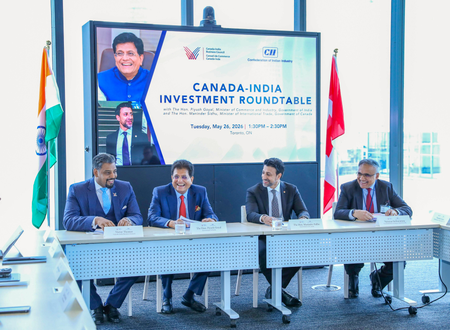
Commerce and Industry Minister Piyush Goyal’s recent visit to Canada signifies a significant milestone in the ongoing efforts to strengthen economic ties between India and Canada. During the visit, Goyal held discussions with various Canadian officials, including Prime Minister Mark Carney, focusing on advancing the proposed comprehensive economic partnership agreement (CEPA) between the two nations. The visit also saw the participation of a substantial Indian business delegation, highlighting the growing interest in enhancing bilateral trade relations.
The economic engagement between India and Canada comes at a crucial time when both countries are navigating a changing global economic landscape characterized by evolving supply chains and heightened economic security concerns. With Canada offering capital, technology, and energy resources, and India bringing market potential and manufacturing capabilities to the table, the two nations possess complementary strengths that could foster mutually beneficial partnerships. Moreover, the geopolitical dynamics in the Indo-Pacific region further underscore the strategic importance of closer economic collaboration between India and Canada.
Former Indian ambassador to Canada, Sanjay Kumar Verma, emphasizes the significance of sustaining the momentum of this renewed engagement to avoid the pitfalls encountered in previous trade negotiations between the two countries. While past discussions on the CEPA and the proposed Early Progress Trade Agreement (EPTA) faced challenges and delays, there is optimism that the current dialogue framework, focusing on achievable goals and commercial viability, could lead to tangible outcomes. The emphasis now lies on crafting a pragmatic and effective trade agreement that serves the interests of both India and Canada.
The India-Canada relationship, although marred by occasional diplomatic tensions and trade disputes, holds immense potential for deeper economic cooperation. While challenges persist, both nations recognize the importance of maintaining a forward-looking approach to trade negotiations and overcoming hurdles through constructive dialogue and compromise. As the two countries navigate the complexities of international trade dynamics, the focus remains on forging a sustainable and mutually beneficial economic partnership that withstands the test of time.
