


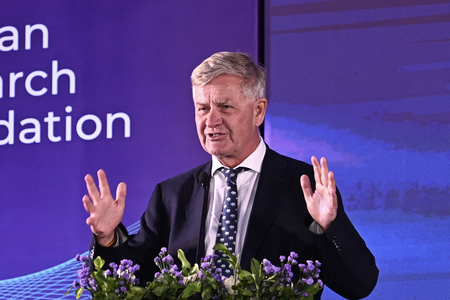
Former UN Environment Programme Executive Director Erik Solheim commended India for launching its first hydrogen-powered train from Haryana’s Jind. The train, consisting of 10 coaches, is among the world’s largest hydrogen-powered passenger trains. Solheim highlighted the project’s innovative propulsion technology and infrastructure that aim to showcase clean rail transportation in India.
The hydrogen train, designed to operate at a top speed of 110 kmph, generates electricity onboard using a Proton Exchange Membrane (PEM) fuel cell. This technology allows the train to produce electricity by combining hydrogen stored in onboard cylinders with oxygen from the atmosphere, resulting in water vapor and heat as the only by-products. The Ministry of Railways emphasized that this process makes the train nearly emission-free.
Featuring two hydrogen-powered power cars and eight trailer coaches, the train can accommodate approximately 2,600 passengers. Indian Railways has established the country’s first integrated railway hydrogen ecosystem in Jind to support the train’s operations. The ecosystem involves on-site hydrogen production through electrolysis, storage, and dispensing into the train through dedicated refueling stations.
To ensure safety, the hydrogen train and refueling infrastructure are equipped with various systems, including hydrogen leak detectors, flame sensors, and automatic shutdown mechanisms in case of abnormalities. The project has undergone independent safety assessments and meets international standards and the requirements of the Petroleum and Explosives Safety Organisation (PESO).
Indian Railways views the hydrogen train as a significant step in its green transition following the electrification of over 99% of the country’s broad gauge network. The project aligns with India’s National Green Hydrogen Mission and its long-term net-zero objectives. The ministry plans to introduce hydrogen-powered trains on other routes, including heritage railways, in the future.
