


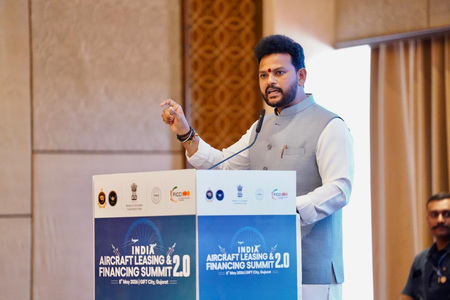
India is set to become the world’s third-largest civil aviation market by 2035, with an estimated fleet size of around 2,250 aircraft, as stated by Union Civil Aviation Minister Kinjarapu Ram Mohan Naidu at the ‘India Aircraft Leasing and Financing Summit 2.0’ in Gujarat’s GIFT City. The Minister highlighted that India is transitioning from a consumer to an architect of aviation finance, marking a significant shift in the sector. He emphasized the country’s potential, offering opportunities of approximately $50 billion in aircraft leasing over the next decade.
The rapid growth in passenger numbers and fleet expansion in India is propelling the demand for robust domestic leasing and financing structures. The Minister projected that India is well-positioned to achieve the status of the third-largest aviation market globally by 2035. GIFT City has emerged as a robust ecosystem for aircraft leasing and financing, supported by regulatory and financial frameworks that attract international players, reducing reliance on foreign leasing jurisdictions.
Union Civil Aviation Secretary Samir Kumar Sinha highlighted the heavy dependence of the current aircraft leasing structure on overseas jurisdictions, with more than 80% of Indian airlines’ aircraft leased from countries like Dublin, Singapore, and Dubai. The government aims to position India not just as a significant aviation market but also as a global financing jurisdiction capable of meeting its fleet needs independently. The development of GIFT City as a financial hub is a crucial step towards achieving this goal, fostering domestic aviation finance capacity.
Chief Minister Bhupendra Patel emphasized Gujarat’s pivotal role in advancing aviation finance through GIFT City, fostering collaboration between global industry stakeholders and domestic institutions to bolster India’s aviation ecosystem. Initiatives like GIFT City, under Prime Minister Narendra Modi’s leadership, are envisioned to contribute significantly to India’s development by 2047 and enhance Gujarat’s standing in emerging global financial sectors.
