


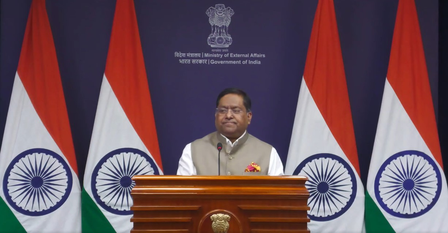
India is actively diversifying its sources of oil and gas imports to counter the supply shortage resulting from the Strait of Hormuz tensions in West Asia. Randhir Jaiswal from the Ministry of External Affairs emphasized the significance of energy security and the country’s current policy of seeking support from global markets. Notably, 11 Indian-flagged vessels remain stranded in the Persian Gulf region.
Moreover, Indian oil companies are increasing their purchases from countries like Russia, Nigeria, and Angola. This strategic shift in crude sourcing is driven by commercial factors and the availability of adequate supplies, as highlighted by a Petroleum Ministry official. Despite recent challenges, India, the world’s third-largest oil importer, has managed to secure sufficient crude through long-term agreements.
In response to fluctuations in global energy costs, Indian refiners have boosted their procurement of Russian oil, leveraging its competitive pricing advantage. Although US sanctions on key Russian entities briefly impacted purchases, waivers subsequently enabled Indian refiners to resume and even escalate their buying activities. Data from Kpler indicates that Indian imports of Russian oil are set to reach nearly record levels of 1.9 million barrels per day in May.
Amid soaring benchmark Brent crude prices exceeding $100 per barrel, India’s acquisition of Russian oil has played a crucial role in stabilizing global markets by alleviating demand pressures. This strategic move not only aids in managing escalating energy costs but also contributes to market equilibrium.
