


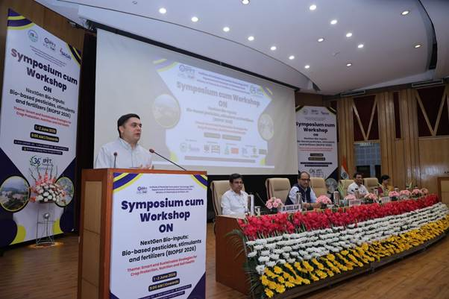
Several positive factors, such as increased policy support for sustainable agriculture and targeted bio-economy initiatives, are expected to propel India towards becoming a global leader in the Bio-Economy and bio-based agri-input sector, as per the government. Tejveer Singh, Secretary of the Department of Chemicals and Petrochemicals (DCPC), highlighted India’s significant potential to excel in these sectors, citing the country’s strong scientific foundation, diverse biodiversity, and rapidly expanding startup ecosystem.
Singh, speaking at the closing session of the ‘BIOPSF 2026’ symposium-cum-workshop in New Delhi, expressed confidence in the role of scientific excellence, effective Industry-Academia collaborations, and the technological innovations of young entrepreneurs in shaping sustainable agricultural solutions for the future. He stressed the importance of developing robust formulation technologies for bio-pesticides to enhance product stability, field effectiveness, ease of application, and farmer acceptance.
The event, ‘BIOPSF 2026,’ hosted by the Institute of Pesticide Formulation Technology (IPFT) in Gurugram under the DCPC, Ministry of Chemicals and Fertilisers, aimed to promote discussions on recent advancements in bio-based agricultural inputs and their significance in sustainable agriculture. Emphasizing India’s progress towards the vision of “Vikshit Bharat 2047” and a thriving Bio-Economy, the Secretary underscored the need to bolster indigenous technological capabilities, foster translational research, and promote startup-driven innovation in bio-based chemicals, crop protection technologies, and sustainable agricultural inputs.
As part of the 36th Foundation Day celebrations of IPFT, the event brought together policymakers, scientists, industry stakeholders, regulators, educators, entrepreneurs, startups, students, and researchers to explore the latest developments in bio-based agricultural inputs and their impact on sustainable farming practices.
