


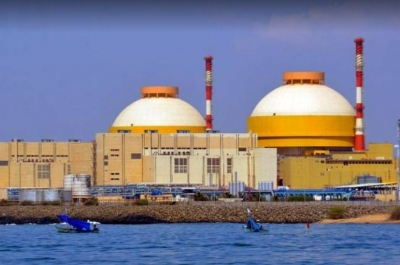
India’s civilian nuclear energy program presents an opportunity for closer ties with Central Asia, focusing on uranium supply, energy security, economic relations, and geopolitical diversification. A recent $4 billion contract between Kazatomprom and India’s Department of Atomic Energy signifies a strategic shift towards long-term cooperation in the nuclear domain. Kazakhstan and Uzbekistan are emerging as key partners for India’s nuclear energy expansion and fuel diversification efforts within a broader Eurasian resource framework.
India aims to achieve 100 GW of civilian nuclear capacity by 2047, with an interim target of 22,480 MW by 2031-32, including a focus on small modular reactors. Kazakhstan, holding around 14% of global uranium reserves and being the top uranium producer globally, appears as an ideal partner for India’s nuclear ambitions. The partnership with Kazakhstan not only enhances India’s fuel security but also reduces reliance on a single supplier as it rapidly scales up its civilian nuclear energy generation.
The collaboration between Kazakhstan and India in the uranium sector has deep institutional roots, transitioning from a mere commodity trade to a strategic alliance. This partnership is crucial for India’s nuclear energy expansion plans, offering stability and diversity in uranium supply. Despite geographical challenges in connectivity through regions like the Caspian, Iran, or Afghanistan, the cooperation between India, Kazakhstan, and Uzbekistan remains politically significant, emphasizing the need for reliable routes, supply assurance, and long-term agreements.
