


Mehbooba Mufti, former Chief Minister of Jammu and Kashmir and President of the People’s Democratic Party, linked recent protests in Jammu to the region’s decision to join India in 1947. She criticized certain groups in Jammu as “right-wing Hindus” and blamed BJP, RSS, Bajrang Dal, and others for undermining the region’s choice to align with secular India. Mufti expressed concern over the revocation of permission to Shri Mata Vaishno Devi Medical College by the National Medical Commission, calling it ‘dangerous and unfortunate.’
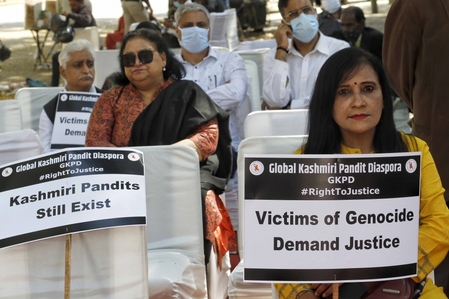
Such statements by Mufti have sparked debate on reducing protests to communal issues and questioning the legitimacy of Jammu and Kashmir’s accession to India. The rhetoric around protests in Jammu has raised questions about the treatment of the Kashmiri Hindu minority, highlighting the historical persecution and forced exodus of Kashmiri Pandits. The failure of political leaders to address the plight of minorities during times of crisis has come under scrutiny, especially in light of the ongoing silence regarding the ethnic cleansing of Kashmiri Hindus.
Former Chief Minister Farooq Abdullah’s past references to Pakistan and calls for autonomy in Jammu and Kashmir have also been revisited in the context of current discussions. The lack of action by political leaders during periods of violence and religious extremism, particularly against the Hindu minority, has drawn criticism for perpetuating a culture of selective secularism. The failure to acknowledge and address the injustices faced by the Kashmiri Pandit community has led to questions about the commitment to Gandhian principles of coexistence and justice.
