


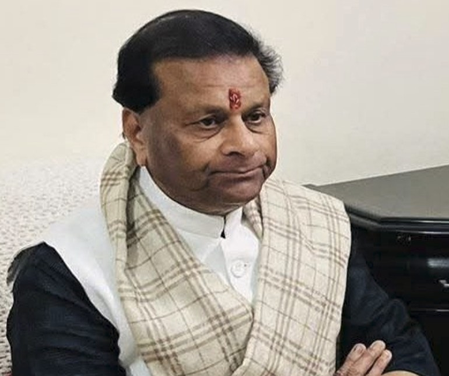
Jaibhan Singh Pawaiya, the newly appointed Chairman of the State Finance Commission and a senior Bharatiya Janata Party leader, recently held a meeting with Governor Mangubhai Patel at Lok Bhavan to inform him about taking charge of the office. During the meeting, Patel offered guidance on the role, functioning, and various activities of the Finance Commission. He expressed confidence in the Commission’s ability to contribute significantly to the state’s development by working towards its objectives.
The Governor’s office shared that Chairman Pawaiya assured Governor Patel of the Commission’s commitment to fulfilling its responsibilities diligently and playing a vital role in the state’s progress. Patel extended his best wishes to the Chairman and members of the Commission, emphasizing that serving the state and the nation with honesty through the Commission’s responsibilities is paramount.
The Madhya Pradesh government has established the sixth State Finance Commission, with Jaibhan Singh Pawaiya as the Chairman, along with K.K. Singh and Virendra Kumar as members. The trio officially assumed their roles on March 23, 2026. The Commission’s term is set until October 31 this year, with a possibility of extension if necessary, as per the notification.
Tasked with reviewing the financial status of municipalities and panchayats, the Commission will propose the allocation of the state’s taxes, duties, tolls, and fees between these local bodies. Furthermore, it will recommend strategies to enhance the financial situation of local entities, with a deadline to submit suggestions to the Governor by October 31 for the upcoming financial year starting April 1.
The Commission’s responsibilities include evaluating the financial conditions of panchayats and urban local bodies, advising on the distribution of taxes and fees between the state and local entities, and proposing measures to enhance the financial independence of local institutions. Its recommendations on funding for local development projects, provision of essential services like water supply, sanitation, roads, and healthcare, and bolstering grassroots governance in rural and urban areas will be pivotal for future progress.
