


The government announced the introduction of six new Bureau of Indian Standards (BIS) for medical assistive technologies under the NLEAP initiative by the Indian Council of Medical Research (ICMR). These standards are intended to guide policymakers, healthcare providers, and stakeholders in the provision and development of assistive products across India. One of the standards focuses on ‘elbow crutches,’ outlining requirements, test methods, safety measures, ergonomics, performance criteria, and manufacturer specifications.
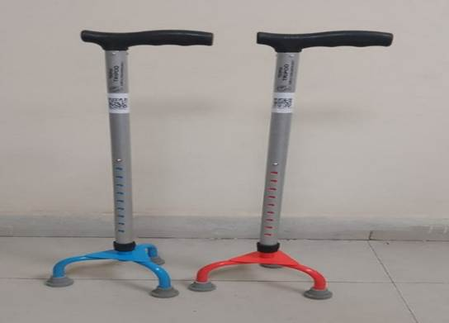
The newly established standards also cover ‘walking sticks,’ detailing aspects such as material, shape, dimensions, workmanship, and performance for various types of walking sticks. These standards were developed in consultation with technical experts from the Indian industry, as highlighted by the Ministry of Consumer Affairs, Food and Public Distribution. Additionally, the guidelines for ‘Walking sticks’ with three or more legs, including handle and tips, emphasize safety, ergonomics, performance, marking, and labeling requirements.
Furthermore, the ‘Accessible Design’ standards define the content and design of tactile guide maps to assist individuals who are blind or have low vision in navigating buildings, public areas, transport hubs, and parks safely. Another aspect of ‘Accessible Design’ standards focuses on the use of braille on signage, equipment, and appliances, specifying braille dimensions, material characteristics, and implementation guidelines. Moreover, the ‘portable ramps’ standard sets requirements for ramps facilitating accessibility for wheelchair users, individuals with mobility aids, older people, and children, ensuring ease of movement in various environments.
The government stressed the importance of standards in the field of Assistive Products to enhance quality of life and independence for individuals with functional impairments. Aligning these standards with global practices and ensuring compliance would enable Indian products to meet international quality standards, facilitating potential exports to global markets.
