


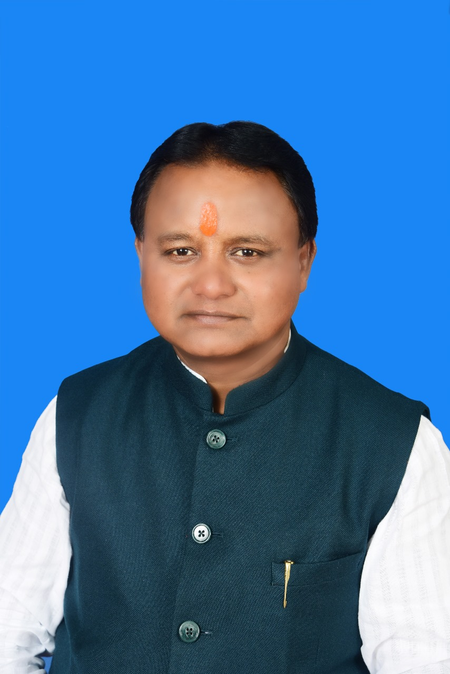
Odisha Chief Minister Mohan Charan Majhi criticized opposition parties for spreading false information about the recently introduced Viksit Bharat – Guarantee for Rozgar and Ajeevika Mission (Gramin) Act, 2025. He labeled the scheme as “anti-poor” and “anti-farmer” during a press conference at the state BJP office. The main aim of the VB–G RAM G scheme is to establish a developed India by 2047, aligning with Mahatma Gandhi’s vision of rural self-employment.
Contrary to claims made by the opposition, CM Majhi highlighted that the law contains extensive provisions for the welfare of farmers and workers. He emphasized that various initiatives have been undertaken in India both pre and post-Independence to enhance employment opportunities for farmers and the underprivileged. These initiatives ensured work availability but lacked proactive measures to create employment and improve economic livelihood, according to CM Majhi.
Chief Minister Majhi alleged that the National Rural Employment Guarantee Act (NREGA), initiated in 2005 and later renamed as the Mahatma Gandhi NREGA, remained structurally unchanged despite its rebranding. He accused the previous UPA government of using the scheme for political gains under Mahatma Gandhi’s name. The CM pointed out irregularities in the implementation of the scheme, citing major scams in Bihar and Uttar Pradesh and serious irregularities in Sambalpur, Odisha, in 2012 under the MGNREGS.
To combat corruption and ensure effective implementation of the scheme, Prime Minister Narendra Modi introduced the VB–G RAM G Bill. The new scheme is designed to realize Mahatma Gandhi’s vision of Gram Swaraj and work towards a developed India by 2047. It extends the guaranteed employment period from 100 to 125 days and is expected to enhance productivity in various rural sectors.
The funding model ensures shared responsibility, with a 90:10 Centre–state ratio for northeastern states and 100% central funding for Union Territories. Other states will share costs in a 60:40 ratio between the Centre and state governments. The scheme focuses on water conservation, rural infrastructure development, livelihood expansion, and climate resilience. To safeguard farmers’ interests, all scheme-related work will be halted during sowing and harvesting seasons for up to 60 days annually to address labor shortages and prevent wage hikes.
