


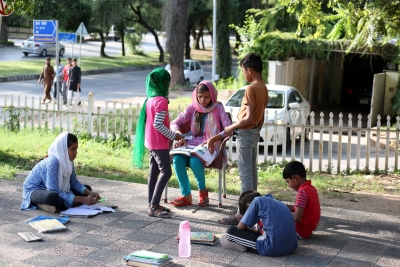
Pakistan faces challenges in transitioning girls from primary to secondary education, creating barriers for Grade 5 students. Issues such as distant schools, unsafe transport, male-dominated teaching staff, and family reluctance hinder girls’ progress post-primary school. The state’s inaction exacerbates this situation, as highlighted in a report by Nishat Riaz, Chief Executive of Malala Fund Pakistan.
Riaz emphasized that Pakistani girls exhibit a strong desire for education despite facing adversities like floods, conflict, and poverty. However, the education system fails to support their aspirations adequately, leading to a significant dropout rate among adolescent girls. The report underscores the need for systemic changes to ensure girls’ education continuity beyond primary levels.
The report points out that while there has been progress in primary education, the real challenge lies in retaining students through middle and secondary school. The scarcity of middle and secondary schools, coupled with their inconvenient locations, particularly affects girls. This lack of access to quality education limits girls’ opportunities and perpetuates inequality in Pakistan’s education system.
Highlighting the importance of secondary education for girls, the report stresses that true empowerment and progress can only be achieved by providing girls with the opportunity to complete their secondary schooling. It calls for a shift from symbolic gestures to concrete actions to address the systemic issues plaguing girls’ education in Pakistan.
