


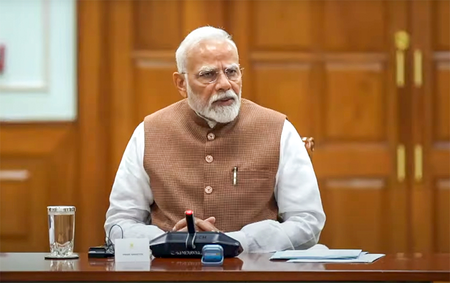
Prime Minister Narendra Modi is set to surpass Jawaharlal Nehru’s record and become India’s longest-serving elected Prime Minister on June 10, completing 4,399 consecutive days in office. Under Modi’s leadership, significant strides were made in national security, with the dismantling of home-grown terror groups like the Indian Mujahideen, leading to a shift in focus towards Jammu and Kashmir.
During the early days of his tenure, PM Modi prioritized national security, holding meetings with top officials to empower security forces. The crackdown on separatists in Jammu and Kashmir revealed financial networks channeled through Pakistan, with a portion of the funds allegedly used for violence while the rest enriched separatist leaders.
The National Investigation Agency (NIA) and Enforcement Directorate (ED) uncovered financial networks supporting separatists’ lavish lifestyles, leading to a gradual decline in separatism in Jammu and Kashmir. Additionally, the government targeted top terrorist commanders, significantly weakening terror outfits like the Hizbul Mujahideen.
A milestone achievement was the abrogation of Article 370 in 2019, bringing Jammu and Kashmir fully under the Indian Constitution. This move, despite initial protests, helped improve security by weakening terror networks, fostering economic growth, and boosting tourism in the region. Notable operations like the Uri Surgical Strikes and the Balakot airstrike showcased the government’s firm response to terror threats.
Operation Sindoor in 2025 marked a significant shift in India’s security doctrine, with precision strikes on terror training facilities in Pakistan and PoK. This operation, aimed at crippling terror infrastructure, demonstrated India’s resolve against cross-border terrorism. The Modi government’s strategic decisions have not only ensured peace and prosperity in Jammu and Kashmir but have also sent a strong message to adversaries worldwide.
