


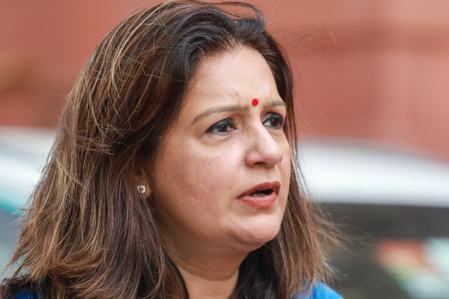
Former Rajya Sabha member Priyanka Chaturvedi expressed worries about the US-India trade negotiations and advocated for increased political inclusion for women. At the Hudson Institute’s “New India Conference,” Chaturvedi criticized the handling of tariff discussions, particularly in light of recent US actions. She highlighted concerns over the ambitious $500 billion bilateral trade targets and their impact on Indian farmers and dairy producers.
Chaturvedi also addressed India’s energy security issues, emphasizing the importance of autonomous decisions regarding oil imports for energy security. She underscored India’s historical commitment to partnerships based on consistency and reliability, urging for the continuity of this approach. Additionally, she cautioned against public pressure in diplomacy and stressed the need for understanding India’s challenges.
Focusing on domestic political reform, Chaturvedi highlighted the inadequate representation of women in India’s Parliament despite constituting nearly half of the population. She pointed out the disparity between women’s share in the population and their representation in Parliament, calling for increased female participation. Chaturvedi raised concerns over the prolonged delay in implementing the 33% reservation for women in Parliament, advocating for immediate steps to enhance women’s representation.
Chaturvedi emphasized the significance of expanding representation to strengthen democratic institutions and advocated for the inclusion of women in decision-making processes. She also mentioned India’s global efforts in promoting equity, including initiatives like vaccine distribution and advocacy at the World Trade Organization. Highlighting Prime Minister Narendra Modi’s focus on women-led development, she discussed India’s policy vision. Chaturvedi highlighted the ongoing exploration of areas of cooperation between India and the US while cautioning against comments that could hinder progress.
The conference convened policymakers and experts to analyze India’s changing global role and its partnership with the United States amid evolving geopolitical dynamics.
