


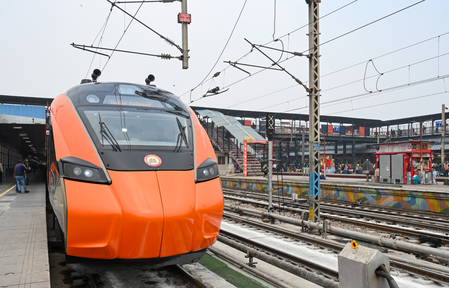
Modernization efforts in India’s railway tracks are leading to a more reliable network, improved ride quality, and higher speeds, as per a statement from the Prime Minister’s Office. These upgrades, including track renewal, advanced testing, and mechanized maintenance, are reducing delays and supporting smoother journeys for passengers and freight transportation nationwide. Railways Minister Ashwini Vaishnaw highlighted that since 2014, around 55,000 km of tracks have been renewed, enhancing safety and ride quality while minimizing the need for frequent repairs.
The installation of approximately 44,000 km of long rail panels with fewer joints is contributing to smoother and safer train movements. Additionally, the utilization of over 80,000 km of stronger 60-kg rails is enabling the support of heavier loads and higher speeds. Minister Vaishnaw noted that nearly 80% of the network can now accommodate train speeds of 110 km per hour or more, with rail and weld failures dropping by 90%, showcasing tangible benefits for passengers and businesses.
The track machine fleet has seen a significant increase from 748 in 2014 to 1,785 in 2026, enhancing efficiency in tasks such as tamping, ballast cleaning, and rail grinding. The minister emphasized the critical role of tracks in ensuring safe and efficient train operations, highlighting that a well-maintained track system allows for higher speeds, while issues like cracked rails or clogged ballast beds can lead to speed restrictions, delays, and safety hazards.
With over 25,000 trains running daily across India, transporting more than 20 million passengers and various commodities, the focus on track modernization is crucial for the seamless functioning of the extensive railway network in the country.
