


New Delhi, Aug 22 (IANS) In a significant advance in computational astrophysics, a team of scientists has developed a method to compute more realistic properties of stellar atmospheres, an official statement said on Friday.
The method opens the door to more realistic simulations of stellar spectra — the primary tool astronomers use to decode the physical conditions in stars, circumstellar disks, and interstellar clouds, according to the study published in the journal Astronomy & Astrophysics.
Until now, most models relied on an important simplification in which it was assumed that while atoms could deviate from equilibrium in terms of energy states, their velocities (how fast they move around) still followed a neat, predictable distribution — the Maxwellian curve that describes equilibrium. This assumption, while convenient, is not always realistic, especially for atoms in short-lived excited states.
In reality, stellar atmospheres are chaotic. Photons scatter, energy levels fluctuate, and velocity distributions can stray from the equilibrium picture. Capturing this complexity requires what astrophysicists call full non-local thermodynamic equilibrium (FNLTE) radiative transfer — a formidable problem that scientists first described back in the 1980s but couldn’t solve due to computational limitations.
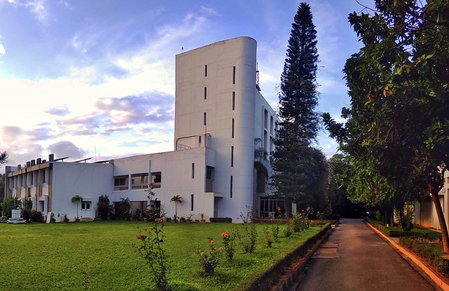
A researcher at the Indian Institute of Astrophysics (IIA), working with collaborators from IRAP – Institut de Recherche en Astrophysique et Planétologie, France, has made major progress.
The team first tackled a simplified version of the FNLTE problem: the case of a two-level atom (where an atom can only jump between two energy states). Now, they’ve taken the next bold step: solving the three-level atom problem.
With three atomic levels, new types of scattering come into play, including Raman scattering — where an atom absorbs light and re-emits it at a different frequency. These processes are only approximated in standard models, but the new FNLTE approach captures them naturally.
When the team compared their FNLTE results to traditional models, the differences were striking. The velocity distribution of excited hydrogen atoms no longer followed the tidy Maxwellian curve. Instead, it showed significant departures, especially near the stellar surface — exactly where astronomers collect their spectral fingerprints of stars.
This advance means astrophysicists are now a step closer to simulate stellar spectra with unprecedented realism.
“The major conceptual jump from two to three or more atomic levels has now been made,” said Sampoorna M from IIA, an autonomous institute of the Department of Science and Technology (DST).
The team — T. Lagache and F. Paletou from IRAP, Toulouse, France, and M. Sampoorna from IIA, Bengaluru — is now working on generalizing the method to even more complex atoms and developing faster numerical schemes to handle the heavy computations.
–IANS
na/
