


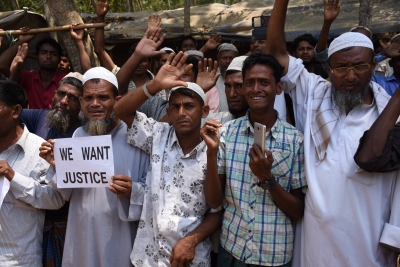
The Rohingya refugee crisis in Bangladesh is transitioning from a humanitarian emergency to a significant security issue, impacting local communities and the broader region. Militancy is on the rise in and around the Rohingya camps, posing a complex challenge that goes beyond law enforcement. The situation is influenced by stalled repatriation efforts, ongoing instability in Myanmar, and the lack of viable solutions for the displaced population.
A recent report highlighted that Bangladesh is now tasked with ensuring security in the camps while maintaining essential humanitarian standards. The camps, particularly those in Cox’s Bazar, are witnessing a convergence of humanitarian vulnerabilities and armed-group violence. Incidents in 2026 indicate a shift towards a more sustained conflict among various Rohingya armed groups vying for control, influence, and access to illicit activities.
Violence levels in the camps remain a significant concern, with data showing casualties linked to Rohingya insurgencies. The report mentioned that up to May 24 this year, four individuals were killed and three injured in such incidents. Additionally, there were 37 deaths in 2025 and 42 in 2024, underscoring the ongoing security challenges.
Concerns are mounting over potential transnational extremist connections, with recent arrests highlighting the issue. In May 2026, a Rohingya youth was apprehended in Teknaf for suspected ties to Tehreek-e-Taliban Pakistan through an Urdu-language WhatsApp group promoting terrorist activities. Earlier, in April, four ARSA members were detained in Dhaka for alleged links with TTP, raising alarms about radicalization within the displaced Rohingya community.
The core of the crisis lies in the unresolved status of the Rohingya people, as per the report. Data from the United Nations High Commissioner for Refugees reveals a significant number of newly registered Rohingya refugees in Bangladesh, bringing the total refugee population in camps to around 1,194,123. The continuous influx underscores the failure to establish safe and voluntary conditions for their return to Myanmar, perpetuating their statelessness and suffering.
Addressing the root causes of displacement, statelessness, and political marginalization is crucial to prevent armed groups from exploiting the situation further. Without structural changes, these factions will continue to recruit, intimidate, and expand their influence within the refugee camps.
