


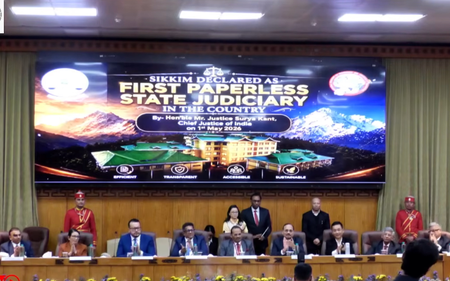
Sikkim achieved a significant milestone by becoming India’s first state to have a paperless judiciary. Chief Justice of India, Surya Kant, announced this historic move during a conclave in Gangtok, emphasizing the digital transformation of access to justice, especially in remote areas. The shift to digital systems has connected citizens directly to judicial forums, reducing delays and paperwork hassles.
The two-day conclave, themed “Technology and Judicial Education,” organized by the High Court of Sikkim and the Sikkim Judicial Academy, is focusing on the future of digital courts and enhancing judicial institutions through modernization. Supreme Court Judge J.K. Maheshwari hailed the paperless judiciary as a remarkable achievement, emphasizing that technology aims to eliminate barriers between citizens and the courts, not replace human judgment.
President of the Bar Association of Sikkim, Tashi Rapden Barphungpa, lauded the development as a landmark moment for the Himalayan state. Initially met with skepticism, the electronic court system has now gained acceptance among lawyers due to increased efficiency. This initiative is expected to boost transparency and accessibility, particularly in Sikkim, where geographical challenges often disrupt travel.
Senior Advocate of the High Court of Sikkim, Jorgay Namka, expressed pride in the state’s accomplishment, attributing it to collaborative efforts among the judiciary, advocates, and the state government. The transition to a paperless system is set to enhance judicial connectivity in remote areas, ensuring that justice is accessible to all citizens. Sikkim’s embrace of innovation and modern governance through this initiative reflects a strong commitment to progress.
