


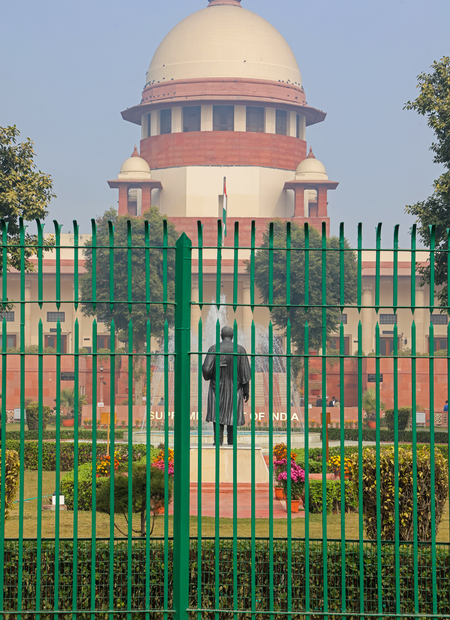
In a crucial judgment set for Wednesday, the Supreme Court will rule on the case of a Ghaziabad man who has been in a permanent vegetative state for almost 13 years. The man, identified as Harish Rana, sustained severe head injuries in a fall from the fourth floor in 2013 while he was a student, leading to his current condition. Rana, now approximately 30 years old, requires constant medical support for breathing, feeding, and daily care due to his 100% disability and quadriplegia.
Earlier, the Supreme Court had instructed the formation of a Primary Medical Board to assess the possibility of withdrawing life-sustaining treatment for Rana, aligning with the court’s guidelines on passive euthanasia. A medical team that evaluated Rana at his home reported his minimal chances of recovery in his current state, emphasizing his reliance on medical assistance for basic functions. Additionally, the court mandated the All India Institute of Medical Sciences (AIIMS), New Delhi, to establish a Secondary Medical Board for an independent evaluation of Rana’s condition.
The legal proceedings originated from a petition filed by Rana’s parents before the Delhi High Court, requesting an examination by a medical board to consider passive euthanasia. While the Delhi High Court rejected the plea citing the prohibition of active euthanasia in Indian law, the matter escalated to the Supreme Court in August 2024. The Supreme Court, acknowledging the parents’ challenges in caring for their son in a vegetative state for over a decade, explored potential solutions with the government.
After considering the case and receiving submissions, the Bench led by Justice Pardiwala reserved its verdict on January 15 this year. The upcoming judgment on Wednesday will determine whether passive euthanasia can be authorized in Rana’s situation, adhering to established legal principles on the right to die with dignity.
