


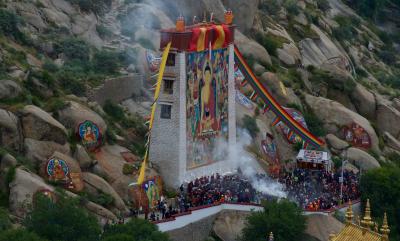
The conversion of the Buddha statue’s grounds in Tibet into a horse-racing venue is seen as a deliberate effort to erase the area’s sacred history. Once a revered site for local Tibetans, the location has now been repurposed for entertainment and sports.
This transformation, often portrayed as modernization, actually involves the removal of Tibetan heritage and the suppression of voices that once protected it. The move to turn a place of worship into a horse-racing field signifies a significant shift in the area’s cultural landscape.
Recent developments in Drakgo County, part of historical Tibet, reflect a broader campaign to replace Tibetan religious culture with alternative activities. The removal of the large Buddha statue near Ganden Rabten Namgyal Ling Monastery, without explanation, symbolizes this ongoing transformation.
The relocation of the Buddha statue into the monastery’s restricted assembly hall restricts public access to this religious symbol. Chinese authorities’ actions, including the closure of Ganden Nangten School and destruction of religious artifacts, indicate a systematic effort to alter the region’s religious and cultural identity.
