


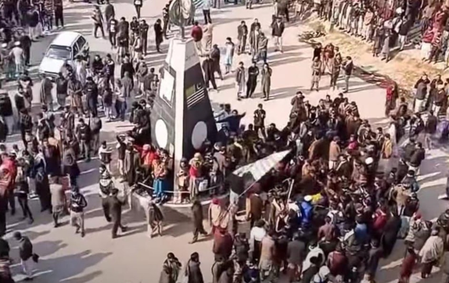
The ongoing unrest in Pakistan-occupied Jammu and Kashmir (PoJK) is not a recent development but stems from long-standing issues of political marginalization and economic disparities imposed by authorities in Islamabad and Rawalpindi. Despite Pakistan’s portrayal of PoJK as “independent,” the region faces governance control and suppression of dissent, leading to protests and violence.
Protests in PoJK have intensified, with recent reports of deaths and injuries during demonstrations, notably linked to grievances over electricity tariffs, inflation, and political representation. The banned Joint Awami Action Committee (JAAC) has been a key player in highlighting these concerns, reflecting broader discontent over economic hardships and Islamabad’s dominance in the region.
The situation in PoJK underscores the complex dynamics of governance, where despite having its own institutions, the region remains under Pakistan’s firm control, with stringent loyalty requirements to Pakistan for political candidates and officeholders. This centralized authority has fueled resentment among locals, who feel marginalized and voiceless in decisions affecting their lives.
Recent incidents have reignited focus on PoJK’s status as an occupied territory, with Islamabad’s influence pervasive in governance and decision-making processes. The region’s struggle for autonomy and representation continues amidst a backdrop of economic challenges and political restrictions imposed by the Pakistani authorities.
