


The recent arrest of Venezuelan leader Nicolas Maduro by US forces is seen as a significant tactical move. However, experts caution that the real challenges lie ahead in terms of governance, stability, and the transition to democracy in Venezuela.
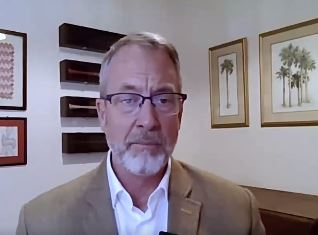
Retired US Ambassador to Venezuela, James Story, described Maduro’s capture as a tactical success but emphasized that strategic success is not guaranteed. While Maduro’s removal is a blow to the regime responsible for Venezuela’s economic crisis and international isolation, key regime figures like Diosdado Cabello Rondon and Vladimir Padrino Lopez still hold power.
Concerns linger over internal stability post-Maduro’s arrest. The control maintained by Cabello over security services and armed groups could hinder public reactions. Additionally, the military’s remaining strength poses risks if control weakens, especially considering their access to advanced weaponry.
The issue of governance post-Maduro is also a point of contention. While US officials suggest working with Delcy Rodriguez as an interim leader, her legitimacy is questioned due to past sanctions. Rodriguez herself rejects US influence, claiming Maduro remains the rightful president, highlighting the uncertainty surrounding any transition.
Questions arise on whether Maduro’s arrest truly advances democracy. Opposition leaders, though claiming victory in the disputed 2024 election, have not been involved in post-Maduro planning. This exclusion risks deepening public distrust after years of unrest and electoral disputes.
The operation is framed by US officials as part of a broader strategy addressing drug trafficking and regional security. However, concerns are raised over the lack of a clear end goal, especially with President Trump’s statement on US involvement until a stable transition. The future remains uncertain, with challenges in maintaining stability and attracting foreign investment amidst ongoing sanctions and political turmoil.
