


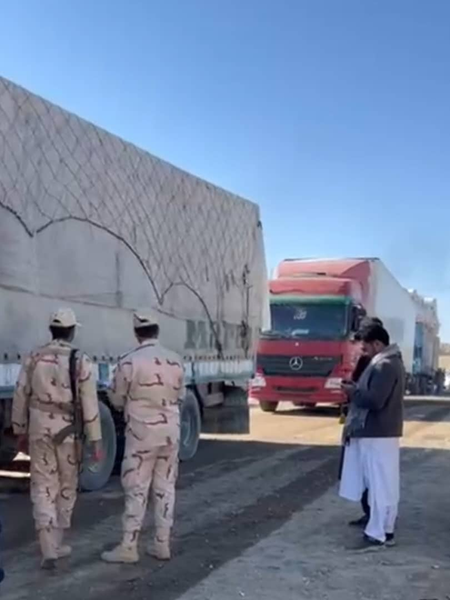
Further US sanctions on Iran are expected to worsen Tehran’s economic situation and potentially destabilize Afghanistan, which has seen a significant rise in commercial trade through its railway link with Iran. According to local officials in Herat province, Afghanistan, the Herat–Khaf railway line has experienced a fivefold increase in trade volume, connecting the country to global markets. This railway link serves as a corridor linking Iran, Afghanistan, Tajikistan, Kyrgyzstan, and China, with the first trial run of cargo from Iran to Afghanistan taking place on May 9, 2023.
Ghulam Wali Mohammadi, the head of the Rozanak station on the Herat–Khaf railway, mentioned that imports have surged from 10,000-15,000 tons per month to 70,000 tons, with goods like cement, corrugated iron sheets, tiles, and diesel being among the top imports. The expansion of commercial activities at Rozanak station has greatly benefited importers and traders, making their work more efficient. However, potential US sanctions on Iran could disrupt trade, lead to energy shortages, and impact refugee flows, adding to Kabul’s challenges.
The repercussions of any reduction in operations by countries trading with Iran could affect not only Afghanistan but also neighboring nations. With Pakistan’s borders closed since October due to conflicts, Afghanistan heavily relies on cross-border trade with Iran. This dependence, combined with its fragile economy and humanitarian needs, means that any sanctions on Iran would have spillover effects on Kabul and nearby countries. Iran plays a crucial role as a trade partner for Afghanistan, supplying essentials like fuel, food, and construction materials.
Sanctions on Iran’s energy sector could lead to fuel price spikes and electricity shortages in Afghan cities, as the country imports a significant amount of petroleum and electricity from Iran. The weakened Iranian rial complicates cross-border transactions, affecting Afghan traders’ payment settlements. Moreover, restrictions on Iranian banks limit financial flows, pushing Afghan businesses towards informal or illicit channels for transactions.
