


There’s a specific kind of anticipation that builds in Maharashtrian households as Gudi Padwa approaches. March 29, 2026—the Marathi New Year, the day the gudi flag goes up, the day families gather to celebrate prosperity and new beginnings. And at the center of every Gudi Padwa celebration, more essential than any other dish, is puran poli.
Soft wheat flatbread stuffed with smooth chana dal and jaggery filling, roasted on a tawa with generous ghee until golden, served warm with katachi amti (the light curry made from the reserved dal water)—puran poli is Maharashtra’s signature festive sweet. With approximately 12 grams of protein per piece and approximately 250 calories, it balances celebration with genuine nourishment in a way that few festive sweets manage.
Table of Contents
What Exactly Is Puran Poli?
Puran poli is Maharashtra’s signature festive sweet flatbread made with soft wheat dough (mixed with a bit of maida for tenderness) stuffed with smooth chana dal and jaggery filling called puran, then rolled thin and roasted on a tawa with ghee until golden and fragrant.
The name itself is instructive: “puran” means the sweet dal filling, “poli” means the flatbread. Together they create something that transcends both components—not quite a dessert, not quite bread, but a festive sweet substantial enough to be a meal unto itself.
The texture when done right is remarkable. The outer poli should be soft and pliable, thin enough to see light through it in places, with golden ghee-roasted spots. The puran filling should be completely smooth—no grain texture at all—sweet but not cloying, with the warm aromatics of cardamom and the subtle earthiness of dal balancing the jaggery’s sweetness.
The flavor profile is complex despite simple ingredients. The jaggery brings deep, caramel-like sweetness with mineral notes. The chana dal provides protein and a subtle nutty flavor. Cardamom adds floral warmth. Nutmeg brings digestive properties and aromatic depth. And ghee—generous amounts of ghee—carries all these flavors and adds its own rich, toasted note.
Recipe Overview
| Detail | Information |
|---|---|
| Prep Time | 45 minutes (plus 2 hours dal soaking + 1 hour dough resting) |
| Cook Time | 45 minutes |
| Total Active Time | 90 minutes |
| Yield | 12-15 puran polis |
| Servings | 12-15 people |
| Cuisine | Maharashtrian |
| Course | Festive Sweet, Main Course Sweet |
| Diet | Vegetarian |
| Difficulty Level | Medium-Advanced |
| Calories per Poli | ~250 kcal |
Ingredients List
For the Puran (Filling)
| Ingredient | Quantity | Notes |
|---|---|---|
| Chana dal (Split Bengal gram) | 1½ cups (300g) | Soaked 2 hours |
| Jaggery | 1½ cups (grated) | Equal ratio to dal |
| Ghee | 1 teaspoon | For cooking filling |
| Green cardamom powder | 1 teaspoon | Freshly ground preferred |
| Nutmeg powder | ¼ teaspoon | Aids digestion |
For the Poli Dough
| Ingredient | Quantity | Notes |
|---|---|---|
| Whole wheat flour | 2 cups | Atta |
| All-purpose flour (Maida) | 1 cup | For softness |
| Hot ghee | 3 tablespoons | Must be hot when added |
| Turmeric powder | ¼ teaspoon | For golden color |
| Salt | Pinch | Optional |
| Water | As needed | For kneading |
Why Puran Poli Is Essential for Gudi Padwa
Gudi Padwa falls on March 29, 2026—the first day of Chaitra month, the Marathi New Year, one of the most important festivals in Maharashtra. The gudi (ceremonial flag) goes up around 10 AM during the auspicious muhurat, and puran poli is the central offering in the morning puja and the centerpiece of the festive meal that follows.
The research documents that Gudi Padwa searches spike approximately 90 percent annually as the festival approaches, and home preparation doubled commercial sales in 2025—evidence that despite its complexity, families prefer to make puran poli at home rather than buy it. This preference isn’t about cost. It’s about the ritual significance of making it yourself.
Symbolism of prosperity. The research notes: “Chana dal longevity symbolizes a prosperous year ahead.” Serving puran poli on Gudi Padwa is a way of invoking abundance for the coming year—through the richness of ghee, the sweetness of jaggery, the golden color that evokes wealth.
Balanced nutrition for celebration. Unlike heavy fried sweets, puran poli provides genuine nourishment. The approximately 12 grams of protein per poli from chana dal, combined with complex carbohydrates and iron-rich jaggery, makes it festive food that sustains rather than just indulges. The research emphasizes: “Unlike heavy fried sweets, puran poli combines dal protein and complex carbohydrates for sustained energy.”
Zero-waste tradition. The water drained from cooking chana dal isn’t discarded—it’s used to make katachi amti, a light, tangy curry that’s the traditional accompaniment to puran poli. This complete utilization of ingredients reflects the values of resourcefulness and gratitude.
Community preparation. The research notes: “Community rolling sessions held on March 28 by Marathi associations to prepare for festival morning.” Making puran poli together—women rolling, men managing the tawa, children watching and learning—is how traditions transmit across generations.
Regional pride. Puran poli is deeply Maharashtrian in identity. Serving it on Gudi Padwa is a way of celebrating cultural heritage alongside the new year.
The Three Technical Foundations of Perfect Puran Poli
Before we get into the step-by-step, let’s establish the three non-negotiable technical foundations that separate excellent puran poli from mediocre attempts:
1. Equal dal-to-jaggery ratio for structural integrity
The research is emphatic: “The equal dal–jaggery ratio is crucial for structure, flavor balance, and rollability.”
Here’s why: Too much jaggery and the filling becomes wet and sticky, leaking through the dough during rolling and making a mess. Too little jaggery and the filling is dry and crumbly, difficult to roll and not sweet enough for a festive sweet. The equal 1:1 ratio (1½ cups dal to 1½ cups jaggery in this recipe) creates the perfect consistency—firm enough to stuff, sweet enough to satisfy, smooth enough to roll thin.
2. Completely smooth, grain-free puran texture
The research states: “No visible grain texture—coarse dal tears dough during rolling.”
The puran must be mashed to absolute smoothness. Not mostly smooth with a few lumps. Completely smooth. Any grain texture creates rough spots that puncture the delicate rolled dough. The traditional tool is a puran yantra (a special strainer), which the research notes creates texture that’s “silkier than a blender.” If you don’t have one, mash hot dal thoroughly with a potato masher, then cook with jaggery while stirring constantly to break down any remaining texture.
3. Properly rested, elastic dough
The research warns: “Under-rested dough causes cracking and shrinking.” And emphasizes: “Resting dough 1 hour improves gluten elasticity and reduces tearing.”
When you add hot ghee to the flour and knead, gluten strands begin forming. But they need time to relax and organize. The 1-hour minimum rest period allows gluten to develop fully, creating dough that’s elastic and pliable rather than resistant and prone to tearing. This rest is not optional—it’s the difference between dough that rolls thin easily and dough that fights you and tears.
Get these three foundations right—equal ratio filling, smooth texture, rested dough—and puran poli success is virtually guaranteed.
Step-by-Step Instructions: Making Perfect Puran Poli
Step 1: Soak and Cook the Chana Dal
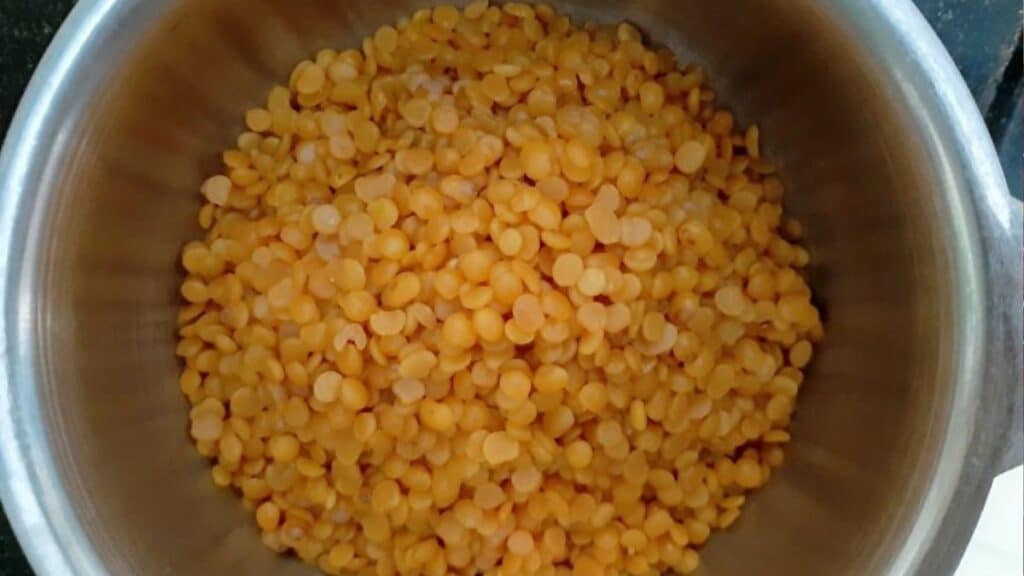
Rinse 1½ cups of chana dal thoroughly under running water. Soak in fresh water for 2 hours. This softens the dal and reduces cooking time.
Time: 2 hours soaking + 15 minutes cooking
Step 2: Mash the Dal to Smoothness
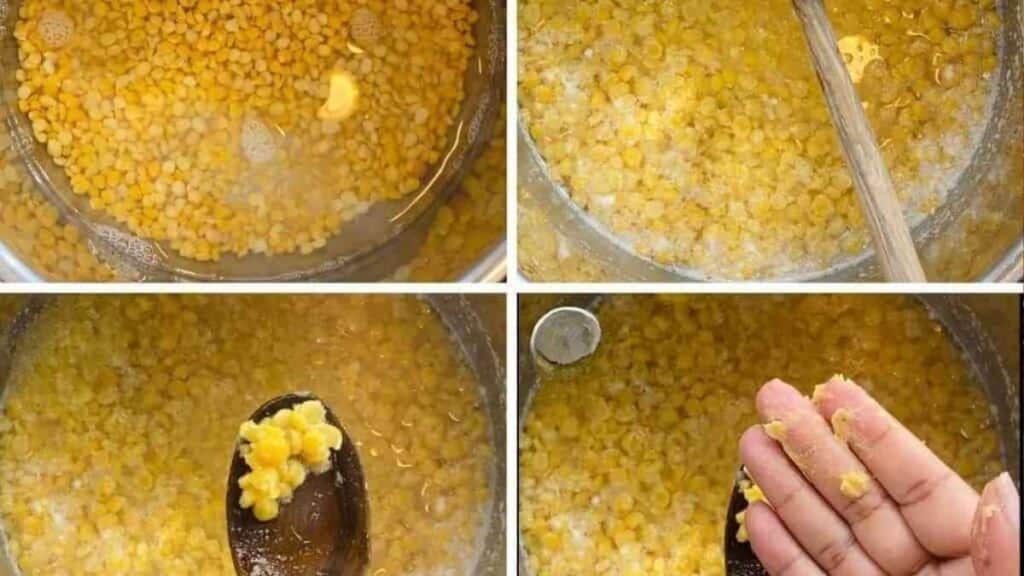
While the dal is still hot (this matters—hot dal mashes more easily), transfer to a large bowl. Using a potato masher or the back of a large spoon, mash thoroughly until you achieve a completely smooth paste with no visible grain texture.
If you have a puran yantra (the traditional strainer), use it now—the research notes it creates texture “silkier than a blender.”
Time: 10 minutes
Step 3: Cook the Puran Filling
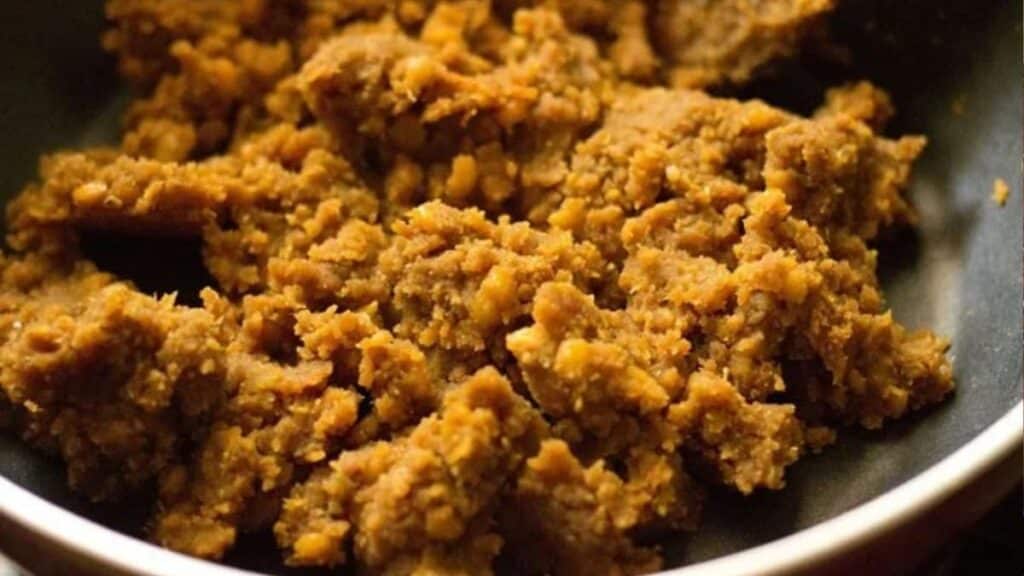
Heat 1 teaspoon of ghee in a heavy-bottomed pan over medium heat. Add the mashed dal and 1½ cups of grated jaggery.
Cook together on low heat, stirring continuously, for 12 to 15 minutes. The mixture will be wet initially, then gradually thicken as moisture evaporates and jaggery caramelizes.
Time: 15-18 minutes cooking + 30 minutes cooling
Step 4: Prepare the Poli Dough
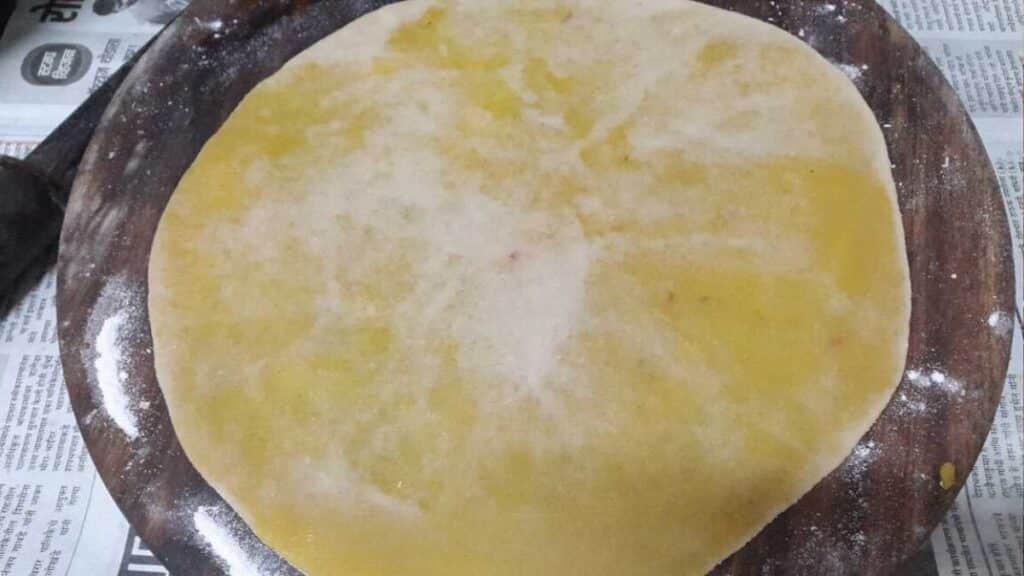
In a large mixing bowl, combine 2 cups whole wheat flour, 1 cup maida (all-purpose flour), and ¼ teaspoon turmeric powder (for golden color).
Heat 3 tablespoons of ghee until quite hot but not smoking. Pour the hot ghee over the flour mixture. Mix with a spoon initially (it’s hot), then with your hands to incorporate the ghee evenly into the flour. The mixture should resemble breadcrumbs.
Time: 10 minutes + 1 hour resting
Step 5: Shape and Stuff the Polis
Once the puran filling is completely cool and the dough has rested for at least 1 hour, you’re ready to assemble.
Time: 10 minutes for portioning and stuffing
Step 6: Roll the Stuffed Polis
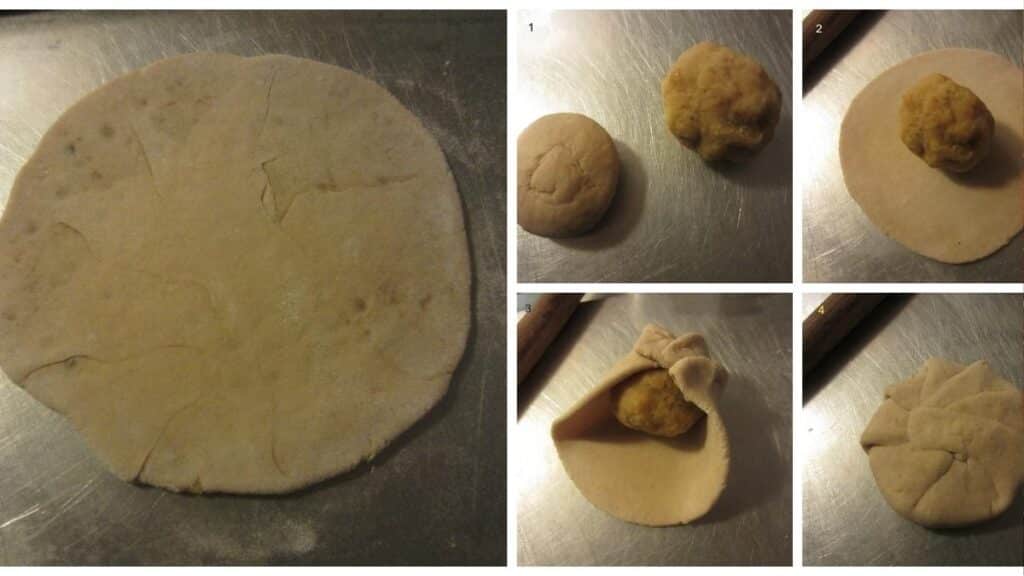
Dust your rolling surface lightly with wheat flour. Take one stuffed ball and gently flatten it with your palm.
Using a rolling pin, roll gently from the center outward, rotating the dough as you go. Roll into a circle approximately 6-7 inches in diameter. The research advises: “Roll edges thinner than center”—this prevents thick, doughy edges.
Time: 15 minutes for rolling all polis
Step 7: Cook on the Tawa
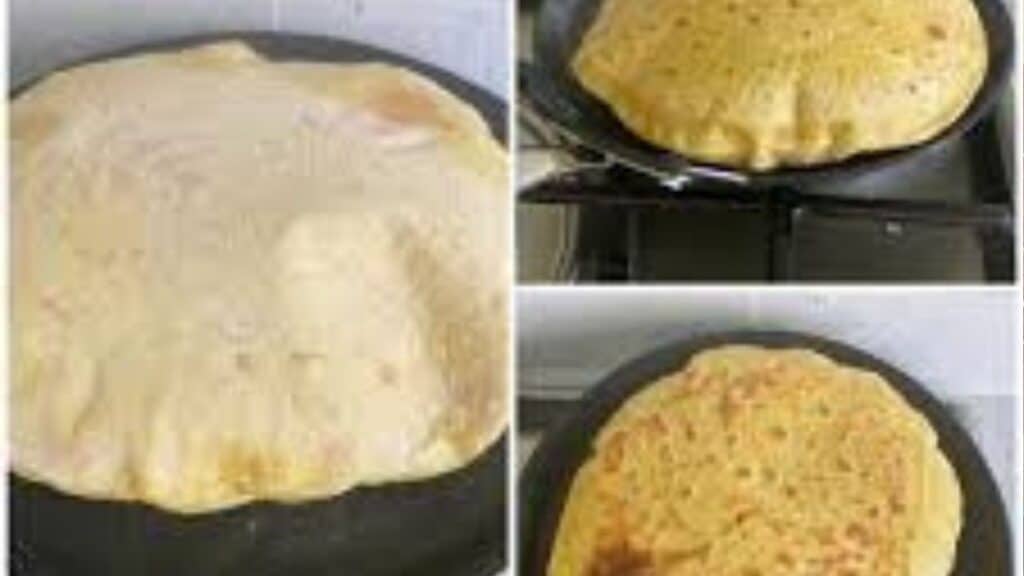
Place one rolled poli on the hot tawa. Cook for about 1 minute—you’ll see bubbles forming and the surface will look slightly dry.
Heat a tawa or flat griddle over medium-high heat. It should be hot but not smoking.
Time: 30-40 minutes for cooking all polis
Step 8: Serve Hot with Ghee
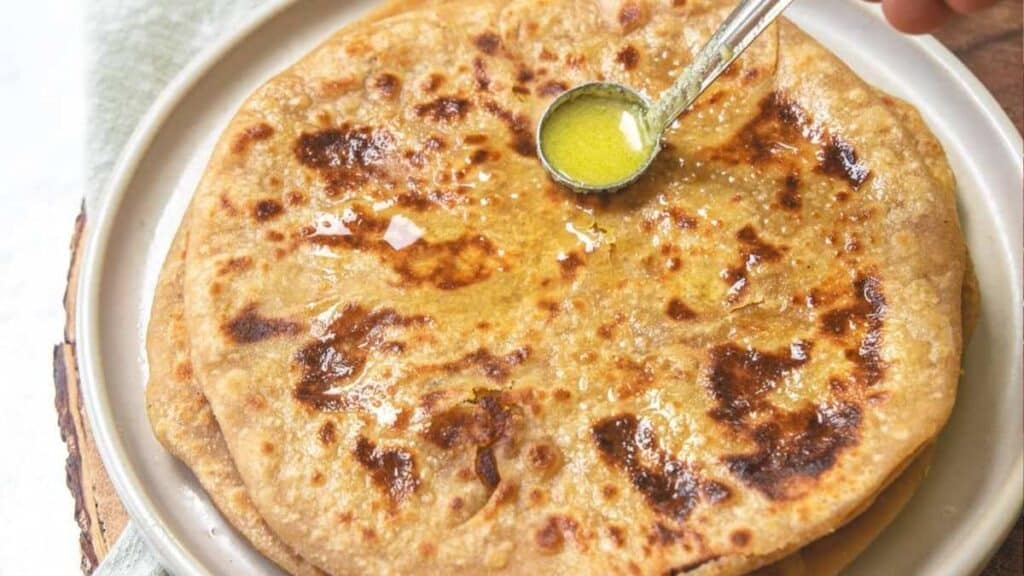
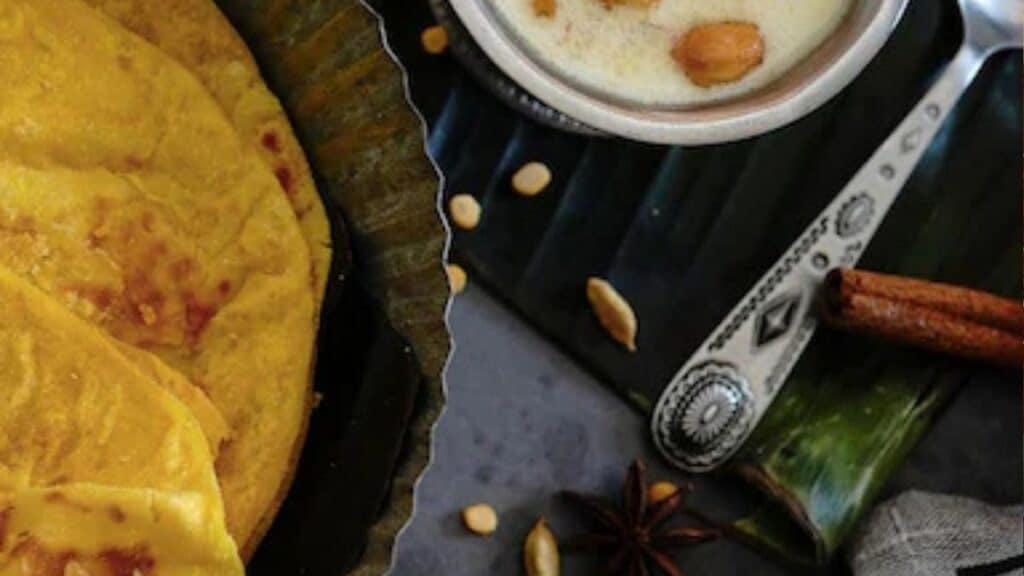
Serve puran poli immediately while hot, with extra ghee drizzled on top. The traditional accompaniment is katachi amti (made from the reserved dal water), which provides tangy, light contrast to the sweet richness of the poli.
Total Time: About 90 Minutes Active Work (plus soaking and resting time)
CHECK MORE ON:Farali Misal Recipe: The Protein-Rich Meal That Actually Fills You Up
Make-Ahead Strategy for Gudi Padwa
Day Before (March 28):
- Soak and cook dal
- Prepare smooth puran filling
- Make and rest dough
- Refrigerate both separately
Festival Morning (March 29):
- Stuff and roll polis
- Cook fresh for puja offering (~10 AM)
- Serve hot
This strategy reduces festival-morning stress while maintaining fresh-cooked quality.
Why This Recipe Still Matters
In the landscape of Maharashtrian culture, puran poli occupies a position that transcends food. The research states: “Puran Poli represents prosperity and hospitality through labor-intensive preparation and shared family cooking.” This is food that cannot be outsourced. That requires time, skill, and family participation. That marks occasions as genuinely important.
This choice isn’t about difficulty or convenience. It’s about meaning. Making puran poli for Gudi Padwa is how families celebrate the new year together. How grandmothers teach granddaughters the spoon test for proper puran consistency. How fathers manage the tawa while mothers roll. How the smell of toasting ghee fills the house and signals that this day is different, special, worthy of this effort.
When you make puran poli for Gudi Padwa 2026—when you soak that dal and mash it smooth, when you knead dough with hot ghee and let it rest properly, when you maintain that equal 1:1 ratio and cook the puran until the spoon test passes, when you stuff and roll each poli gently and roast it golden with generous ghee—you’re participating in something larger than just making breakfast.
So take the time. Mash the dal completely smooth. Let the dough rest the full hour. Maintain the equal ratio. Roll gently. Cook with enough ghee. Serve hot.
Why does my poli dough keep cracking when I roll it?
Insufficient resting time is the most common cause. The research is clear: “Under-rested dough causes cracking and shrinking
My puran filling is too wet and keeps leaking. What went wrong?
Not cooking the filling long enough is the usual cause. The research emphasizes that you need to cook dal and jaggery together for 12-15 minutes on low heat, stirring continuously.
Can I make puran poli with 100% wheat flour instead of adding maida?
Yes, you can use 100% whole wheat flour (atta), but the texture will be slightly different—a bit more chewy and less tender.
