


There are certain foods that transcend cooking and become devotion. Foods where the number of pleats matters, where the shape carries symbolism, where the act of making them is itself a form of prayer. Ukadiche modak—the traditional Maharashtrian steamed dumpling with its conical shape and 21 pleats—is exactly that kind of food.
Made from rice flour dough (ukad) shaped into delicate pleated cones and filled with coconut-jaggery mixture flavored with cardamom and nutmeg, then steamed until glossy and slightly translucent, ukadiche modak is the prasad offered to Lord Ganesha and served during Gudi Padwa (March 29, 2026) as part of the festive celebration.
Table of Contents
What Exactly Is Ukadiche Modak?
Ukadiche modak (literally “steamed modak” in Marathi) is a traditional Maharashtrian sweet dumpling consisting of a soft rice flour shell shaped into a distinctive pleated cone and filled with coconut-jaggery mixture flavored with cardamom and nutmeg. The modaks are steamed until the rice flour shell becomes glossy and slightly translucent, creating a texture that’s soft on the outside with a fudgy, moist interior.
The shape is not arbitrary—it’s deeply symbolic. The conical form is said to represent the divine, and the traditional 21 pleats carry specific devotional meaning. The research quotes: “21 pleats honor Ganesha’s 21 names.” Making modaks with the correct number of pleats is considered an act of devotion, not just aesthetics.
The texture when done correctly is remarkable: the outer rice flour shell should be soft and slightly chewy, with a surface that’s smooth and glossy from steaming. The interior filling should be cohesive—not dry and crumbly, not wet and leaking—with the coconut and jaggery melded together into a fudgy consistency that holds its shape.
Recipe Overview
| Detail | Information |
|---|---|
| Prep Time | 30 minutes |
| Cook Time | 30 minutes (filling + steaming) |
| Total Time | ~60 minutes |
| Yield | 21 modaks |
| Servings | 21 pieces |
| Cuisine | Maharashtrian |
| Course | Sweet, Prasad, Offering |
| Diet | Vegetarian, Gluten-Free |
| Difficulty Level | Advanced |
| Calories per Modak | ~180 kcal |
| Symbolic Significance | 21 pleats honor Ganesha’s 21 names |
Ingredients List
For the Ukad (Rice Flour Dough)
| Ingredient | Quantity | Notes |
|---|---|---|
| Fine rice flour | 1½ cups | Use fine-grade for smooth texture |
| Water | 2 cups | For boiling |
| Ghee | 1 teaspoon | For dough elasticity |
| Salt | Pinch | Balances sweetness |
Why Ukadiche Modak Is Essential for Gudi Padwa
Gudi Padwa falls on March 29, 2026—the Marathi New Year, a festival deeply associated with Lord Ganesha worship in Maharashtrian culture. Ukadiche modak is Ganesha’s favorite prasad, making it spiritually appropriate for this new year celebration.
Lighter alternative to fried sweets. The research emphasizes: “Ukadiche modak offers a lighter alternative to heavier fried sweets while maintaining ritual purity and festive richness.” After the rich fried foods and sweets common to festival celebrations, steamed modak provides celebration without heaviness.
Ritual purity through sattvic preparation. The research notes modak is “suitable as naivedya during puja”—meaning it’s appropriate for offering during religious ceremonies. The steaming method aligns with sattvic cooking principles that prioritize purity and spiritual elevation.
Devotional craftsmanship. Making modak is considered an act of devotion. The research states it “represents devotional craftsmanship”—the time, care, and technique required are themselves offerings. The 21 pleats aren’t just decorative; they’re devotional.
Cultural tradition. The research documents that approximately 90 percent of Maharashtrian homes prepare modaks during major festivals. This near-universal practice suggests ukadiche modak carries deep cultural significance beyond just taste.
Digestive consideration. The research notes: “Steamed preparation makes it easier to digest compared to fried sweets” and “Coconut fiber balances jaggery sweetness.” For festival meals that are already rich, this digestibility matters.
Aromatic devotion. The research quotes: “Nutmeg aroma invokes divine presence.” The specific spices used—cardamom and nutmeg—aren’t just flavor; they’re considered offerings through aroma.
CHECK MORE ON:Sandesh Recipe: No-Cook Sweet That’s Ready in 10 Minutes
The Critical Technique: Hot Kneading for Crack-Free Shaping
Before we get into the step-by-step, let’s establish the single most important technical factor that determines whether your ukadiche modak succeeds or fails: hot kneading of the rice flour dough.
The research is emphatic: “Hot ukad dough shapes easiest—cold cracks irreparably.” And: “Hot kneading ensures elasticity and prevents cracking during pleating.”
Here’s what’s happening at a molecular level: Rice flour doesn’t contain gluten, so it can’t develop the elastic protein network that wheat flour creates when kneaded. Instead, rice flour relies on starch gelatinization for structure. When you add boiling water to rice flour and knead while hot, you’re forcing the starch granules to swell and gelatinize, creating a cohesive, pliable dough.
Get hot kneading right—knead for the full 8-10 minutes while the dough is still quite warm, using wet palms—and ukadiche modak success becomes achievable.
Step-by-Step Instructions: Making Perfect Ukadiche Modak
Step 1: Prepare the Coconut-Jaggery Filling
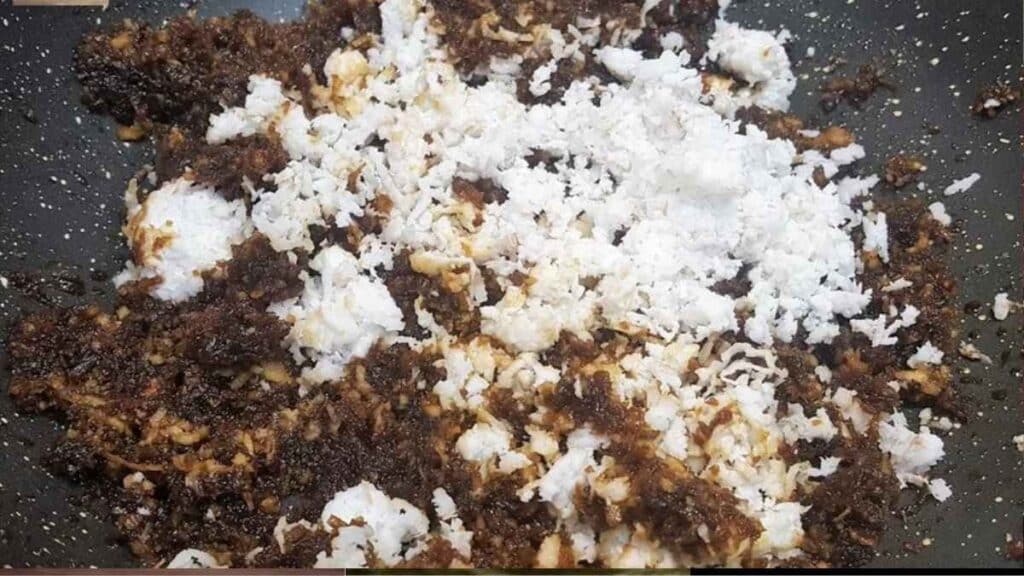
Heat a heavy-bottomed pan over low-medium heat. Add 2 cups of fresh grated coconut and dry-roast lightly for 2-3 minutes, stirring continuously. You’re not trying to brown it—just warm it and release oils slightly.
Time: 15 minutes cooking + 20-30 minutes cooling
Step 2: Make the Ukad (Rice Flour Dough)
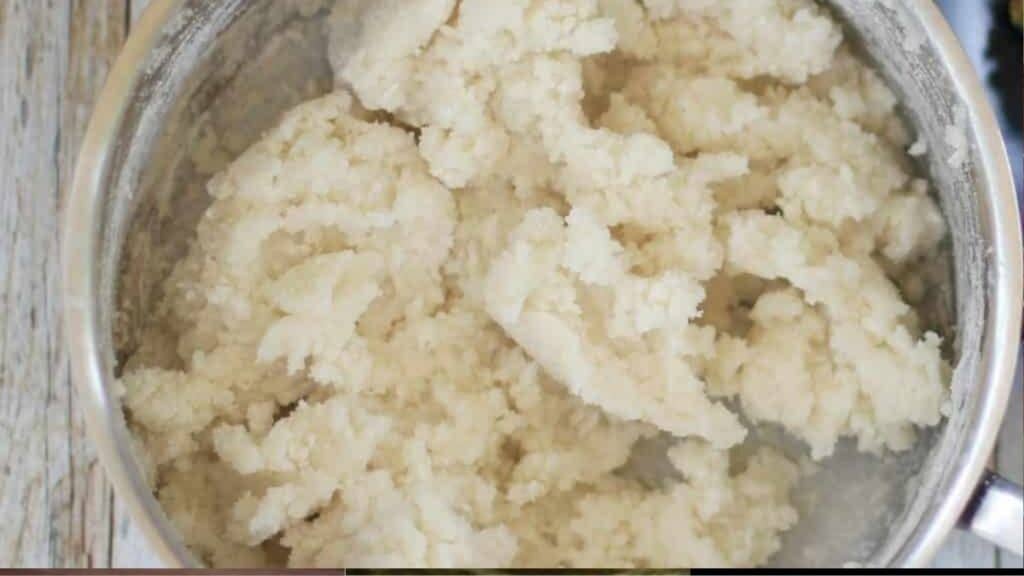
When the water is boiling hard, add 1½ cups of fine rice flour all at once. The research specifies: “Add rice flour all at once.”
Immediately stir vigorously with a wooden spoon or spatula. The mixture will absorb the water and come together into a thick, sticky mass. Keep stirring for 1-2 minutes until no dry flour remains.
Time: 15 minutes
Step 3: Shape the Modaks
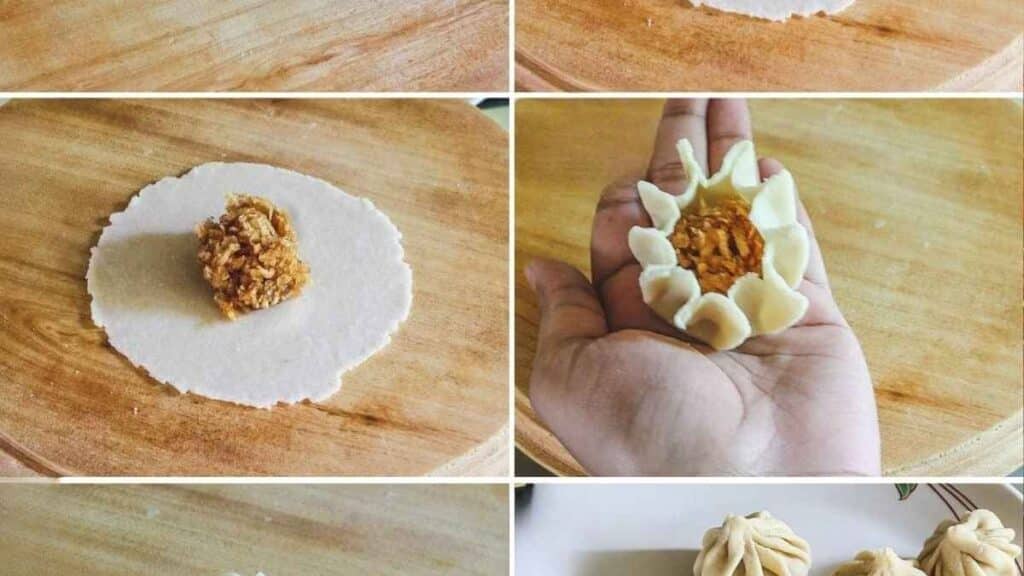
Hand Method (Traditional 21 Pleats):
Roll into a smooth ball, then flatten into a disc about 3 inches in diameter.
Time: 20-25 minutes for all 21
Step 4: Steam the Modaks
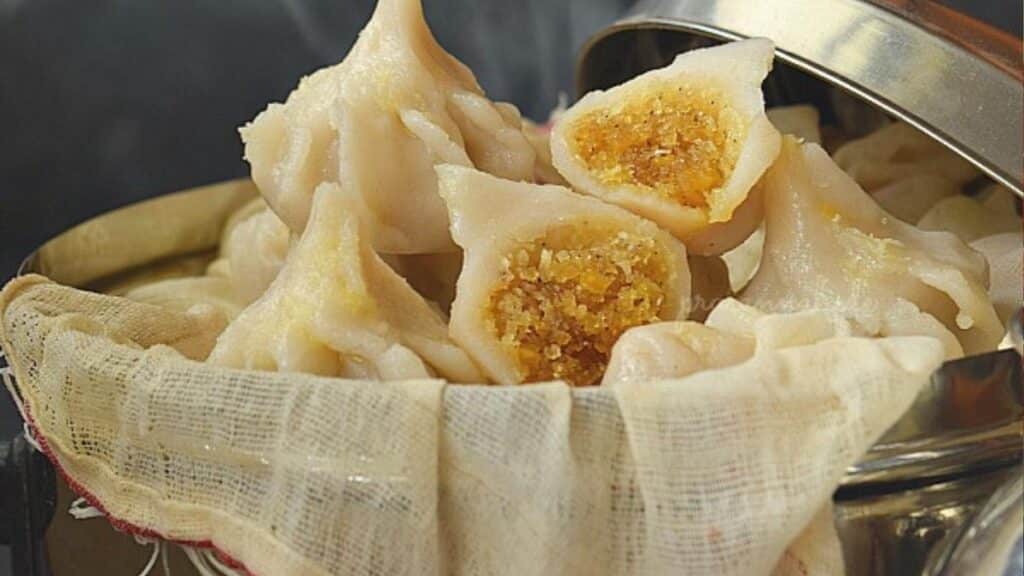
Prepare your steamer. If using banana leaf (traditional method), line the steamer tray with small pieces of banana leaf greased with ghee. The research notes: “Line steamer with banana leaf (optional)”—this prevents sticking and adds subtle aroma.
Time: 15 minutes
Step 5: Serve with Ghee
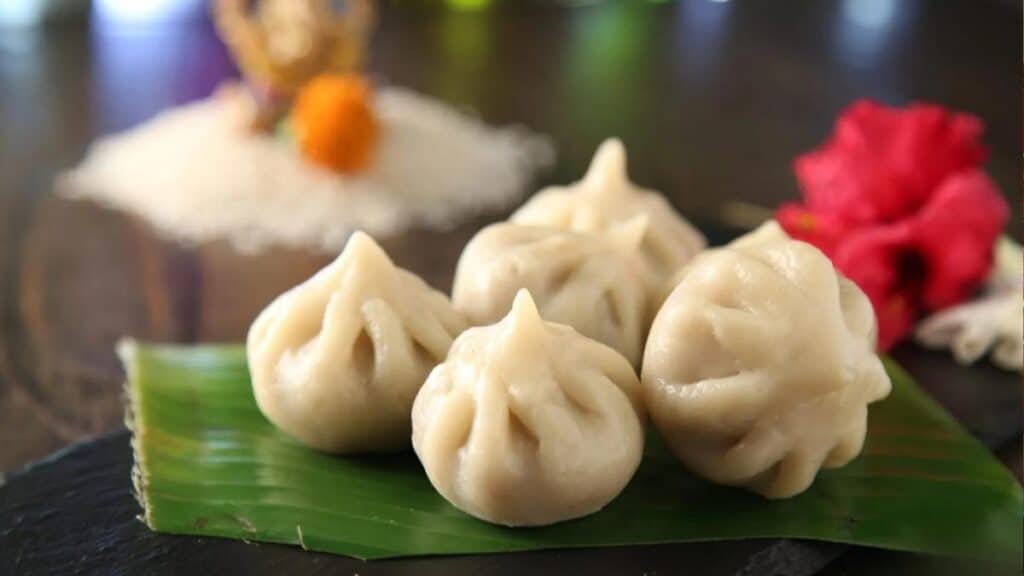
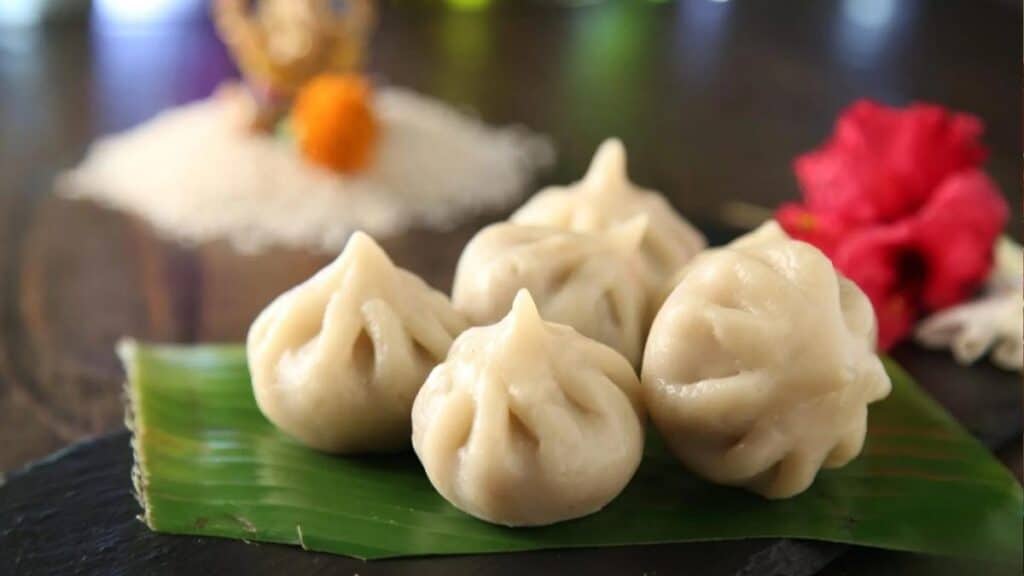
Transfer steamed modaks to a serving plate. Drizzle with warm ghee immediately before serving—this is traditional and adds richness and aroma.
Total Time: Approximately 60 Minutes
Make-Ahead Strategy
Day Before:
- Prepare coconut-jaggery filling
- Cool and refrigerate
Festival Morning:
- Make fresh ukad dough
- Shape and steam modaks
- Serve warm
The fresh preparation on the day ensures the best texture and spiritual purity for offering.
The Devotional Significance: Why Making Modak Is Prayer
In the landscape of Indian festival sweets, ukadiche modak occupies a unique spiritual position. The research states directly: “Ukadiche modak is not just a sweet—it represents devotional craftsmanship, symbolic pleating (21 folds), and sattvic cooking through steaming rather than frying.
The research quotes the spiritual dimension: “21 pleats honor Ganesha’s 21 names.” Each pleat isn’t decorative; it’s devotional. When you make a modak with the traditional 21 pleats, you’re honoring each of Ganesha’s names through your hands.
The numbers matter too. The research documents: “Traditional counts include 21 or 108 modaks in collective offerings” and “Traditional practice includes offering 21 modaks per plate.” These aren’t arbitrary—21 represents the names, 108 represents sacred completeness in Hindu numerology.
What makes ukadiche modak particularly appropriate for Gudi Padwa 2026 is how it combines celebration with devotion. The research emphasizes its role: “Ukadiche modak offers a lighter alternative to heavier fried sweets while maintaining ritual purity and festive richness.”
When you make ukadiche modak for Gudi Padwa—when you knead that rice flour dough while it’s still almost too hot to touch, when you create each pleat with care and intention, when you pinch the top closed and know it represents completion, when those modaks steam and their surface becomes glossy and you smell the nutmeg and cardamom rising—you’re not just making dessert.
Why is my modak dough cracking when I try to pleat it?
The research addresses this directly: “Dough cracking? Longer hot kneading + slight ghee addition.”
Why is the filling leaking from my modaks during steaming?
The research provides the solution: “Filling leaking? Ensure thicker edges and proper sealing.”
My steamed modaks have a sticky surface instead of glossy. What went wrong?
The research answers: “Sticky surface? Steam slightly longer and cool before handling.” Undercooking leaves the rice flour sticky rather than set.
