


Made from fresh chhena (the soft, crumbly fresh cheese before it becomes pressed paneer) kneaded with jaggery and cardamom until silky smooth, then shaped into discs or logs and chilled briefly, sandesh is ready in approximately 10 minutes of active work. No cooking.
If you’ve made sandesh before and ended up with grainy, crumbly results instead of smooth, silky fudge, this recipe will solve that. The secret is simpler than you think: knead longer. Much longer than feels necessary.
Table of Contents
What Exactly Is Sandesh?
Sandesh is a traditional Bengali sweet made from fresh chhena (curdled milk solids) kneaded with sweetener and cardamom until it forms a smooth, fudgy paste, then shaped into discs, logs, or decorative molds and chilled briefly to set. The basic version requires no cooking—just kneading, shaping, and chilling. More elaborate versions might be steamed (bhapa sandesh) or flavored with saffron, but the fundamental sandesh is refreshingly simple.
The texture is what defines good sandesh. Not crumbly like burfi. Not chewy like some milk-based sweets. Smooth and fudgy, with just enough structure to hold its shape but soft enough to melt on your tongue. The research describes it perfectly: sandesh should have a “melt-in-mouth” texture that comes from proper kneading technique rather than added ingredients.
The flavor profile is subtle and refined. The sweetness from jaggery (or sugar), the warmth from cardamom, the richness from milk solids—none of them overwhelming, all of them balanced. This restraint is characteristic of Bengali sweets, which tend to favor elegance over intensity.
| Detail | Information |
|---|---|
| Prep Time | 10 minutes |
| Chill Time | 30 minutes |
| Total Time | 40 minutes |
| Yield | 12 pieces |
| Servings | 12 people (1 piece each) |
| Cuisine | Bengali (adapted for Navratri fasting) |
| Course | Dessert, Prasad, Sweet |
| Diet | Vegetarian, Grain-Free, Vrat-Friendly |
| Difficulty Level | Easy |
| Calories per Piece | ~180 kcal |
Ingredients List
| Ingredient | Quantity | Notes |
|---|---|---|
| Fresh chhena/paneer | 250g | Fresh and soft; not pressed firm paneer |
| Jaggery powder | ½ cup | Or vrat-approved sugar |
| Green cardamom powder | ½ teaspoon | Freshly ground preferred |
| Warm milk | 1 teaspoon | For kneading if mixture is too stiff |
| Chopped pistachios | 2 tablespoons | For garnish |
| Arrowroot powder (optional) | ½ teaspoon | For firmness if chhena is too soft |
Why Sandesh Is Perfect for Navratri Days 8-9
As Navratri approaches its conclusion—day eight on March 26 and Navami on March 27, 2026—the atmosphere shifts slightly. The discipline of the fast continues, but there’s an anticipation of completion, a readiness to celebrate. Sandesh fits this moment with unusual precision:
No-cook preparation. The research notes that approximately 70 percent of urban households prefer instant sweets during fasting. When you’re coordinating puja schedules, Kanya puja preparations, and family meals, a sweet that requires no cooking—just 10 minutes of kneading and shaping—is genuinely practical.
Protein for sustained energy. The approximately 12 grams of protein per piece from casein (slow-release milk protein) provides sustained energy without the sugar crash that comes from sweets made purely from refined sugar and starch. The research emphasizes: “Slow-release milk protein sustains energy without a sugar crash.”
Elegant prasad option. Sandesh looks refined and intentional. When shaped into neat discs and garnished with chopped pistachios, it presents beautifully as prasad—appropriate for offering to the goddess and sharing with guests during Kanya puja.
Minimal ingredients ensure sattvic purity. Just chhena, jaggery, and cardamom. No elaborate ingredient lists. No questionable additives. This simplicity aligns with the sattvic principles that guide Navratri fasting.
Market trends confirm demand. The research notes that instant mithai searches rise approximately 80 percent during festivals, paneer sales surge approximately 65 percent before Navratri Navami, and festival mithai consumption rises approximately 75 percent toward final days. These aren’t random statistics—they’re evidence of collective need for exactly what sandesh provides.
Textural contrast with other desserts. If you’re also making chhena kheer (creamy and liquid), sandesh provides fudgy, dense contrast. The combination of both on a Navami thali offers sensory variety that makes the celebration feel complete.
Calcium support. The approximately 25 percent daily value of calcium per piece supports bone health after a period of potentially reduced calcium intake during fasting.
The Kneading Technique That Determines Texture
Before we get into the step-by-step, let’s establish the single most important factor in sandesh success: thorough kneading.
Here’s what’s happening at a textural level: fresh chhena is grainy. It’s made of thousands of tiny milk protein particles that haven’t yet bonded into a cohesive mass. When you knead—pressing, folding, pressing again—you’re mechanically breaking down those particles and encouraging them to form a smooth matrix. The longer you knead, the smoother the matrix becomes.
The research is emphatic about this: “Proper kneading is the most critical factor for smooth, melt-in-mouth sandesh.” And more specifically: “3–5 minutes of firm kneading eliminates graininess.”
The solution: knead for 3 to 5 full minutes. Use the heel of your palm. Press firmly. Fold the mixture over itself. Press again. Your forearm will get tired. That’s how you know you’re doing it right. When the mixture becomes glossy and cohesive—when it starts to come away from the sides of the bowl and form a single mass rather than staying crumbly—you’re getting close. Keep going another minute past the point where you think you’re done.
CHECK MORE ON: Chhena Kheer Recipe: Protein-Rich Dessert
Step-by-Step Instructions: Making Perfect Sandesh
Step 1: Prepare the Chhena
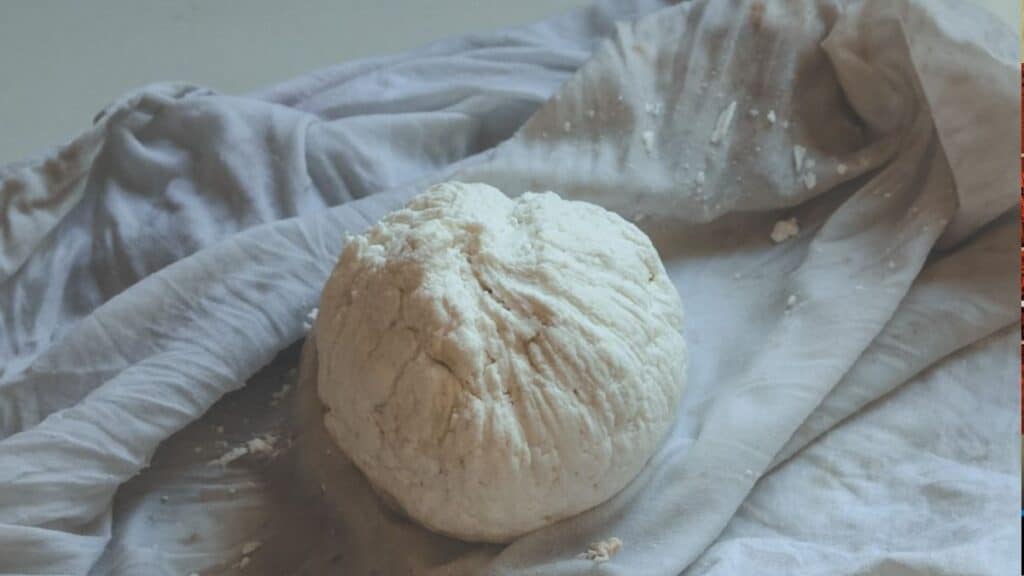
If you’re making fresh chhena: Bring 1 litre of milk to a boil. Add 2-3 tablespoons of lemon juice or vinegar. The milk will curdle immediately. Drain through muslin cloth, rinse under cold water to remove acid taste, squeeze out excess water gently. You should have approximately 250g of fresh, soft chhena.
Time: 15 minutes if making fresh chhena; 5 minutes if using store-bought
Step 2: Add Jaggery and Knead Thoroughly
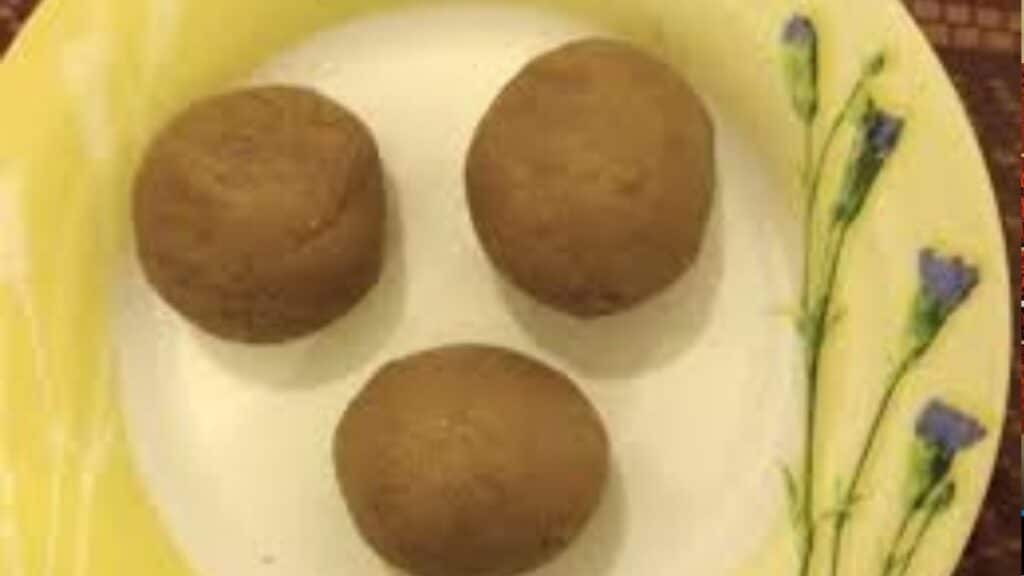
Now comes the critical step: knead firmly for 4 to 5 full minutes. Use the heel of your palm. Press down hard. Fold the mixture over. Press again. Work the mixture across the entire surface of the plate or bowl. You’re aiming for a transformation from grainy and crumbly to smooth and glossy.
Time: 5-6 minutes
Step 3: Add Cardamom and Final Kneading
Add ½ teaspoon of green cardamom powder. Knead for another minute to distribute the cardamom evenly throughout the mixture. Taste a tiny bit—it should be sweet, smooth, and warmly fragrant from the cardamom.
Time: 1 minute
Step 4: Shape the Sandesh
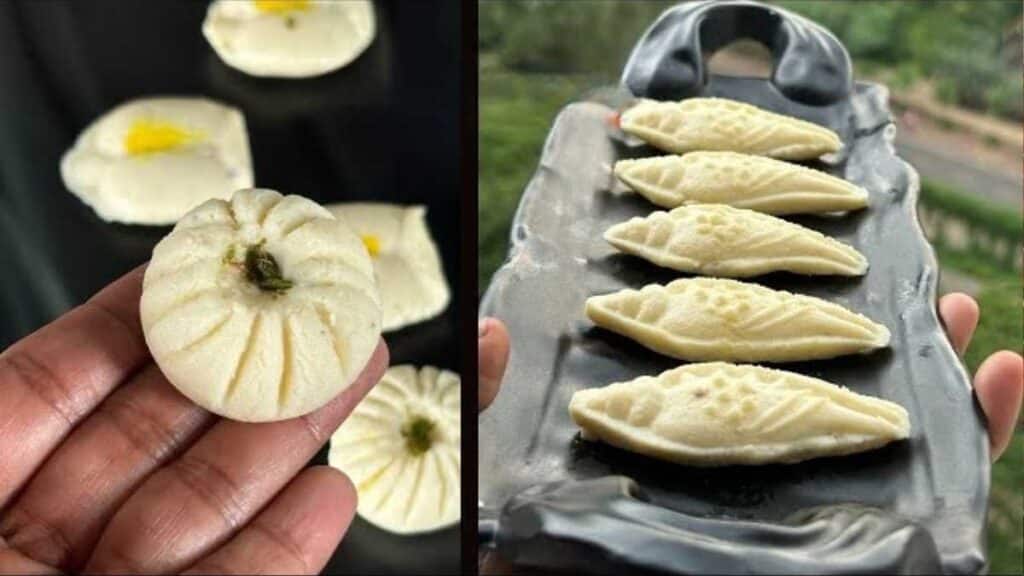
Divide the mixture into 12 equal portions. Roll each portion between your palms to form a smooth ball, then gently flatten into a disc about 2 inches in diameter and ½ inch thick. Or shape into short logs. Or press into decorative molds if you have them.
The mixture should be worked while it’s still fresh and pliable. The research warns: “Shape immediately before mixture dries.”
Time: 3-4 minutes
Step 5: Chill to Set
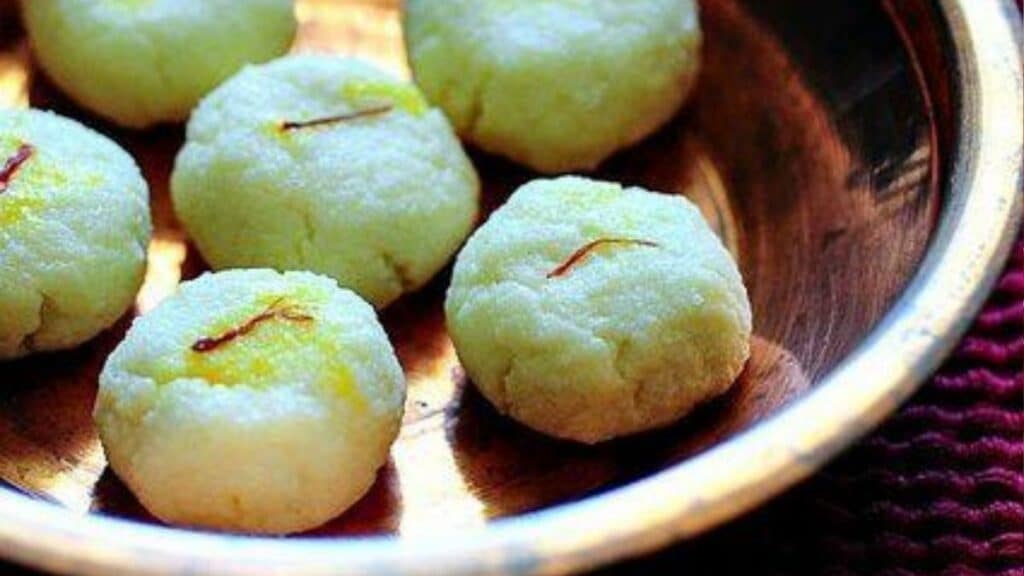
Refrigerate the sandesh for 30 minutes. The research notes that “30 minutes chilling firms texture without drying.” During this time, the sandesh will firm up slightly and the flavors will set. The texture will transform from soft and malleable to firm enough to handle easily but still tender and fudgy in the mouth.
Time: 30 minutes
Total Time: 40 Minutes (10 minutes active + 30 minutes chilling)
Serving Suggestions
| Serve With/As | Context |
|---|---|
| Navami prasad | Primary use after morning puja |
| Kanya puja distribution | Individual wrapped pieces for young girls |
| Alongside chhena kheer | Textural contrast: fudgy vs creamy |
| Gift to neighbors | Traditional festival sharing |
| Navratri thali dessert | Completes celebratory meal |
| Tea-time sweet | Post-aarti refreshment |
Ideal Navratri Timing
- Day 8 Evening (March 26, 2026): Prepare ahead for Navami
- Navami Morning (March 27, 2026): Fresh for puja and Kanya puja
- Any Day: Quick elegant sweet when needed
Make-Ahead Strategy for Navami
Prepare fresh chhena the evening before Navami. Refrigerate overnight. On Navami morning, let it come to room temperature, then knead with jaggery and shape. Total morning time: just 10 minutes of active work.
Why This Recipe Still Matters
In the landscape of Navratri desserts, sandesh represents something quietly revolutionary: simplicity as strategy. While other sweets require cooking, elaborate technique, or multiple steps, sandesh asks for just one thing—thorough kneading—and delivers elegance, nutrition, and ceremonial appropriateness in return.
The research notes that instant mithai searches rise approximately 80 percent during festivals, and approximately 70 percent of urban households prefer instant sweets during fasting. These aren’t just convenience statistics—they’re evidence of genuine need for exactly what sandesh provides: a sweet that honors the occasion without demanding hours of preparation.
At approximately 12 grams of protein per piece from pure milk solids, sandesh is one of the few Indian sweets with genuine nutritional strategy rather than just ceremonial value. The research states: “Pure milk solids deliver protein density rarely found in sweets.” During Navratri, when meals are restricted and protein sources are limited, this matters.
When you make sandesh for Navami—when you knead that fresh chhena for a full five minutes until your forearm aches and the mixture becomes glossy and smooth, when you shape it into neat discs and press pistachio pieces gently into the surface, when you chill it briefly and offer it as prasad—you’re participating in something larger than just making dessert.
Why is my sandesh grainy and crumbly instead of smooth?
Insufficient kneading is almost always the cause. The research is clear: “3–5 minutes of firm kneading eliminates graininess.
Can I use store-bought paneer instead of fresh chhena?
You can, but the texture won’t be quite as good. Fresh chhena is softer and more receptive to kneading.
Do I need to cook sandesh or can it be eaten raw?
Traditional sandesh (the basic version in this recipe) requires no cooking—it’s entirely a kneading and shaping preparation
