



There’s a specific challenge that emerges around day six of Navratri. You’ve been eating well—sabudana khichdi, kuttu puri, various potato preparations. But somewhere in the middle of the nine days, when you’re making lunch and looking at another plate of the same rotation, you realize what you’re actually craving isn’t a different curry.
Ready in 25 minutes from flour to plate, rajgira puri fits perfectly into busy Navratri schedules. And if you’ve tried making it before and ended up with cracked, leathery disappointments instead of puffy golden rounds, this recipe is going to solve that.
Table of Contents
What Exactly Is Rajgira Puri?
Rajgira puri is a gluten-free fasting bread made from rajgira flour—also known as amaranth flour or ramdana atta—bound together with mashed boiled potato and deep-fried until it puffs into a soft yet slightly nutty flatbread. The potato isn’t just a filler ingredient; it’s structurally essential. Because rajgira flour contains no gluten (the protein network that gives wheat dough its stretch and strength), it can’t hold together on its own. The starch from mashed potato creates the binding matrix that allows the dough to roll without crumbling and to puff when it hits hot oil.
The texture is distinct from wheat puri. Where wheat puri is tender and neutral, rajgira puri has a subtle nuttiness and a slightly denser chew. It’s satisfying in a way that makes you feel like you’ve eaten bread rather than just a vehicle for curry.
What makes it particularly valuable during Navratri is what it brings nutritionally. Most fasting breads are pure carbohydrate—kuttu puri, singhara puri, even sabudana-based breads. Rajgira puri delivers approximately 8 grams of protein per puri from a complete protein source. During a nine-day period when protein is scarce, this matters enormously.
Recipe Overview
| Detail | Information |
|---|---|
| Prep Time | 15 minutes |
| Cook Time | 10 minutes |
| Total Time | 25 minutes |
| Yield | 12 puris |
| Servings | 4 people (3 puris each) |
| Cuisine | North Indian (Vrat/Fasting) |
| Course | Bread/Accompaniment |
| Diet | Vegetarian, Gluten-Free, Grain-Free, Vrat-Friendly |
| Difficulty Level | Medium |
| Calories per Puri | ~120 kcal |
Ingredients List
For the Dough
| Ingredient | Quantity | Notes |
|---|---|---|
| Rajgira flour (Amaranth flour) | 1 cup (120g) | Also called ramdana atta |
| Boiled potato | 1 large (150g) | Mashed while still warm |
| Black pepper powder | ½ teaspoon | For subtle warmth |
| Roasted cumin powder (optional) | ½ teaspoon | For flavor depth |
| Sendha namak (Rock salt) | To taste | Regular salt if not fasting |
| Ghee | 1 teaspoon | For binding and richness |
| Water | 1-2 tablespoons | Add only if needed |
Complete Protein Advantage
Rajgira (amaranth) is one of the few plant sources that provides complete protein—meaning it contains all nine essential amino acids that your body can’t produce on its own. This is unusual and valuable during fasting when protein sources are severely limited.
Why Rajgira Puri Is Perfect for Navratri
Rajgira puri addresses several specific nutritional gaps that emerge during extended fasting:
Complete protein for muscle maintenance. The research states it clearly: “Lysine-rich flour helps fight muscle loss during long fasts.” Lysine is an essential amino acid that’s typically absent or minimal in plant proteins. During periods of calorie restriction and limited protein intake, having access to complete protein helps your body maintain muscle mass rather than breaking it down for amino acids.
Iron for energy levels. With approximately 7mg of iron per 100g of rajgira flour (translating to roughly 20 percent of daily value per puri), rajgira puri helps prevent the fatigue and weakness that can come from iron-depleted fasting diets. Women especially need this during Navratri.
Magnesium to prevent cramping. The approximately 30 percent daily value of magnesium per puri supports muscle function and helps reduce the cramping that sometimes happens during fasting, particularly if you’re also standing through long pujas or dancing during garba.
Twenty-five minute preparation. From flour to finished puri, the entire process takes 25 minutes. During Navratri when time is structured around puja schedules, that efficiency is genuinely practical.
Batch production capability. A single batch makes 12 puris—enough for lunch and dinner for a small family, or lunch for a larger group. This makes it efficient for feeding multiple people or planning ahead.
The Thick-Rolling Technique That Prevents Cracks
Before we get into the step-by-step, let’s address the most common problem people have with rajgira puri: cracking during rolling or frying.
The cause is almost always the same: rolling too thin.
If you roll thin (the way you would with wheat puri), that starch binding isn’t strong enough to prevent cracks. The dough fractures. The cracks get worse when the puri hits hot oil. You end up with leathery, irregular discs instead of puffy rounds.
The solution: roll thick. Specifically, roll to approximately ¼ inch thickness—noticeably thicker than you would roll wheat puri. The research emphasizes this repeatedly: “Thick rolling (¼ inch) prevents cracking and improves puff.”
CHECK MORE ON:Kuttu Ki Puri Recipe
Step-by-Step Instructions: Making Perfect Rajgira Puri
Step 1: Prepare the Potato
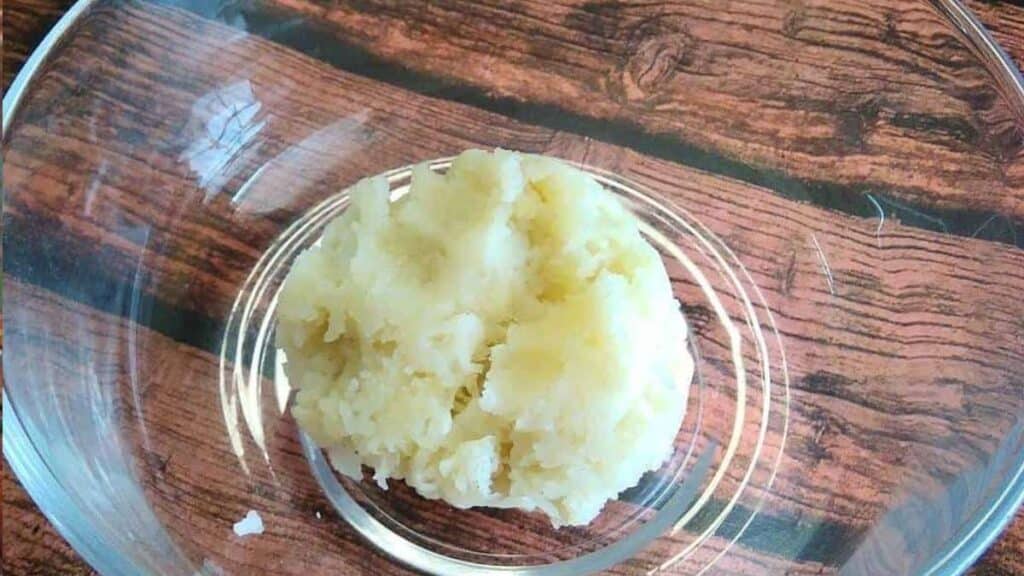
Boil 1 large potato (approximately 150g) in water until completely tender—you should be able to pierce it easily with a fork. This takes about 15 minutes in a regular pot or 2 whistles in a pressure cooker.
Once cooked, peel while still warm and mash thoroughly until completely smooth with no lumps. The warmth is important—warm potato integrates better with the flour.
Time: 15 minutes (can be done ahead)
Step 2: Make the Dough
In a large mixing bowl, combine:
1 teaspoon ghee
1 cup rajgira flour
The mashed warm potato
½ teaspoon black pepper powder
½ teaspoon roasted cumin powder (if using)
Sendha namak to taste
Time: 5 minutes mixing + 10 minutes resting
Step 3: Shape and Roll the Puris
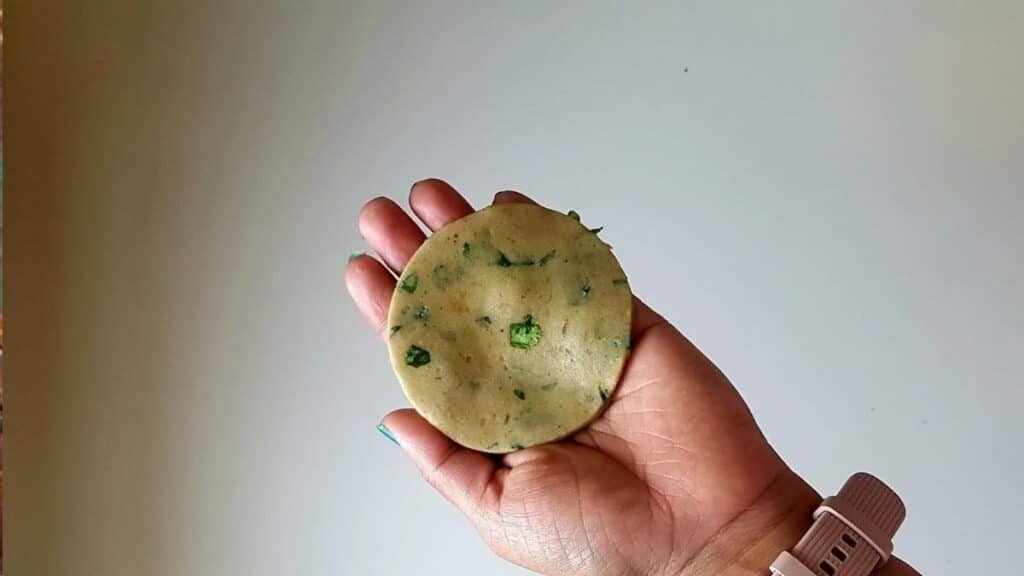
Divide the dough into 12 equal portions. Roll each portion between your palms to form a smooth ball about the size of a small lemon.
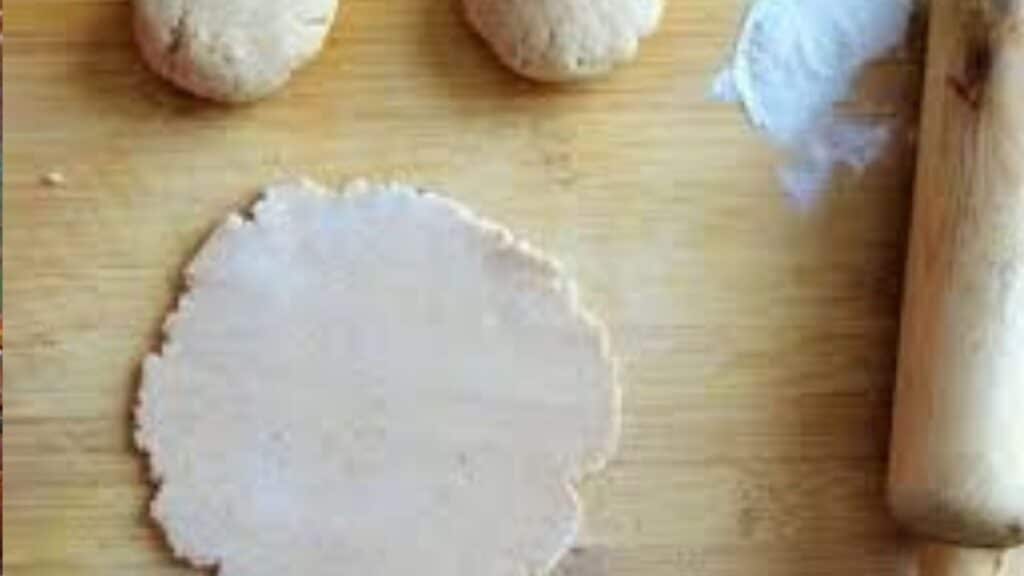
Take one dough ball and flatten it slightly between your palms. Dust both sides lightly with rajgira flour. Using a rolling pin on a flat surface dusted with rajgira flour, roll into a circle approximately 4-5 inches in diameter and—this is critical—approximately ¼ inch thick.
Do not roll thin. Thick is good. Thick prevents cracks. Thick creates puff.
Time: 10 minutes for all 12
Step 4: Heat the Oil

Heat oil or ghee for deep frying in a wide, heavy-bottomed pan or kadhai. You need enough oil for the puris to float freely—at least 2-3 inches deep.
The research states it clearly: “Hot oil makes instant puff—cold oil shrinks the puri.”
Time: 5 minutes
Step 5: Fry the Puris
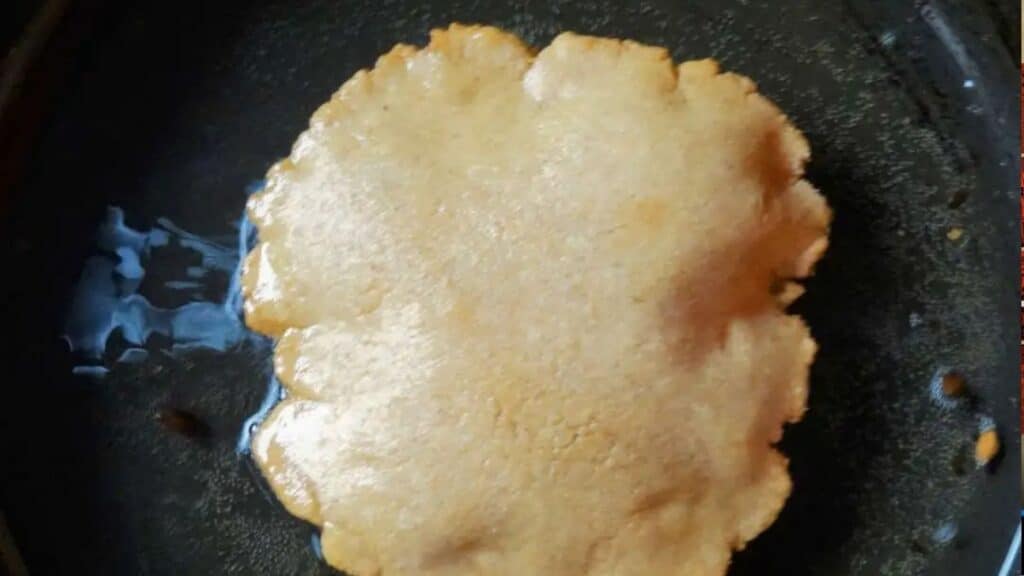
Gently slide one rolled puri into the hot oil. It should immediately start to sizzle and puff slightly. After about 10-15 seconds, use a slotted spoon to gently press down on the puri, which encourages it to puff up fully.
Fry for 45-60 seconds on the first side until golden brown. Flip and fry the second side for another 30-45 seconds until evenly golden.
Time: 8-10 minutes for all 12 puris
Step 6: Serve Immediately
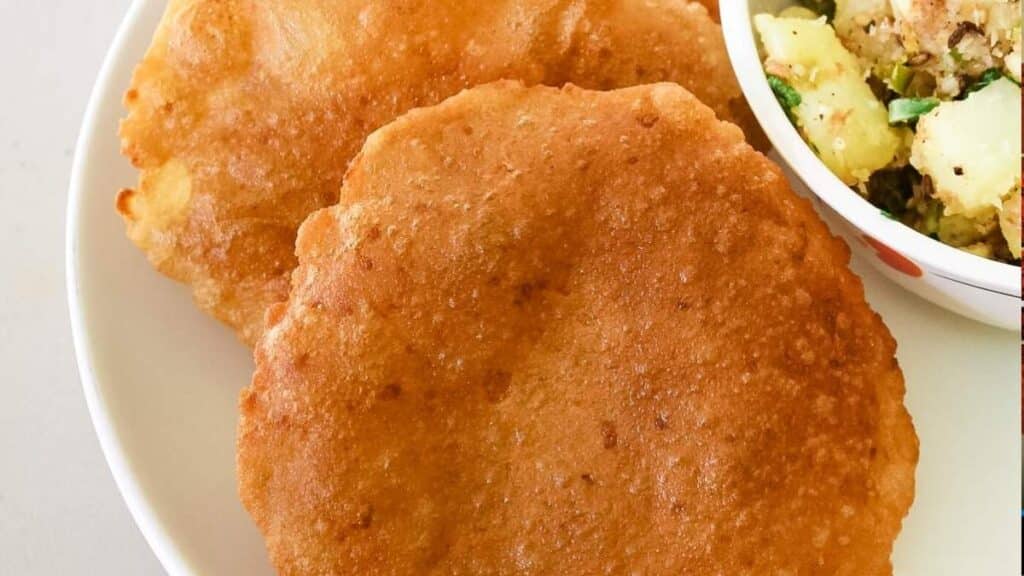
Rajgira puris are best served hot and fresh. Arrange them on a serving plate and serve immediately with your choice of vrat-friendly curry or accompaniment.
Total Time: 25 Minutes
Storage and Make-Ahead Tips
| Component | Storage Method | Duration | Notes |
|---|---|---|---|
| Fried puris | Store in cloth-lined container | 2 days at room temp | Prevent moisture buildup; cloth absorbs steam |
| Dough balls (unfried) | Freeze in single layer | Up to 1 week | Thaw, roll fresh, fry for best puff |
| Rajgira flour | Airtight container in cool place | Months | Buy fresh before Navratri |
| Boiled potato | Refrigerate | Use within 1 day | Mash while warm for dough |
Make-Ahead Strategy
Prepare and freeze dough balls before Navratri. On fasting days, thaw, roll, and fry fresh for maximum puff and best texture. This reduces active preparation time to just 10-12 minutes.
Why This Recipe Still Matters
In the landscape of Navratri fasting, rajgira puri occupies a uniquely important nutritional position. The research notes that millet recipes surge approximately 70 percent during Indian festivals, and rajgira product usage appears in approximately 80 percent of North Indian vrat thalis. But these statistics don’t capture the functional reason why.
The reason is protein. Complete protein. During a nine-day period when most meals are carbohydrate-heavy—sabudana, potatoes, kuttu—having access to a bread that delivers approximately 8 grams of complete protein per serving genuinely changes your nutritional equation. The research states it directly: “Lysine-rich flour helps fight muscle loss during long fasts.”
When you make rajgira puri properly—when that dough comes together moist and pliable from warm mashed potato, when you resist the urge to roll thin and instead roll thick, when those puris hit 180°C oil and immediately puff up golden and beautiful—you’re experiencing what happens when traditional fasting wisdom meets genuine nutritional strategy.
Why do my rajgira puris keep cracking when I roll them?
Cracking during rolling means either the dough is too dry or you’re rolling too thin. Solution: Ensure your potato is mashed while warm and integrated completely with the flour. If the dough still feels dry, add water 1 tablespoon at a time until it’s pliable.
Can I make rajgira puri without potato?
Potato is structurally essential because it provides the starch binding that rajgira flour lacks due to having no gluten.
Why aren’t my rajgira puris puffing?
Puffing failure has three common causes: (1) Oil temperature too low—the oil must be approximately 180°C; test with a small dough piece that should rise immediately.
