


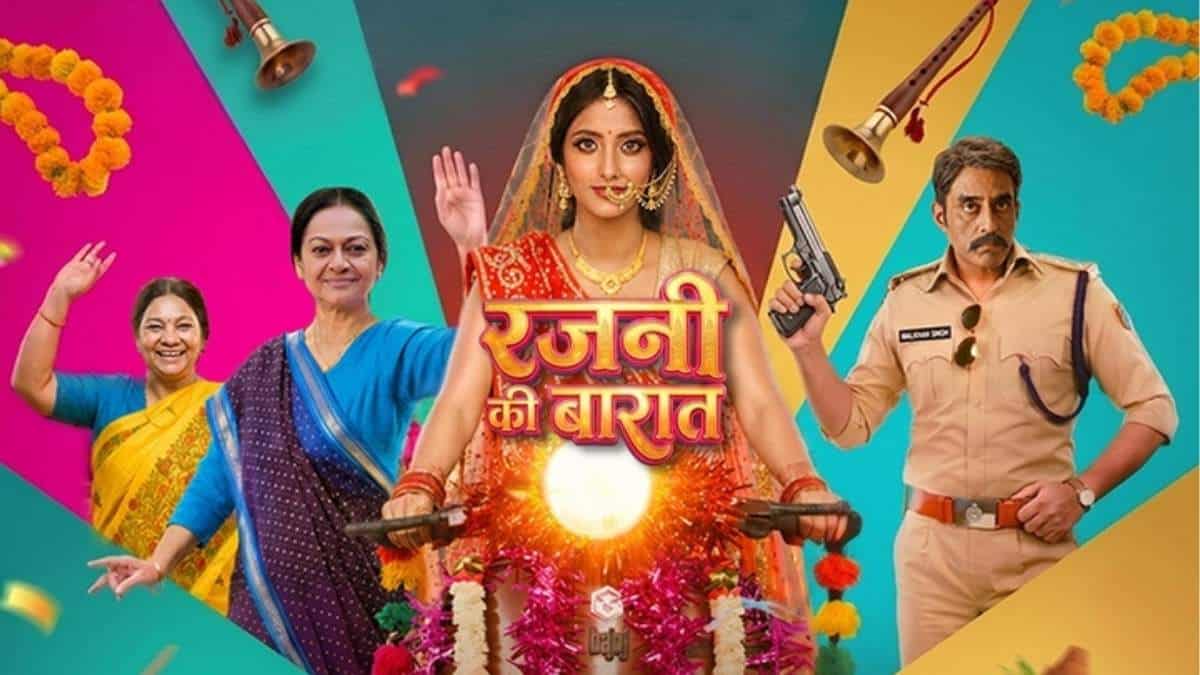
Rajni Ki Baraat arrives in theaters on May 29, 2026, as one of the most refreshingly original Hindi films of the year — a story that dares to flip the script on age-old wedding traditions and delivers its message with warmth, humor, and genuine emotional power. Rooted in the cultural richness of Mithila and powered by a standout lead performance, this is a film that speaks directly to modern India without ever losing its small-town soul.
Rajni Ki Baraat is a feel-good, female-led drama set in Darbhanga, Bihar, about a courageous school teacher who leads her own wedding procession to the groom’s house — challenging conservative traditions and patriarchal authority head-on. Backed by strong performances, authentic cinematography, and an emotionally resonant premise, the film is a worthy theatrical experience despite a slightly sluggish second half and an underdeveloped climax.
Cast & Crew
| Role | Name |
|---|---|
| Director | Aditya |
| Screenplay & Dialogues | Aditya Aman, Anupam Purohit |
| Cinematography | Arup Mandal |
| Rajni | Ulka Gupta |
| Rajjan | Kanishk Vijay |
| Malkhan Singh (Inspector) | Ashwath Bhatt |
| Grandmother | Zarina Wahab |
| Mother | Sunita Rajwar |
Plot Summary
Set in the fog-draped lanes of Darbhanga, the story centers on Rajni (Ulka Gupta), a spirited school teacher who grew up on the streets and tea stalls of the city, carrying the emotional weight of a fatherless household and the warmth of her mother and grandmother. She falls in love with Rajjan (Kanishk Vijay), a shy, sensitive poet — but their love faces an enormous obstacle in the form of Rajjan’s father, Malkhan Singh (Ashwath Bhatt), a formidable police inspector who is fiercely opposed to love marriages and has already arranged his son’s wedding with a girl from a wealthy family.
When Malkhan catches the couple together and Rajjan crumbles under his father’s authority, Rajni refuses to back down. She makes a bold announcement that shakes the entire town: she will lead her own wedding procession directly to the groom’s house. What follows is a spirited, emotional, and often hilarious journey involving local friends, neighbors, and even internet-savvy YouTubers rallying behind Rajni’s cause — all building toward a climax that, while somewhat restrained, carries the film’s empowering message home.
Also Read: Shree Baba Neeb Karori Maharaj (2026) Movie Review: A Devotional Journey That Touches the Soul
Performances
Ulka Gupta as Rajni
Ulka Gupta carries the entire film on her shoulders with extraordinary conviction and does so effortlessly. Her Bihari accent is completely natural — never forced or caricatured — and her ability to shift between playful sass, quiet vulnerability, and fierce determination makes Rajni one of the most compelling female protagonists in recent Hindi cinema. Her emotional scenes are deeply felt, making the audience genuinely invested in her journey. This is, without question, the defining performance of her career so far.
Ashwath Bhatt as Malkhan Singh
Ashwath Bhatt brings a powerful, layered energy to the role of the stubborn police inspector. His booming voice, imposing screen presence, and sharp dialogue delivery make Malkhan Singh a convincing antagonist. The confrontational scenes between Bhatt and Gupta are the film’s dramatic centerpiece, crackling with tension and authenticity.
Zarina Wahab as the Grandmother
Zarina Wahab’s portrayal of the modern-minded, supportive grandmother is a quiet joy throughout the film. She brings decades of experience and effortless grace to a character who serves as Rajni’s moral anchor, infusing every scene she’s in with genuine affection and warmth.
Sunita Rajwar as the Mother
Sunita Rajwar is a delight as Rajni’s fretful, society-conscious mother. Her comic timing is impeccable, delivering the film’s lighter moments with ease, while also conveying a mother’s real anxieties about her daughter’s unconventional choices. She is a perfect blend of humor and heart.
Also Read: The Great Grand Superhero Review: Jackie Shroff’s Desi Superhero Saga Is Pure Heart and Chaos
Kanishk Vijay as Rajjan
Kanishk Vijay brings an endearing innocence and sincerity to the role of Rajjan. The script deliberately positions him as the quieter, more timid presence in the relationship, and Vijay navigates this with a subtle, understated charm. While the writing limits the full scope of his character, he ensures Rajjan remains sympathetic and likable throughout — and his chemistry with Ulka Gupta in the film’s gentler moments is genuinely sweet.
Technical Craft
Cinematography by Arup Mandal is one of the film’s undeniable strengths. The camera captures Darbhanga with authentic, loving detail — the carvings on old havelis, the misty lake shores, the vibrant narrow market lanes — presenting Bihar as beautiful, culturally rich, and full of life, a welcome departure from Bollywood’s tired stereotypes of the region. The lighting in emotional and romantic scenes is warm and evocative.
Direction by Aditya demonstrates a genuine understanding of small-town spirit. He avoids the heavy-handed messaging trap that many social-issue films fall into, instead allowing the themes of women’s empowerment and defiance of patriarchy to emerge organically through character moments and narrative choices. The film’s opening — with Rajni standing beside her late father’s rusty scooter on a foggy morning — is particularly striking in its quiet emotional power.
Music draws intelligently from Bihar’s folk traditions. The judicious use of folk instruments gives the film an authentic rustic feel, and the climactic baraat sequence backed by dhols and folk tunes is genuinely stirring.
Also Read: Ego Raman (2026) Movie Review: A Quiet Psychological Drama That Dares to Go Dark
Strengths & Weaknesses
Strengths
- Refreshingly original concept — a female-led baraat is a bold, timely premise executed with genuine cultural grounding
- Ulka Gupta’s towering lead performance — one of the year’s best so far
- Authentic, beautiful depiction of Darbhanga and Mithila culture — including a lovely nod to the Swayamvar of Sita Mata
- Strong supporting ensemble — every actor brings something meaningful to the table
- Balanced tone — the film handles comedy, romance, and social commentary without letting any single element overwhelm the others
- Refreshing portrayal of Bihar — cultural richness over tired stereotypes
Weaknesses
- The climax falls short — the film’s most powerful idea deserves a more nuanced, hard-hitting payoff
- Sluggish second half — pacing noticeably dips post-interval, and the story loses some momentum
- Rajjan’s character is underdeveloped — the male lead’s timidity, while intentional, is taken too far, leaving an imbalance in the central relationship
- The social media campaign subplot feels rushed — the scenes involving Rajni’s friends rallying online support needed more space to breathe
- No standout songs — the music, while pleasant and culturally appropriate, doesn’t produce a memorable track that lingers after the credits roll
Final Verdict: ⭐⭐⭐⭐ / 5 — 4 Stars
Rajni Ki Baraat is a film that deserves to be seen — not because it is flawless, but because it is necessary. In a cinematic landscape still navigating how to tell women’s stories without reducing them to spectacle or sermons, this film finds a genuine, human path. Ulka Gupta’s Rajni is a character audiences will carry with them long after leaving the theater: spirited, stubborn, and deeply real. Pair that with authentic craftsmanship behind the camera, a warm and capable ensemble, and a cultural setting depicted with rare beauty and honesty, and you have a film well worth the trip to the multiplex.
A bold, heartfelt love story rooted in the spirit of Darbhanga — Rajni Ki Baraat leads its own procession with pride.
What is the age rating of Rajni Ki Baraat?
Rajni Ki Baraat is suitable for a general audience. It carries a U/A certification, making it appropriate for viewers of most age groups, though parental guidance is advised for younger children given some dramatic confrontational scenes.
Can we watch Rajni Ki Baraat with kids?
Yes, Rajni Ki Baraat is largely a family-friendly film. Its themes of courage, love, and standing up for one’s rights are positive and inspiring.
Is Rajni Ki Baraat based on a true story?
No, Rajni Ki Baraat is not based on a specific true story.
