


The month of Sawan is deeply intertwined with Lord Shiva’s divine presence, and for many devotees, it becomes a time not only for prayer and fasting but for spiritual pilgrimages that transcend the physical world. One of the most revered spiritual circuits during this time is the Panch Kailash Yatra—a sacred journey across five mystical abodes associated with Lord Shiva.
While the journey is physically demanding, it’s also spiritually liberating, offering seekers a once-in-a-lifetime chance to connect with Shiva’s cosmic energy across the vast Himalayan range.
Here’s a sacred exploration of the five revered Kailash peaks that form the Panch Kailash, ideal for a soulful retreat this Sawan.
In this Article
1. Srikhand Kailash – The Abode of the Blue-Throated Lord
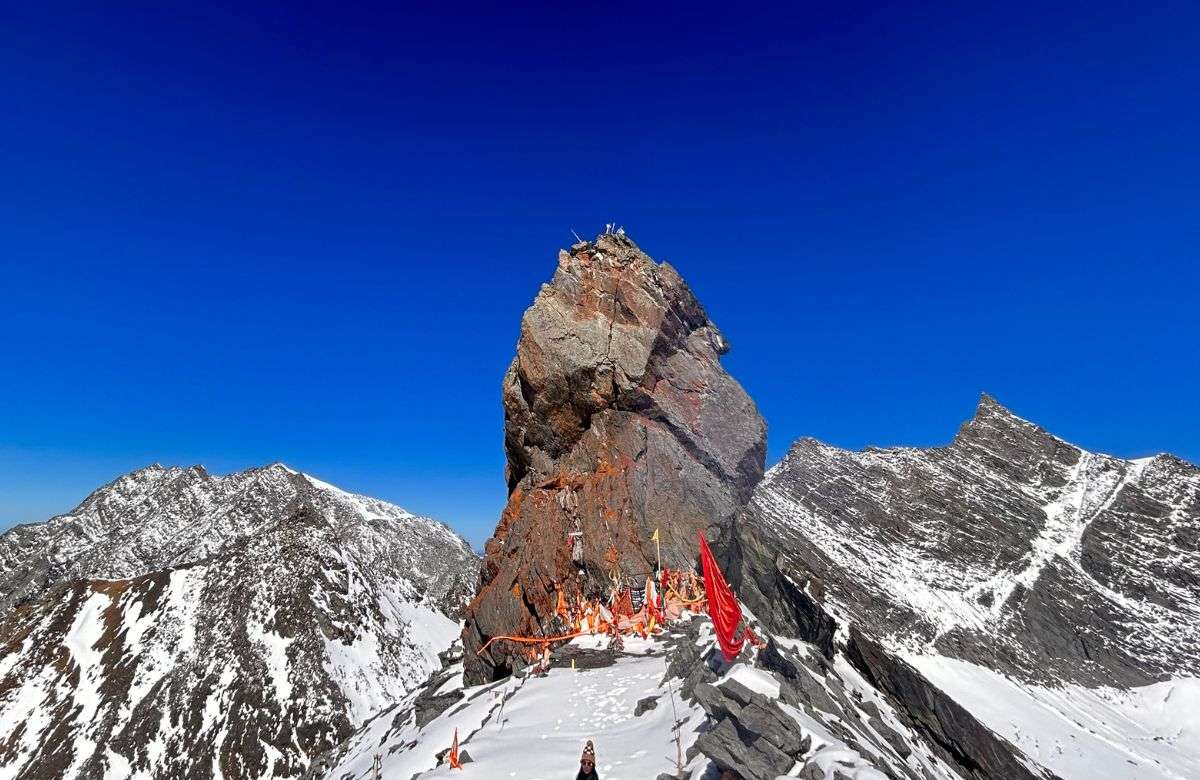
Situated deep within Himachal Pradesh’s Kullu region, Srikhand Kailash stands tall at an altitude of 5,155 meters. What makes this peak extraordinary is the natural Shivling formation that sits atop, uncovered by snow even in winter. According to legend, Lord Shiva meditated here after consuming the deadly poison (Halahala) during the churning of the cosmic ocean (Samudra Manthan).
The Srikhand Mahadev Yatra, which usually takes place during Sawan, attracts thousands of pilgrims who brave the rugged terrain to glimpse the divine.
Check Out: Sawan 2025: 7 Powerful Ways Hindus Worldwide Can Joyfully Celebrate the Auspicious Month
2. Adi Kailash – The Primordial Mountain of Shiva’s Presence
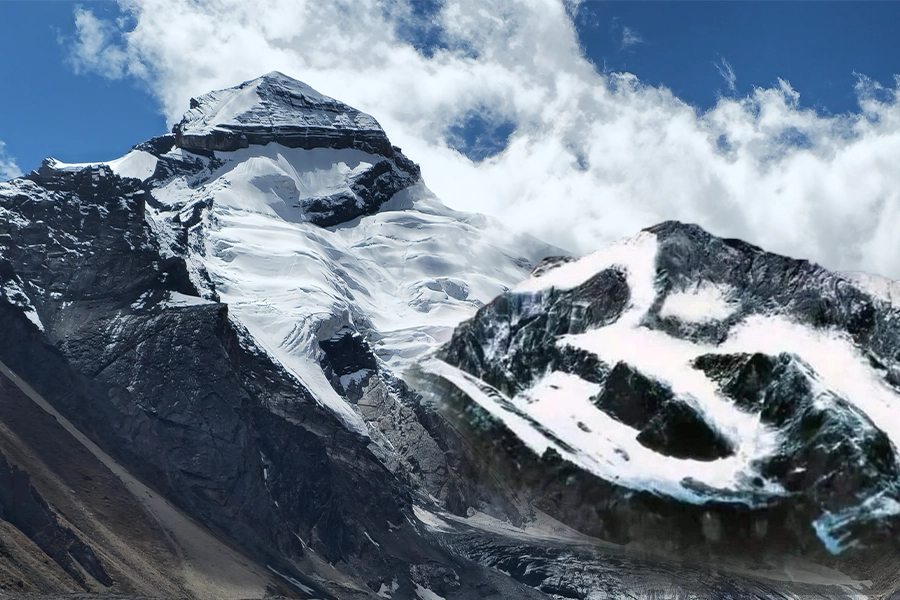
Known as the ‘Chhota Kailash’ or ‘Bhootnath Kailash’, Adi Kailash is located in the Pithoragarh district of Uttarakhand, near the Indo-Tibetan border. At 6,191 meters, it resembles Mount Kailash in Tibet and is considered Shiva’s earliest manifested abode on earth.
Unlike Mount Kailash in Tibet, Adi Kailash is accessible to Indian pilgrims and has become a popular alternative for those unable to travel internationally. The journey takes one through the Om Parvat, where snow naturally forms the sacred syllable “ॐ” – a rare sight that leaves pilgrims spellbound.
3. Manimahesh Kailash – The Jewel in Shiva’s Crown

Nestled in the Chamba district of Himachal Pradesh, Manimahesh Kailash is revered for its shimmering glow under sunlight—giving it the name ‘Mani’ (jewel) Mahesh (great god). The Manimahesh Lake, located at the base of the peak, is believed to be where Shiva and Parvati bathe during their celestial visits.
The Manimahesh Yatra during Sawan is especially significant. It culminates in a holy dip in the lake, believed to wash away sins and grant moksha (liberation).
4. Kinnaur Kailash – The Silent Sentinel of the Devas

In the mystical Kinnaur Valley of Himachal Pradesh, Kinnaur Kailash is home to a 79-foot tall natural Shivling, standing vertically on the mountain’s edge. The sunlight striking the Shivling creates an aura of golden energy, leaving devotees awestruck.
As per ancient lore, it is at this very peak that Shiva summoned deities during winter, holding divine assemblies. The epic Mahabharata even mentions this site, where Arjuna was blessed with the Pashupatastra, Shiva’s divine weapon, after intense penance.
5. Mount Kailash – The Ultimate Cosmic Axis

Located in Ngari Prefecture, Tibet, Mount Kailash is the most sacred of the five and revered not just in Hinduism, but also in Buddhism, Jainism, and the Bon tradition. With an elevation of 6,638 meters, this pyramid-shaped peak is regarded as the axis mundi—the cosmic center of the universe.
Believed to be the eternal abode of Lord Shiva and Goddess Parvati, this peak is also near the source of four major rivers: the Indus, Brahmaputra, Sutlej, and Karnali. Circumambulating the mountain (a 52-km Parikrama) is said to erase all sins and grant salvation.
While Mount Kailash remains in Tibet, Indian pilgrims can access it through the Kailash Mansarovar Yatra, organized by the Indian government.
Why Undertake Panch Kailash Yatra During Sawan?
- Spiritual Significance: Sawan is considered Lord Shiva’s most auspicious month. Performing pilgrimages during this time is said to yield 100x merit.
- Ritual Alignment: Many Kailash yatras coincide with Sawan dates, offering synchronized opportunities for fasting, puja, and pilgrimage.
- Seasonal Accessibility: Most Kailash sites become accessible in Sawan, post-snowmelt, making travel possible (especially in Uttarakhand and Himachal).
Travel Tips for Devotees Planning Panch Kailash Yatra 2025
- Fitness First: These yatras involve trekking at high altitudes. Prepare physically at least 1–2 months prior.
- Permissions & Passes: Some regions (especially Adi Kailash and Tibet) require special permits. Book in advance.
- Join Authorized Tours: For safety, always choose government-authorized or well-reviewed operators.
- Sawan Dates to Note:
- Start (North India): July 11, 2025
- End (North India): August 9, 2025
- Start (South/West India): July 25, 2025
- End (South/West India): August 23, 2025
- Sawan Shivratri: July 23, 2025
The Panch Kailash Yatra 2025 is not just a pilgrimage—it’s a sacred invitation to walk in the footsteps of the divine. Whether you’re venturing to the majestic Adi Kailash in Uttarakhand or contemplating the cosmic mystery of Mount Kailash in Tibet, every step taken during Sawan draws you closer to moksha, peace, and oneness with Shiva.
As the monsoon cleanses the earth, may your soul too be renewed on this sacred path.
