


When was the last time a Punjabi sequel didn’t just live up to its predecessor but genuinely surpassed it in emotional ambition? Bambukat 2 arrives ten years after the 2016 cult classic and does something rare — it doesn’t recycle the charm of the original but instead uses it as a launchpad for something far more profound. Director Pankaj Batra and writer Jass Grewal return to Chanan Singh’s world and discover that the story of one man’s stubborn pride is actually the story of an entire community’s fight for dignity.
This is Dileep’s — correction, Ammy Virk’s — most committed, most layered performance in years. Simi Chahal evolves beautifully alongside him. And anchored by veterans like Binnu Dhillon, Gurpreet Ghuggi, and Karamjit Anmol, Bambukat 2 is the kind of film that reminds you why regional cinema at its best will always outshine the formulaic and the safe.
Bambukat 2 is a rare sequel that expands its universe meaningfully — trading the original’s romantic comedy lightness for a rich, emotionally textured period drama about class, dignity, and revolution. Ammy Virk is outstanding, the music is soul-stirring, and the climax is genuinely thrilling. A triumph of Punjabi storytelling.
Language: Punjabi
Age Rating: U/A
Genre: Period Drama, Social Drama, Action
Director: Pankaj Batra
The Plot: From Personal Pride to a People’s Revolution
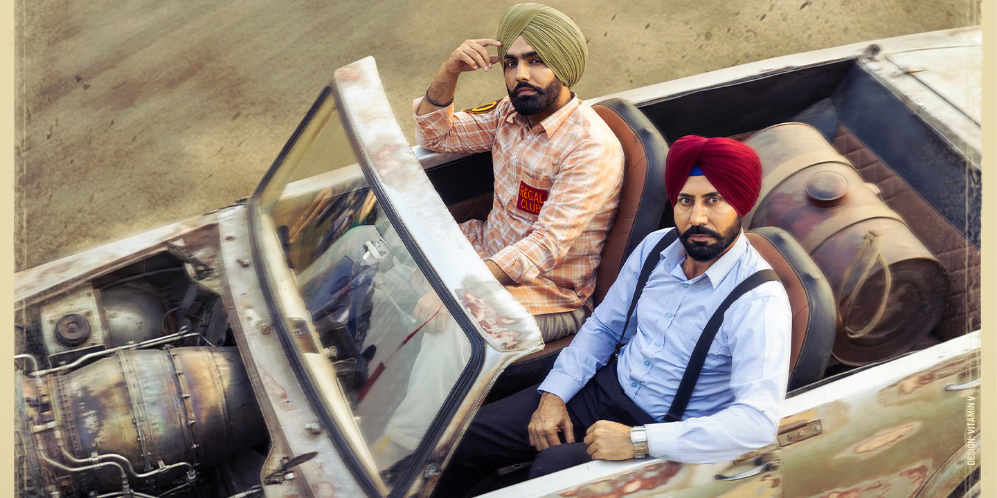
At its heart, Bambukat 2 is still about Chanan Singh — a man for whom dignity is not negotiable. But where the original revolved around a personal rivalry over a motorcycle and the approval of his in-laws, this sequel plants Chanan at the center of something far larger. Returned to his village as a disgraced inventor dismissed from the royal palace, he finds himself caught between the life he built and a crown that has no place for men like him.
Jass Grewal’s screenplay earns enormous credit here. The transition from lighthearted romantic comedy to a poignant, politically charged drama set in 1960s Punjab is seamless. The “underdog” spirit that made the original so beloved is completely intact — but now the underdog isn’t just fighting for his marriage; he’s fighting for his people. When an invention becomes a revolution, Bambukat 2 finds its true soul.
Performances: A Cast That Shines From First Frame to Last
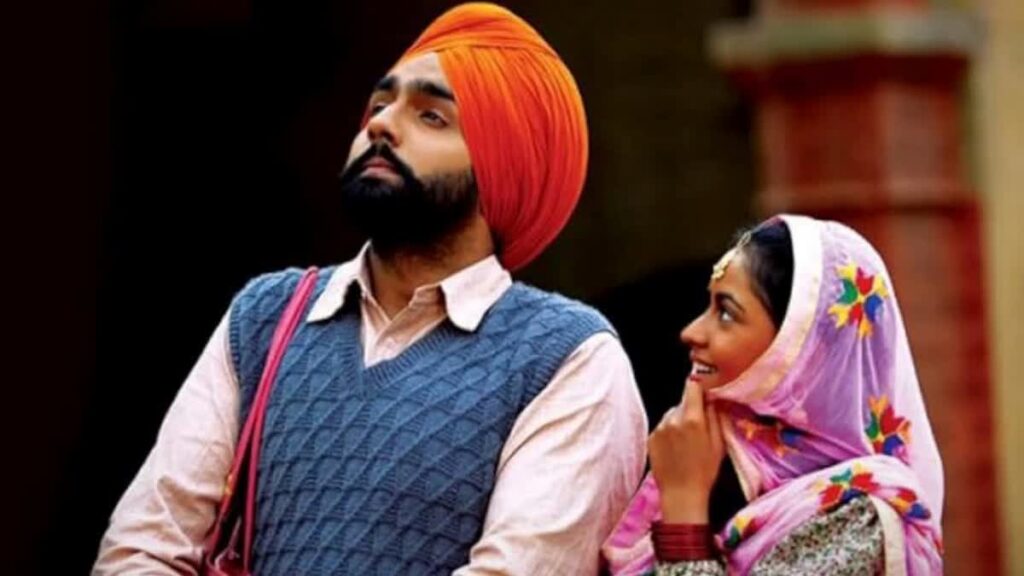
Ammy Virk delivers what is comfortably his finest screen work to date. His Chanan Singh is a man stripped of everything except his pride, and Ammy carries that weight with extraordinary restraint and depth. The jail sequences in particular — driven entirely by expression, with minimal dialogue — are genuinely arresting. He has moved from a charming leading man into a complete actor, and Bambukat 2 is the proof.
Simi Chahal as Pakko is a revelation in character evolution. Gone is any trace of the passive romantic lead; in her place is a woman of quiet steel who shares Chanan’s burdens as an equal. Her performance is understated and deeply moving — she doesn’t need big scenes to leave a lasting impression.
Binnu Dhillon surprises most pleasantly. His character here is far more layered than his role in the original, and he rises to the challenge brilliantly — balancing his trademark comic timing with genuine dramatic depth in the more confrontational scenes. He earns every laugh and every serious moment.
Gurpreet Ghuggi and Karamjit Anmol provide the film with its philosophical and emotional backbone. Ghuggi in particular delivers dialogue that is simultaneously witty and profound — the kind of lines you find yourself repeating long after the credits roll.
The supporting ensemble — Sardar Sohi, Anita Devgan, Malkeet Rauni, Hobby Dhaliwal, and Deedar Gill — each carve out memorable impressions that add richness and authenticity to the film’s period world. No role feels wasted.
Direction & Screenplay: Pankaj Batra’s Most Assured Work
Pankaj Batra directs Bambukat 2 with a maturity and confidence that marks a genuine evolution from the original. His greatest achievement here is tonal — managing the shift from comedy to drama to political allegory without ever losing the film’s warmth or its sense of joy. He lets scenes breathe. He trusts his actors. And when the climax arrives — a metaphorical race for justice that builds with real cinematic tension — it lands with the force of everything the film has been building toward.
Jass Grewal’s writing is equally impressive. The screenplay never feels like it is straining to justify its own existence as a sequel. It finds organic, emotionally honest reasons to revisit these characters and uses the period setting of 1960s Punjab to say something genuine about class, power, and the radical act of refusing to be diminished.
Music & Technical Brilliance
Jatinder Shah returns to compose, and the result is one of the year’s finest Punjabi soundtracks. Where many films interrupt their narrative with songs, Bambukat 2 weaves its music into the storytelling — each song feels like it belongs exactly where it is placed. A spiritual successor to the beloved “Langhe Paani” is already generating major buzz and is certain to become a chartbuster. The background score’s use of traditional Punjabi instruments during the invention sequences creates a unique rhythmic pulse — mechanical and musical at once.
Cinematographer Vineet Malhotra shoots the Ferozpur belt with a warm, sepia-kissed palette that feels nostalgic without ever feeling dusty. Every frame breathes period authenticity while remaining visually alive and crisp. The dialogue, rooted deeply in the Malwa Punjabi dialect, crackles with the “Thath” — the grandeur — of the era and delivers several genuinely heavy-hitting lines about social equality that will stay with audiences.
Strengths & Minor Weaknesses
What Works Magnificently
- Ammy Virk’s career-defining performance — restrained, emotional, completely convincing
- Jass Grewal’s seamless evolution of the story into something thematically richer
- Simi Chahal’s evolved portrayal of Pakko as a true equal partner
- Jatinder Shah’s soul-stirring, narratively integrated soundtrack
- Pankaj Batra’s assured, emotionally intelligent direction
- Vineet Malhotra’s gorgeous, period-authentic cinematography
- Sharp, culturally rooted Malwa Punjabi dialogue
- A genuinely thrilling, tension-filled climax
Where It Could Improve
- The second act pacing dips noticeably before recovering for the climax — a patient audience will be rewarded, but it asks for that patience
- The broader social allegory occasionally pulls focus away from the intimate character moments that made the original so endearing
Final Verdict: 4.5/5 Stars ⭐⭐⭐⭐½
Bambukat 2 is that rare sequel that doesn’t just ride on the affection audiences have for its predecessor — it earns new affection entirely on its own terms. Pankaj Batra and Jass Grewal have taken Chanan Singh’s deeply personal story and discovered within it something universal: the idea that when one man refuses to surrender his dignity, he plants a seed that can grow into a revolution.
Ammy Virk is outstanding. Simi Chahal is luminous. The veterans are in peak form. The music soars. And the cinematography makes 1960s Punjab feel vivid and alive. For fans of the original and newcomers alike, Bambukat 2 is essential Punjabi cinema — the kind of film that reminds you what this industry is capable of when its best talents decide to genuinely reach for something meaningful.
The invention becomes a revolution. And what a revolution it is.
What is the age rating of Bambukat 2?
Bambukat 2 carries a U/A certificate, meaning it is suitable for general audiences with parental guidance recommended for younger children.
Can we watch Bambukat 2 with kids?
Yes, Bambukat 2 is a wholesome family entertainer.
Is Bambukat 2 based on a true story?
No, Bambukat 2 is a work of fiction. However, it is deeply rooted in the cultural and social realities of rural Punjab in the 1960s, drawing on authentic period detail, the Malwa Punjabi dialect, and real historical tensions around class and dignity in the region.
Do I need to watch Bambukat (2016) before watching Bambukat 2?
While Bambukat 2 tells a largely self-contained story and can be enjoyed independently, watching the original 2016 film will significantly deepen your connection to Chanan and Pakko’s relationship and make their emotional journey in the sequel far more resonant. It is highly recommended to watch both.
