


In this Bhabiji Ghar Par Hain! Fun on the Run movie review, we explore a film that arrives like a warm hug from an old friend. When was the last time you walked into a theater knowing exactly what you’d get and left feeling completely satisfied? This isn’t cinema trying to reinvent the wheel—it’s a feature-length celebration of characters we’ve grown to love, humor we’ve come to cherish, and the simple joy of uncomplicated laughter.
Director Shashank Bali understands the golden rule of sitcom-to-screen adaptations: if it ain’t broke, enhance it lovingly. This is Aasif Sheikh and Rohitashv Gour’s victory lap after years of perfecting their craft on television, supported by an ensemble that knows exactly what kind of delightful chaos they’ve signed up for. With Ravi Kishan delivering one of the year’s most entertaining supporting performances and a car named Bua Ji that practically becomes the fifth lead, Bhabiji Ghar Par Hain! Fun on the Run is the cinematic equivalent of comfort food prepared by a master chef.
Quick Takeaway:
Bhabiji Ghar Par Hain! Fun on the Run is a technically proficient, warmly familiar comedy that succeeds brilliantly as both fan service and standalone entertainment. While the brief horror-comedy detour feels slightly unnecessary, the film’s infectious energy, career-defining performances from the lead quartet, and that absolutely joyous chase-comedy structure make it essential viewing for anyone craving authentic desi humor.
Language: Hindi
Age Rating: U/A
Genre: Sitcom Adaptation, Chase Comedy, Family Entertainer
Release Date: February 6, 2025
The Plot: Chaos on Wheels
At its core, Bhabiji Ghar Par Hain! Fun on the Run is a chase comedy—but calling it just that would miss the beautifully orchestrated madness at play. The film’s genius lies in its simplicity: take beloved characters, add gangsters, throw in a car named Bua Ji that becomes the narrative pivot, and let chaos unfold organically.
Vibhuti Narayan Mishra (Aasif Sheikh) and Manmohan Tiwari (Rohitashv Gour), along with Angoori Bhabhi (Shubhangi Atre) and Anita Bhabhi (Vidisha Srivastava), find themselves tangled in a situation involving dangerous criminals and a vehicle that’s practically a character itself. From that point on, the narrative becomes a delightful merry-go-round of confusion, misunderstandings, and narrowly avoided disasters.
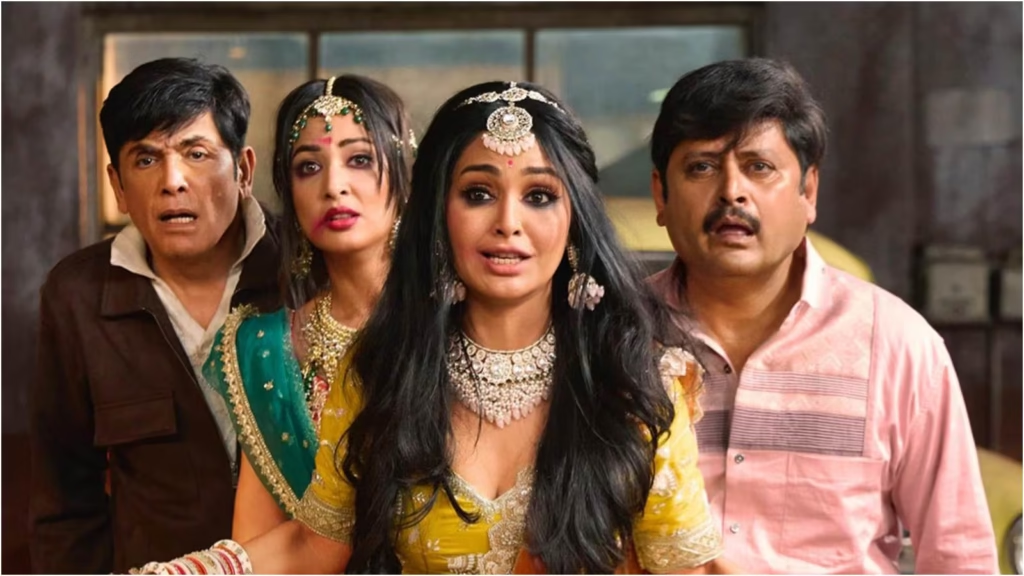
The beauty of this approach is how it taps into Hindi cinema’s largely abandoned on-the-run comedy genre—think the chaotic energy of ’90s madcap entertainers, but with characters we already know and love. There’s nothing particularly inventive about the setup, but the commitment to sustained laughter makes every familiar beat feel fresh.
What’s particularly smart is how the film never pretends to be anything other than what it promises. This isn’t a sitcom trying desperately to justify its theatrical existence—it’s a confident expansion that understands its audience came for familiar faces delivering familiar laughs, and it delivers exactly that with infectious enthusiasm.
Check Out: Bhabiji Ghar Par Hain Movie Release Date: Popular TV Show Makes Theatrical Debut
Performances: Everyone Brings Their A-Game
Aasif Sheikh: The Everyman Elevated
This Bhabiji Ghar Par Hain! Fun on the Run movie review must begin with the obvious: Aasif Sheikh is absolutely magnificent. Years of inhabiting Vibhuti Narayan Mishra have made this character second nature, and that depth of understanding shows in every frame. Watch him navigate the chaos with impeccable timing—the subtle expressions, the physical comedy that never feels forced, the way he can sell even the most absurd situation with complete conviction.
What’s remarkable is how effortlessly Sheikh shifts between the character’s trademark scheming and moments of genuine panic. The comic timing is surgical—not a beat wasted, not a moment oversold. This is an actor at the peak of his craft, reminding us why he’s carried a successful show for years while making it look ridiculously easy.
Rohitashv Gour: Perfect Comic Counterpoint
Every great comedy duo needs perfect chemistry, and Gour provides exactly that as Manmohan Tiwari. His natural rapport with Sheikh creates the film’s comedic foundation—they’re so in sync that even throwaway exchanges become highlight moments. Gour’s expressions during the madness, his physical comedy timing, and his ability to play straight man and absurdist simultaneously make every scene crackle with energy.
The film smartly uses the Vibhuti-Manmohan dynamic as its anchor, letting their established relationship ground the escalating chaos. Gour brings the same dedication to this feature film that he’s brought to countless television episodes, proving that consistency and quality can absolutely coexist.
The Leading Ladies: Charm and Strength
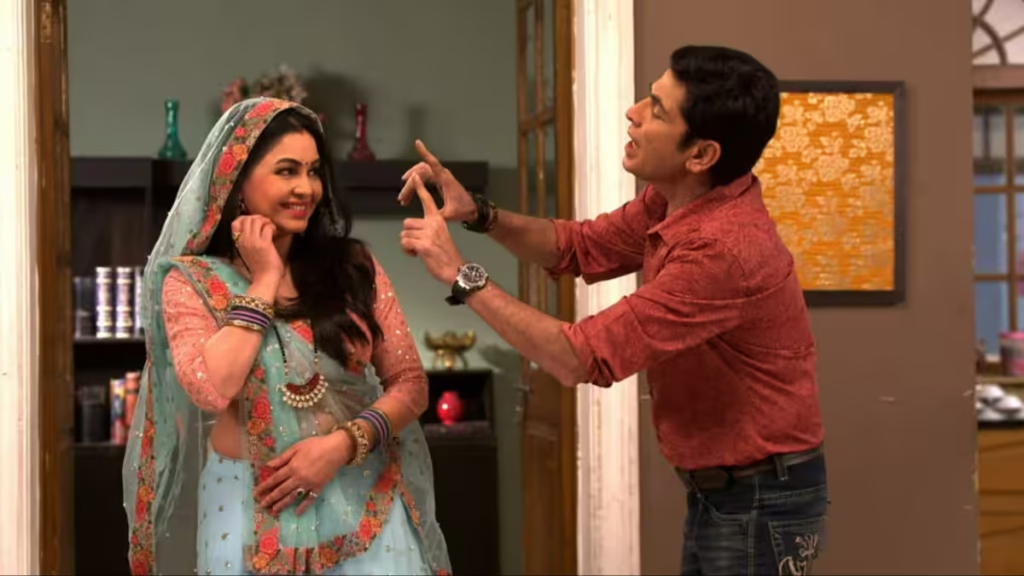
Shubhangi Atre as Angoori Bhabhi delivers more than the script necessarily demands. While positioned within the show’s comedic framework, she finds moments of genuine emotional depth, particularly during the horror-comedy sequence. Her timing remains impeccable, her chemistry with the ensemble natural and warm.
Vidisha Srivastava as Anita Bhabhi brings confidence and charisma to every scene. She understands exactly how to play within this universe while maintaining her character’s distinct personality, creating perfect balance in the quartet dynamic.
Ravi Kishan: The Scene-Stealing Champion
Let’s address what everyone’s talking about: Ravi Kishan is absolutely sensational. Fresh off his memorable Laapataa Ladies performance, he brings that same UP dialect mastery and impeccable comic timing to Bhabiji Ghar Par Hain, elevating every single sequence he’s in. His dialogue delivery is pitch-perfect, his physical comedy inspired, and his understanding of the material so complete that he makes challenging scenes look effortless.
When Kishan enters the frame, the energy immediately shifts—not because he overwhelms other performers, but because he enhances them. His character becomes integral to the film’s best moments, and his chemistry with the ensemble creates some of the year’s most purely entertaining comedy sequences.
The Supporting Ensemble: Depth That Delights
Mukesh Tiwari creates wonderful comic chemistry with Ravi Kishan as his younger brother. Their sibling dynamic adds layers to the humor, with Tiwari bringing his trademark intensity to material that could easily have been one-note.
Dinesh Lal Yadav (Nirahua) and Mushtaq Khan make impactful contributions despite limited screen time, each bringing distinct flavors to the ensemble.
Saanand Verma (Anokhelal) and Yogesh Tripathi (Happu Singh) provide delightful fan service, their familiar television characters seamlessly integrated into the cinematic universe. The filmmakers’ decision to include these beloved supporting players shows genuine respect for the show’s extended world and the audience that’s grown attached to it.
The ensemble works beautifully because everyone understands the assignment: commit completely to the chaos while keeping characters grounded. Nobody oversells the comedy, nobody breaks the reality the film establishes. This unified approach transforms what could have been a disjointed television reunion into genuinely cohesive cinema.

Direction and Vision: Respecting What Works
The director Shashank Bali demonstrates the wisdom that sitcom-to-film adaptations require: enhance rather than reinvent. There’s tremendous confidence in staying true to the source material while finding cinematic ways to elevate it. The chase structure provides natural momentum, the ensemble cast gets balanced screen time, and the pacing maintains the show’s energetic rhythm while allowing theatrical breathing room.
What’s particularly impressive is how the film handles tonal shifts. The brief detour into horror-comedy territory could have derailed momentum, but it’s executed with enough charm and technical competence that it feels like a fun experiment rather than a mistake. The director trusts both the material and the audience, never over-explaining jokes or pandering unnecessarily.
The decision to keep things relatively simple proves inspired. Rather than chasing cinematic grandeur that would feel false, the focus remains on character dynamics, comic setups, and sustained laughter. This restraint becomes the film’s greatest strength—it knows exactly what it is and celebrates that identity with infectious enthusiasm.
Technical Brilliance: Craft Meeting Comedy
Cinematography: Vibrant Visual Energy
The visual approach perfectly captures the show’s colorful aesthetic while utilizing cinematic space effectively. Colors pop with sitcom vibrancy, but the camera movement and framing give action sequences genuine dynamism. The chase scenes are choreographed with clarity and energy, ensuring we’re never confused about spatial relationships even during maximum chaos.
What’s particularly effective is how the cinematography maintains intimacy during character moments while opening up for spectacle when needed. The film looks genuinely theatrical without betraying its television roots—a delicate balance that’s harder to achieve than it appears.
Sound Design and Music: Aural Joy
The background score knows exactly when to swell for comic effect and when to let dialogue breathe. Musical choices feel culturally authentic, enhancing the desi humor rather than fighting against it. The sound design during chase sequences creates genuine excitement without overwhelming the comedy.
The audio mix ensures dialogue clarity even during chaotic ensemble scenes—crucial for comedy where a single missed line can deflate a punchline. This technical precision demonstrates real care for the material.
Editing: Keeping Energy Flowing
Maintaining comedy momentum across feature-length runtime requires surgical editing, and the film mostly succeeds brilliantly. Scenes cut at precisely the right moments, the interweaving of different story threads maintains clarity, and the pacing keeps energy high without feeling exhausting.
There are moments—particularly during the horror-comedy sequence—where slightly tighter cuts might have helped, but these are minor observations about an otherwise well-constructed film that understands comedy rhythm at a fundamental level.
Cultural Context: Celebrating Desi Humor Unapologetically
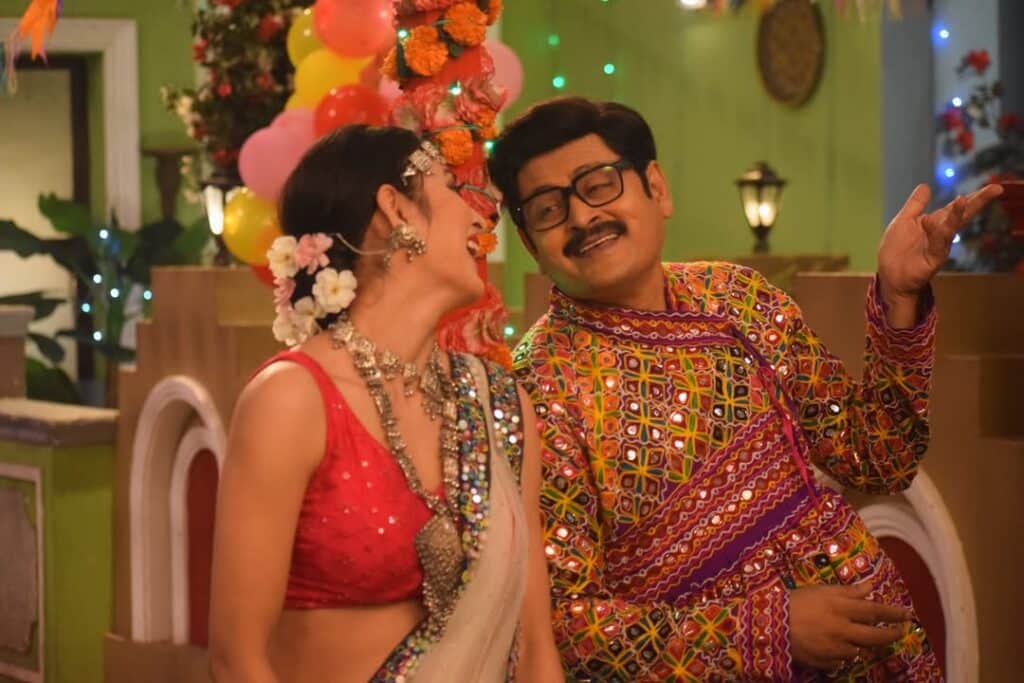
This Bhabiji Ghar Par Hain! Fun on the Run movie review must celebrate how confidently the film embraces its cultural identity. The humor is unapologetically desi—double-meaning jokes, situational comedy rooted in specific Indian contexts, character dynamics that reflect particular social relationships. The film makes zero apologies for this specificity, trusting that audiences who’ve kept the show successful will appreciate the theatrical expansion.
There’s genuine intelligence in how the comedy balances broad appeal with cultural specificity. The physical comedy translates universally, the chase structure needs no explanation, but the character-based humor carries depth for those familiar with these relationships. It’s accessible without being watered down—a difficult balance many adaptations fail to achieve.
The film also sneaks in observations about male insecurity, self-worth, and relationship dynamics through humor. These moments add substance without compromising entertainment, showing that mass comedy can carry meaning when crafted with care.
Strengths and Minor Weaknesses
What Works Magnificently
- Career-defining ensemble chemistry – Aasif Sheikh and Rohitashv Gour deliver masterclass performances with impeccable timing
- Ravi Kishan’s scene-stealing presence – Every moment he’s on screen becomes instantly more dynamic
- Confident directorial vision – Enhancing rather than reinventing, trusting the source material completely
- Genuine laugh-out-loud moments – Comedy that lands consistently across different demographics
- Bua Ji the car as narrative anchor – A brilliant device that provides structure while becoming a running gag
- Ensemble utilization – Everyone from leads to supporting cast gets meaningful moments
- Cultural authenticity – Desi humor celebrated without apology or dilution
- On-the-run genre revival – Tapping into largely abandoned comedy territory with fresh energy
Where It Could Improve
- Horror-comedy detour slightly unnecessary – The film reaches its natural conclusion without this tonal shift
- Limited cinematic justification – Would work equally well on television or streaming platforms
- Some supporting characters underutilized – A few familiar faces contribute minimally beyond fan service
- Female character agency could be stronger – Both Bhabhis remain somewhat constrained within the framework
Final Verdict: 4.5/5 Stars ⭐⭐⭐⭐½
Bhabiji Ghar Par Hain! Fun on the Run is exactly what Hindi comedy cinema needs right now—a film that remembers that making audiences genuinely laugh is achievement enough, that familiar can be fantastic when executed with love and skill, and that respecting your audience’s intelligence means trusting them to appreciate what you do well.
This Bhabiji Ghar Par Hain! Fun on the Run movie review celebrates a film that succeeds far more than it stumbles. Yes, the horror-comedy tangent feels slightly extraneous. Yes, there’s nothing particularly cinematic that demands theatrical viewing. Yes, some supporting players could have been utilized more effectively. But these are minor observations about a film that delivers exactly what it promises with infectious enthusiasm and genuine craft.
For the director, this adaptation announces confident understanding of what sitcom-to-screen success requires: respect the source, enhance thoughtfully, and never apologize for being exactly what you are. The willingness to celebrate television’s strengths while utilizing cinematic possibilities—these are marks of filmmaking that honors both mediums.
The Joy of Familiar Faces
There’s specific pleasure in watching characters you’ve invited into your home for years finally get the big-screen treatment they deserve. In an industry increasingly chasing pan-Indian formulas and international validation, Bhabiji Ghar Par Hain! Fun on the Run feels like coming home—or perhaps more accurately, like your favorite neighbors throwing a party and everyone’s invited.
After years of sitcoms struggling to justify theatrical adaptations, this film delivers beautifully—not just for devoted fans, but for anyone who believes Hindi comedy’s future includes honoring what works while fearlessly celebrating it with bigger budgets and theatrical possibilities.
The familiarity is the strength. The comfort is the point. And somewhere in all that warmhearted chaos is a genuine love letter to audiences who’ve kept this show alive—flawed perhaps in minor ways, but absolutely successful in what matters most: making people laugh, feel good, and remember why they fell in love with these characters in the first place.
Recommendation: Essential viewing for fans of the show, perfect for families seeking uncomplicated entertainment, and ideal for anyone who appreciates character-driven comedy that trusts its audience. This is comfort food cinema prepared with skill, served with love, and guaranteed to leave you smiling.
