


Your child’s constant worries, stomachaches before school, or refusal to sleep alone might be more than typical childhood fears. Anxiety disorders affect millions of children and teens worldwide, but many parents struggle to recognize when normal nervousness crosses into a clinical condition requiring professional help.
Quick Summary:
Childhood anxiety disorders include GAD, separation anxiety, social phobia, specific phobias, panic disorder, and selective mutism. Signs include excessive worry, physical complaints without medical cause, school avoidance, sleep problems, and emotional outbursts.
Table of Contents
Understanding Anxiety Disorders in Children and Adolescents
Anxiety is a normal part of childhood development. Feeling nervous before a test, worried about making friends, or scared of the dark are typical experiences that help children navigate their world.
But when anxiety becomes persistent, overwhelming, and begins interfering with school, friendships, family life, or daily activities, it may signal an anxiety disorder—one of the most common mental health conditions affecting young people today.
Types of Anxiety Disorders in Children and Teens
Separation Anxiety Disorder
While separation anxiety is developmentally normal in toddlers, it becomes a disorder when it persists beyond age-appropriate stages or reappears in older children and teenagers.
Characteristic behaviors:
- Extreme distress when separating from parents or primary caregivers
- Refusal to go to school, sleepovers, or camps
- Physical symptoms (nausea, headaches) before separation
- Constant worry that something terrible will happen to loved ones
- Inability to sleep alone or stay in a room by themselves
- Following parents around the house constantly
Children with separation anxiety may have nightmares about separation or catastrophic events befalling their family. The anxiety is so intense it impairs their ability to function independently at age-appropriate levels.
Social Anxiety Disorder (Social Phobia)
Social anxiety disorder involves intense fear of judgment, embarrassment, or rejection in social situations.
Common manifestations in children:
- Refusing to speak in class despite knowing answers
- Avoiding eye contact or speaking very quietly
- Extreme self-consciousness about eating in front of others
- Fear of using public restrooms
- Panic about attending birthday parties or group activities
- Excessive worry about being laughed at or criticized
The disorder often emerges in early adolescence when peer relationships become central to identity formation.
Specific Phobias
A specific phobia is an intense, irrational fear of a particular object, animal, or situation that poses little actual danger.
Common childhood phobias:
- Animals (dogs, insects, snakes)
- Natural environments (heights, water, storms, darkness)
- Medical procedures (needles, blood, dentists)
- Situations (enclosed spaces, flying, vomiting)
The fear response is disproportionate to the actual threat. A child with a dog phobia may panic seeing a small puppy on a leash across the street. The phobia drives significant avoidance behavior that restricts the child’s activities and experiences.
Panic Disorder
Panic disorder involves recurrent, unexpected panic attacks—sudden episodes of intense fear that peak within minutes.
Panic attack symptoms in children:
- Racing or pounding heartbeat
- Sweating and trembling
- Shortness of breath or feeling of choking
- Chest pain or discomfort
- Dizziness or lightheadedness
- Feeling detached from reality
- Fear of dying or “going crazy”
After experiencing panic attacks, children develop anticipatory anxiety—constant fear of having another attack. This leads to avoiding places or activities where previous attacks occurred, sometimes progressing to agoraphobia.
Young children may not articulate panic symptoms clearly, instead showing sudden distress, clinging behavior, or insisting something is physically wrong.
What Causes Anxiety Disorders in Young People?
Anxiety disorders don’t have a single cause—they result from complex interactions between biological, psychological, and environmental factors.
Genetic Factors
Family history matters significantly:
- Children with parents who have anxiety disorders are 4-6 times more likely to develop anxiety themselves
- Genetic variations affect neurotransmitter systems regulating fear and stress responses
- Inherited temperament traits (behavioral inhibition, sensitivity) increase vulnerability
However, genetics don’t guarantee anxiety disorders—they increase susceptibility that environmental factors then trigger.
Brain Chemistry and Structure
Neurobiological differences in anxious children:
- Imbalances in neurotransmitters (serotonin, GABA, norepinephrine) that regulate mood and fear
- Heightened amygdala activity—the brain’s fear center responds more intensely to potential threats
- Reduced prefrontal cortex regulation—difficulty controlling emotional responses
- Altered stress hormone (cortisol) regulation
These differences often predate anxiety symptoms, representing biological vulnerability that stress activates.
Temperament and Personality Traits
Certain inborn temperament characteristics predict higher anxiety risk:
- Behavioral inhibition: Tendency to be cautious, withdrawn, or fearful in new situations
- Perfectionism: Setting unrealistically high standards and fearing mistakes
- High sensitivity: Intensely experiencing emotions and environmental stimuli
- Negative affectivity: Tendency toward worry, sadness, and emotional reactivity
These traits aren’t disorders themselves but increase likelihood of developing clinical anxiety under stress.
Environmental Stressors and Life Events
Triggering experiences:
- Trauma: Physical or sexual abuse, witnessing violence, natural disasters
- Chronic stress: Ongoing family conflict, parental mental illness, financial instability
- Bullying: Peer victimization, social exclusion, cyberbullying
- Academic pressure: Excessive expectations, fear of failure, competitive environments
- Significant changes: Moving, divorce, death of loved ones, school transitions
- Medical illness: Chronic health conditions or hospitalizations
Even positive changes (new sibling, moving to better neighborhood) can trigger anxiety in vulnerable children.
Parenting and Family Dynamics
Parenting style significantly influences anxiety development, though this doesn’t mean parents are “to blame.”
Risk-increasing patterns:
- Overprotective parenting: Shielding children from all discomfort prevents learning to cope with stress
- Overly critical parenting: Constant criticism or high criticism increases fear of failure
- Parental anxiety modeling: Children learn anxious responses by watching anxious parents
- Accommodation of avoidance: Allowing children to avoid feared situations reinforces anxiety
- Inconsistent discipline: Unpredictable consequences create insecurity
Understanding these patterns helps parents modify interactions to support rather than inadvertently reinforce anxiety.
Recognizing Anxiety Disorders: Warning Signs for Parents
Children often cannot articulate anxiety clearly. Unlike adults who can say “I’m having anxiety about work,” children may not have emotional vocabulary to name their experience.
Emotional and Cognitive Signs
What to watch for:
- Constant worrying that seems extreme or unrealistic
- Repetitive questions seeking reassurance (“Are you sure nothing bad will happen?”)
- Catastrophic thinking (“If I forget my homework, everyone will hate me”)
- Difficulty concentrating or mind “going blank”
- Irritability, anger outbursts, or emotional meltdowns
- Negative self-talk (“I’m stupid,” “I can’t do anything right”)
These patterns persist beyond temporary stress and interfere with the child’s ability to enjoy activities or relationships.
Physical Symptoms
Anxiety manifests physically, especially in children who can’t verbalize emotions:
- Frequent complaints with no medical explanation: Stomachaches, headaches, nausea
- Sleep disturbances: Difficulty falling asleep, nightmares, night terrors, early waking
- Fatigue: Despite adequate rest, constant tiredness from mental exhaustion
- Muscle tension: Jaw clenching, hunched shoulders, restlessness
- Appetite changes: Eating significantly more or less than usual
- Bathroom issues: Frequent urination, diarrhea, or constipation during stress
Pediatricians should rule out medical causes, but persistent physical complaints without organic cause often indicate anxiety.
Behavioral Changes
Observable anxiety-driven behaviors:
- Avoidance: Refusing school, social events, new activities, or specific situations
- Clinginess: Excessive attachment to parents, following them constantly, refusing to be alone
- Perfectionism: Erasing homework repeatedly, spending excessive time on assignments, refusing to try if success isn’t guaranteed
- Rituals and compulsions: Repetitive behaviors to reduce anxiety (checking, arranging, counting)
- Regression: Return to younger behaviors (thumb-sucking, baby talk, bedwetting)
These behaviors represent attempts to manage overwhelming internal distress.
How Therapy Helps Children with Anxiety Disorders
Therapy provides children with safe space to explore feelings, learn coping skills, and build emotional resilience. Multiple evidence-based approaches effectively treat childhood anxiety.
Cognitive Behavioral Therapy (CBT)
CBT is the gold-standard treatment for childhood anxiety disorders, with the strongest research support.

How CBT works for children:
Cognitive component: Children learn to identify anxious thoughts (“Everyone will laugh at me”) and evaluate their accuracy. Therapists help them develop balanced, realistic thoughts (“Some kids might not even notice, and my friends will support me”).
Behavioral component: Children gradually face feared situations through structured exposure, learning that anxiety decreases naturally and that they can tolerate discomfort.
Skills building: Therapists teach concrete coping strategies—deep breathing, progressive muscle relaxation, problem-solving, and self-talk techniques.
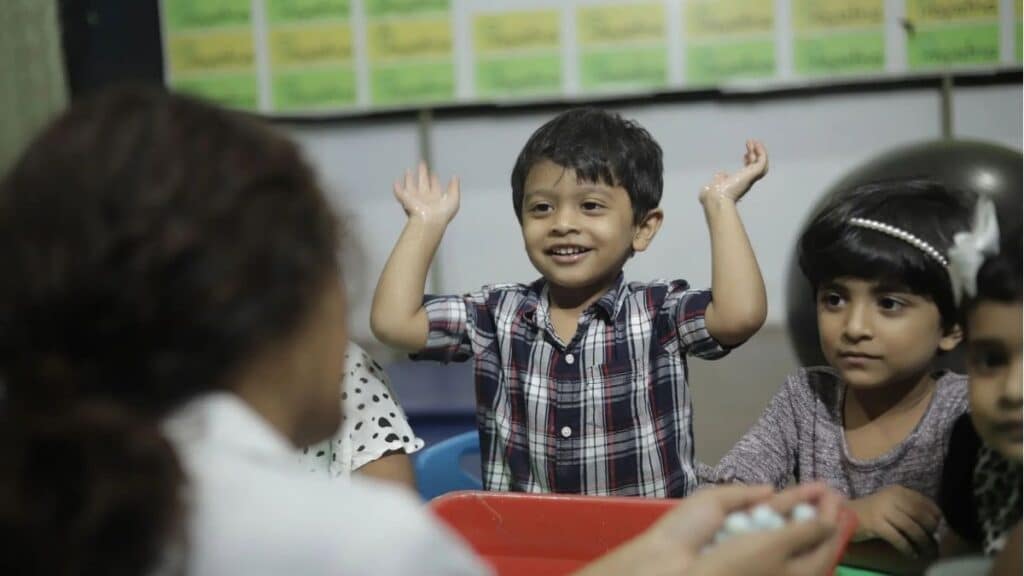
Play Therapy (for Younger Children)
Young children (ages 3-7) often lack verbal sophistication to discuss abstract emotions. Play therapy uses their natural language—play—to process anxiety.
Therapeutic play techniques:
- Using dolls or puppets to act out feared scenarios
- Drawing or painting to express feelings
- Sand tray therapy to create symbolic representations of worries
- Storytelling to explore emotions indirectly
- Games that build confidence and coping skills
Exposure Therapy
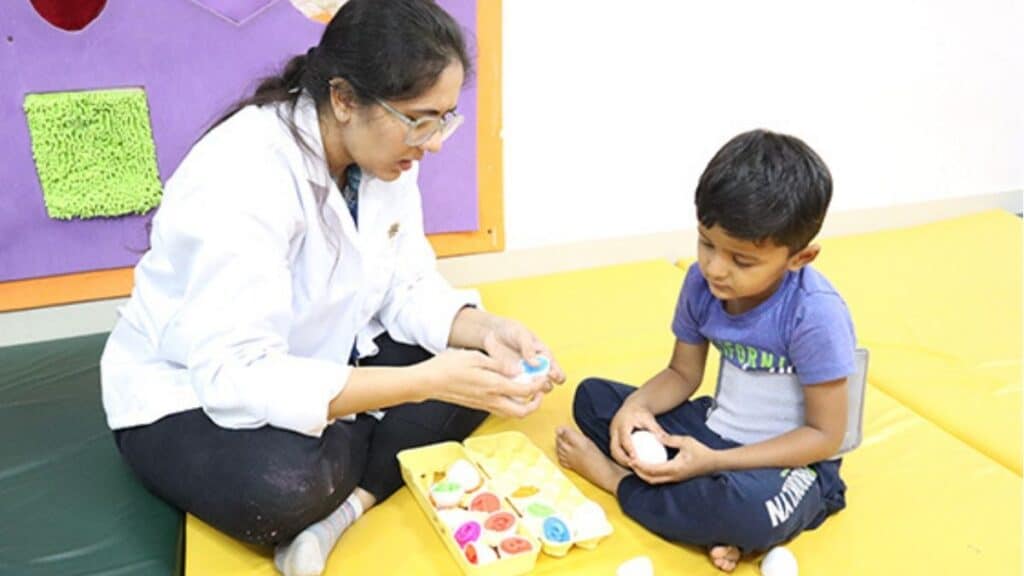
Exposure therapy is often incorporated within CBT but merits specific discussion due to its effectiveness.
The exposure process:
Create fear hierarchy: Child and therapist list feared situations from least to most anxiety-provoking (ladder of fears).
Start small: Begin with situations causing moderate anxiety, not the most terrifying scenario.
Gradual progression: Child faces each step repeatedly until anxiety decreases before moving to next level.
Family Therapy
Anxiety doesn’t exist in isolation—it affects entire family systems and is influenced by family dynamics.
Family therapy addresses:
- Educating parents about anxiety mechanisms and treatment
- Identifying family patterns that maintain anxiety (accommodation, criticism)
- Teaching parents to support rather than reinforce avoidance
- Improving communication about emotions
- Managing parental anxiety that children model
- Reducing family conflict that exacerbates child anxiety
Parents learn the crucial distinction between support (encouraging gradual facing of fears) and accommodation (removing all discomfort, which reinforces anxiety).

What Parents and Caregivers Can Do to Help
Parents are critical partners in treating childhood anxiety. Your responses either help your child build resilience or inadvertently reinforce anxious patterns.
Listen Without Dismissing
Validate their experience:
- “I can see you’re really worried about this” acknowledges their feelings
- Avoid minimizing: “There’s nothing to be scared of” invalidates their genuine distress
- Don’t rush to fix: Sometimes children need to express emotions before problem-solving
Validation doesn’t mean agreeing the fear is rational—it means acknowledging the feeling is real and acceptable.
Model Calm Behavior
Children are emotional sponges, absorbing how you handle stress.
What modeling looks like:
- Verbalize your coping: “I’m feeling stressed about this deadline, so I’m going to take some deep breaths”
- Demonstrate problem-solving: “This is challenging. Let me think about options”
- Show emotional regulation: Manage your own frustration calmly rather than yelling or panicking
- Acknowledge imperfection: “I made a mistake. That’s okay—I’ll learn from it”
If you’re an anxious parent, managing your own anxiety (through therapy if needed) powerfully helps your child.
Treatment Outcomes and Long-Term Prognosis
With appropriate treatment, most children with anxiety disorders significantly improve.
Research shows:
- 60-80% of children respond positively to CBT
- Combining therapy with parental involvement produces best outcomes
- Earlier intervention leads to better long-term results
- Skills learned in childhood therapy provide lifelong coping tools
However, anxiety often requires ongoing management rather than one-time cure. Children may experience anxiety flares during stressful transitions (middle school, high school, college) but will have tools to manage these episodes.
Anxiety Disorders Are Treatable Conditions
Anxiety disorders in children and adolescents are real, common, and highly treatable mental health conditions—not character flaws, attention-seeking behavior, or phases children simply outgrow.
When parents recognize warning signs early, seek professional help, and implement supportive strategies at home, children learn to manage anxiety effectively. With proper treatment—particularly Cognitive Behavioral Therapy combined with family support—most anxious children develop into confident, emotionally healthy adults.
If you recognize these patterns in your child, don’t wait. Reach out to a mental health professional specializing in childhood anxiety. Early intervention changes life trajectories.

What are the signs of anxiety disorders in children?
Signs include excessive worry about multiple topics, physical complaints without medical cause (stomachaches, headaches)
What is the most common anxiety disorder in children?
Separation anxiety disorder is most common in younger children, while social anxiety disorder and generalized anxiety disorder
How is childhood anxiety treated?
Cognitive Behavioral Therapy (CBT) is the most effective treatment, helping children identify anxious thoughts and gradually face fears through exposure therapy
