


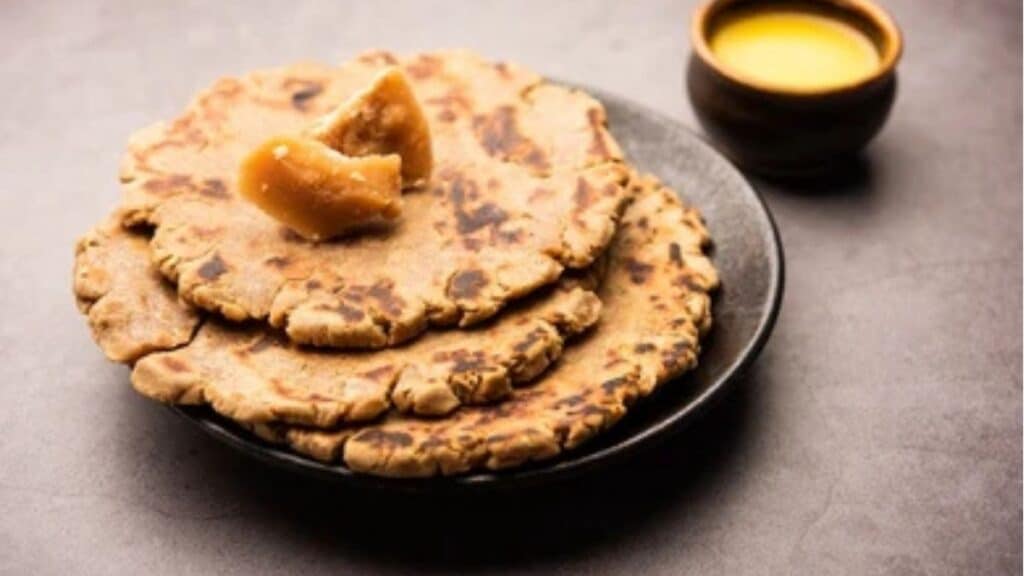
Gur ki Roti, also known as Meethi Roti or jaggery flatbread, is a beloved traditional Indian sweet flatbread made with whole wheat flour and jaggery. Particularly popular during winter months, this nutritious and delicious roti combines the earthy sweetness of jaggery with the wholesome goodness of whole wheat, creating a comforting treat that’s typically served warm with ghee or white butter.
Quick Summary
Gur ki Roti is a sweet Indian flatbread made by kneading whole wheat flour with jaggery syrup, resting the dough, rolling into thick rotis, and roasting on a griddle with ghee. The result is a soft, slightly sweet flatbread perfect for winter mornings or as a nutritious snack.
Table of Contents
What Is Gur Ki Roti?
Gur ki Roti is a traditional sweet flatbread from North India, particularly popular in Punjab, Haryana, Uttar Pradesh, and Rajasthan. The name translates to “jaggery bread,” with “gur” meaning jaggery (unrefined cane sugar) and “roti” meaning flatbread.
Unlike regular savory rotis eaten with curries and vegetables, Gur ki Roti is slightly sweet and can be enjoyed on its own or with simple accompaniments like white butter, yogurt, or pickles. The natural sweetness comes entirely from jaggery, making it a healthier alternative to refined sugar-based sweets.
Why It’s Special:
- Winter Comfort Food: Jaggery generates body heat, making this roti especially popular during cold months
- Nutritious: Combines whole wheat’s fiber with jaggery’s iron and minerals
- Energy Booster: Provides sustained energy from complex carbs and natural sugars
- Nostalgic Flavor: Evokes memories of traditional Indian homes and winter mornings
- Versatile: Works as breakfast, snack, or dessert
Gur Ki Roti Ingredients
The beauty of Gur ki Roti lies in its simplicity, requiring just a handful of pantry staples commonly found in Indian kitchens.
Main Ingredients
Whole Wheat Flour (Atta): 1.5 cups
Use fresh, finely milled whole wheat flour for softer rotis. The whole wheat adds fiber, nutrients, and authentic flavor that white flour cannot replicate.
Jaggery (Gur): 1/2 cup (grated or broken into small pieces)
Choose organic jaggery for best flavor and nutritional value. Dark jaggery has a stronger molasses flavor, while lighter varieties are milder. Grate or break into small pieces for easier dissolving.
Water: 1/4 cup (to dissolve jaggery)
Adjust quantity as needed based on jaggery moisture content. Some jaggery is drier and may need slightly more water.
Ghee/Oil: 1-2 tablespoons (for dough) + extra for roasting
Ghee provides authentic flavor and richness, though oil works for a lighter version. Keep extra ghee handy for roasting the rotis.
Optional Flavor Enhancers
Fennel Seeds (Saunf): 1 teaspoon
Adds subtle anise-like sweetness and aids digestion. Common in traditional recipes.
Sesame Seeds (Til): 1 tablespoon
Provides nutty flavor, crunch, and additional calcium. Especially popular in winter versions.
Cardamom Powder: 1/4 teaspoon
Adds aromatic warmth and enhances the sweet profile. Use freshly ground for best flavor.
Step-by-Step Gur Ki Roti Recipe
Follow these detailed instructions to make perfectly soft, sweet Gur ki Roti at home.
Step 1: Prepare Jaggery Water
The foundation of great Gur ki Roti is properly prepared jaggery syrup that’s smooth, lump-free, and completely cooled before adding to flour.
Process:
- Add 1/2 cup grated jaggery and 1/4 cup water to a small saucepan
- Heat on low flame, stirring occasionally
- Let jaggery dissolve completely into the water (3-5 minutes)
- Do NOT boil the mixture – just warm enough to dissolve
- Strain through a fine-mesh strainer to remove any impurities or undissolved bits
- Let the jaggery syrup cool completely to room temperature
Why This Step Matters:
- Straining removes impurities that can make dough gritty
- Cooling prevents the syrup from cooking the flour proteins
- Proper dissolution ensures even sweetness throughout
- Low heat preserves jaggery’s nutritional benefits
Step 2: Prepare the Dough
Once your jaggery syrup is completely cooled, you can begin making the dough that forms the base of your rotis.
Process:
- In a large mixing bowl, combine 1.5 cups whole wheat flour
- Add 1 teaspoon fennel seeds (and any optional seeds/spices)
- Mix in 1 tablespoon ghee or oil
- Rub the ghee into the flour using your fingertips until it resembles breadcrumbs
- Pour in the cooled jaggery syrup gradually
- Mix with a spoon initially, then knead with your hands
- Knead for 5-7 minutes to form a firm, smooth, slightly sticky dough
- The dough should hold together well and not be too soft
Dough Consistency Tips:
- The dough should be firmer than regular roti dough
- It will feel slightly sticky due to jaggery content
- If too sticky, add 1-2 tablespoons extra flour
- If too dry, add water 1 teaspoon at a time
- Properly kneaded dough should be smooth without cracks
Step 3: Rest the Dough
Resting allows the flour to fully hydrate and the jaggery to integrate, resulting in softer, easier-to-roll rotis.
Process:
- Shape the dough into a smooth ball
- Cover with a damp cotton cloth or plastic wrap
- Let it rest for 15-20 minutes at room temperature
- The dough will soften slightly during resting
Why Resting Helps:
- Gluten relaxes, making dough easier to roll
- Flour absorbs moisture evenly
- Jaggery further integrates with flour
- Results in softer final texture
Step 4: Roll the Roti
Unlike thin chapatis, Gur ki Roti should be rolled slightly thicker to maintain its soft, substantial texture.
Process:
- Divide rested dough into 6-8 equal portions
- Roll each portion into a smooth ball between your palms
- Flatten slightly and dust with whole wheat flour
- Place on a floured surface or board
- Roll gently with a rolling pin into a circular shape
- Aim for 5-6 mm thickness (thicker than regular roti)
- Dust with flour as needed to prevent sticking
- Keep rolled rotis covered while you roll the rest
Rolling Tips:
- Apply even pressure while rolling
- Rotate the roti frequently for uniform thickness
- Don’t roll too thin or rotis will become crispy instead of soft
- Keep extra flour handy for dusting
- Work on a clean, dry surface
Step 5: Roast the Roti
Proper roasting technique ensures perfectly cooked rotis with beautiful golden spots and soft texture.
Process:
- Heat a tawa (griddle) or heavy-bottomed pan on medium flame
- Test heat by sprinkling water – it should sizzle and evaporate
- Place rolled roti gently on the hot tawa
- Let it cook for 30-40 seconds until small bubbles appear on top
- Flip using a spatula or tongs
- Spread 1/2 teaspoon ghee on the cooked side
- Flip again and cook for 20-30 seconds
- Spread ghee on the second side
- Flip once more and press gently with spatula
- Cook until golden brown spots appear on both sides
- Remove and keep warm in a roti basket or container
Perfect Roasting Indicators:
- Small bubbles forming on uncooked side
- Golden brown spots without burning
- Soft texture when pressed gently
- Slight puffing (though Gur ki Roti doesn’t puff like phulka)
- Pleasant aroma of roasted wheat and jaggery
Step 6: Serve Warm
Gur ki Roti is best enjoyed fresh and warm, allowing the jaggery sweetness and ghee richness to shine.
Serving Suggestions:
Traditional Style:
- Serve hot with extra ghee or white butter on top
- Pair with plain yogurt for balance
- Accompany with spicy pickle for contrast
Modern Variations:
- Serve with cream cheese or paneer spread
- Pair with chai or warm milk
- Top with sliced bananas and honey
- Serve with seasonal fruit preserves
Meal Integration:
- Breakfast alongside boiled eggs or paneer
- Mid-morning or evening snack with tea
- Light dinner with vegetable raita
- Lunchbox option for children
Tips for Perfect Gur Ki Roti
Master these expert tips to achieve consistently excellent results every time you make this traditional sweet flatbread.
Dough Consistency
Make Stiff Dough Initially:
The dough should be quite firm when first kneaded because jaggery has hygroscopic properties (attracts moisture). As the dough rests, the jaggery will release moisture, naturally softening the dough to the perfect consistency.
Add Extra Flour If Needed:
If your dough feels too soft or sticky after resting, don’t hesitate to add 2-3 tablespoons more wheat flour. Knead it in thoroughly. Humidity, jaggery moisture content, and flour protein levels all affect dough consistency.
Test Before Rolling:
Before dividing the entire dough, roll out one test roti. If it sticks excessively or tears easily, adjust the dough by adding a bit more flour.
Preventing Breaking and Tearing
Common Causes of Breaking:
- Dough too dry (add water drop by drop)
- Insufficient kneading (knead for full 5-7 minutes)
- Not rested long enough (ensure 15-20 minute rest)
- Rolled too thin (maintain 5-6mm thickness)
- Overcooked or undercooked on tawa
Solutions:
- Keep dough covered to prevent surface drying
- Use light hand while rolling, don’t press too hard
- Dust generously with flour while rolling
- Don’t flip too early when roasting
- Maintain consistent medium heat
Health Benefits of Gur Ki Roti
Gur ki Roti offers numerous nutritional advantages over refined sugar-based sweets, making it a healthier indulgence.
Jaggery’s Nutritional Profile
Rich in Iron:
Jaggery contains significant iron content, helping prevent anemia and supporting healthy blood circulation. One serving of Gur ki Roti provides approximately 10-15% of daily iron needs.
Mineral Content:
Contains magnesium, potassium, phosphorus, and trace minerals lost during white sugar refining. These support bone health, muscle function, and overall cellular processes.
Antioxidants:
Unlike refined sugar, jaggery retains molasses, which contains polyphenols and other antioxidants that combat free radicals and reduce inflammation.
Digestive Aid:
Traditionally consumed in Indian medicine to activate digestive enzymes, cleanse the liver, and prevent constipation. The fennel seeds often added enhance this benefit.
Can I use brown sugar instead of jaggery?
While brown sugar can substitute in a pinch, it won’t provide the same authentic flavor, nutritional benefits, or traditional character. Jaggery has a complex, earthy sweetness that brown sugar lacks.
Why is my Gur ki Roti dough too sticky?
Excess moisture in jaggery or too much jaggery syrup can make dough sticky. Add 2-3 tablespoons more wheat flour and knead thoroughly. Also ensure jaggery syrup was completely cooled before adding.
Can I make Gur ki Roti without ghee?
Yes, you can use oil instead of ghee, though flavor will be less rich. For vegan version, use coconut oil or refined vegetable oil. The rotis will still be delicious.
