


In this Jockey movie review, we explore a film that dares to venture where mainstream Tamil cinema rarely goes—into the heart of Madurai’s kida fighting tradition, where honour, reputation, and pride are decided by four-legged champions with locked horns. When was the last time you witnessed something on screen that felt genuinely unprecedented? Director Pragabhal’s Jockey doesn’t just document a forgotten cultural practice; it transforms it into riveting cinema that educates while it entertains.
Three years of dedication, real goats performing under camera, and a commitment to authenticity that borders on obsession—Jockey arrives as a testament to what filmmaking can achieve when directors refuse to compromise their vision. This is Tamil cinema pushing boundaries, celebrating regional traditions, and proving that unfamiliar worlds contain inherent drama worthy of theatrical experience.
Quick Takeaway:
Jockey succeeds brilliantly as cultural preservation through commercial entertainment, delivering spectacular goat combat sequences that required unprecedented patience to capture. While the human rivalry follows familiar revenge patterns, the film’s raw authenticity, technical excellence, and sheer audacity in bringing this tradition to mainstream cinema make it compelling viewing.
Language: Tamil
Age Rating: U/A
Genre: Action, Drama, Cultural Documentary
Director: Pragabhal
Runtime: 2 hours 27 minutes
The Plot: Where Tradition Meets Personal Vendetta
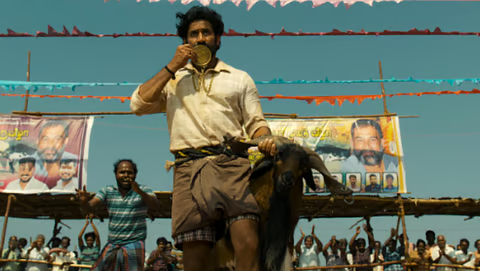
Jockey wastes no time immersing viewers in Madurai’s goat fighting circuit—a world most audiences don’t know exists. Ramar (Yuvan Krishna) arrives at Usilampatti in a share-auto, immediately mocked for his humble entrance. But his black goat Kaali speaks louder than any grand arrival could. Across seventeen fierce rounds, Kaali faces Anugundu, the reigning champion belonging to the arrogant Ghabra Karthi (Ridhaan Krishnas).
When Kaali breaks Anugundu’s horn, Ramar becomes Madurai’s Jockey—a title that ignites dangerous consequences. Karthi doesn’t accept defeat gracefully. What follows is an escalating cycle of humiliation and revenge: hidden hooks during rematches, midnight threats against Ramar’s sister, destroyed trophies, and tactics that push both men toward a point of no return.
The genius here is how the film uses this personal rivalry as a window into an entire cultural ecosystem. We’re not just watching two men settle scores—we’re witnessing how kida fighting shapes identities, determines social standing, and carries forward traditions that modern India is rapidly forgetting.
Performances: Conviction Meets Cultural Authenticity
Yuvan Krishna: The Underdog Who Earns Our Investment
Yuvan brings earnest dedication to Ramar, portraying him as a man who channels everything—pride, ambition, honour—through his champion goat. What makes the performance work is the restraint. Yuvan doesn’t oversell the emotions; he lets Ramar’s actions speak. Watch how he handles the post-victory scenes—there’s quiet satisfaction rather than theatrical triumph, suggesting a character who understands that in this world, every win invites new challenges.
The physical commitment shows too. Training goats, coordinating with real animals during shoots, maintaining focus across the extended production timeline—Yuvan’s performance reflects the patience required to bring this story to screen. His chemistry with Kaali feels genuine, a connection built through months of actual work rather than movie magic.
Ridhaan Krishnas: Arrogance With Layers
Ridhaan crafts Ghabra Karthi as more than a simple antagonist. Yes, he’s arrogant and impulsive, but there’s insecurity beneath the bravado—the fear that losing his champion means losing his identity. The character’s descent into increasingly desperate tactics tracks logically because Ridhaan establishes what’s at stake beyond simple pride.
His confrontational energy drives the rivalry convincingly. When Karthi crosses ethical lines, we understand the desperation fueling those choices. Ridhaan matches Yuvan’s intensity while providing the necessary contrast that makes their conflict compelling.
Supporting Cast: Authentic Voices From the Circuit
Ammu Abhirami brings warmth and normalcy to Meenu, creating breathing room amid the testosterone-fueled rivalry. Though her romantic subplot feels somewhat obligatory, she makes the most of every scene.
Madhu Sudhan Rao embodies the elder statesman role with authority, representing tradition’s wisdom even when younger generations won’t listen. His presence adds gravitas to scenes that might otherwise feel purely confrontational.
The ensemble populating both rival camps delivers authentic regional flavour, bringing credibility to the arena sequences. These aren’t Kollywood extras playing dress-up—they feel like actual participants in this tradition.
Direction and Vision: When Patience Becomes Art
Pragabhal’s Unprecedented Commitment
Here’s what makes this Jockey movie review celebratory: Pragabhal spent over three years capturing authentic goat fighting sequences. That’s not Hollywood blockbuster timeline for CGI dragons—that’s dedication to documenting real animals, real tradition, real culture. The director understood that this story demanded authenticity above all else, and he refused to compromise.
His approach respects both the tradition and the audience. Rather than sensationalizing or explaining away the cultural practice, Pragabhal simply shows it—trusting that the inherent drama of two animals in combat, the passion of their trainers, and the electric atmosphere of the arenas will speak for themselves. That trust pays off magnificently.
The film smartly positions itself as education through entertainment. We learn about kida fighting’s rules, its cultural significance in the Madurai belt, the training required, the social hierarchies it creates—all woven seamlessly into dramatic storytelling.
Technical Brilliance: Capturing Raw Reality
Cinematography: Dust, Sweat, and Madurai’s Soul
NS Uthayakumar’s camera work is nothing short of spectacular. The cinematography captures goat fighting with documentary authenticity while maintaining cinematic grandeur. Every collision feels visceral, every strategic maneuver visible, every drop of sweat and cloud of arena dust tactile and immediate.
What’s particularly impressive is how Uthayakumar balances intimate animal behaviour with crowd dynamics. Close-ups during combat show the raw physicality—muscles straining, horns connecting, animals calculating their next move. Wide shots capture the electric atmosphere of spectators living and dying with every round.
The Madurai locations pulse with gangster energy. These aren’t sanitized movie sets but lived-in spaces where this tradition actually happens. The cinematography honours both the spectacle and the cultural specificity, never letting either overshadow the other.
The Climactic Battle: Where Everything Converges
The final goat fight stands as Jockey’s crowning achievement. Pragabhal and his team deploy live sync-sound, putting viewers directly in the arena. You hear every collision, every crowd reaction, every strained breath. It’s immersive in ways modern cinema rarely achieves—no orchestral score overwhelming emotion, just raw reality captured with artistic precision.
This sequence alone justifies the three-year production timeline. Getting real animals to perform convincingly is no small feat. Coordinating cameras, handlers, actors, and unpredictable animal behaviour into coherent, thrilling cinema requires extraordinary patience and skill.
Sound Design and Music: Enhancing Without Overwhelming
Sakthi Balaji delivers dependable musical support that complements rather than dominates. The background score knows when to swell during dramatic confrontations and when to pull back, letting authentic arena sounds tell the story. This restraint serves the film’s documentary impulses—we’re here to witness tradition, not watch a typical commercial entertainer with wall-to-wall music.
The decision to use live sync-sound during key combat sequences adds visceral power that pre-recorded audio couldn’t match. You feel the impact of horns connecting, the shuffle of hooves in dirt, the eruption of spectators. It’s aural authenticity matching the visual approach.
Cultural Context: Preservation Through Popular Cinema
This Jockey movie review must celebrate what Pragabhal has achieved beyond entertainment: cultural documentation. The kida fighting tradition exists outside mainstream consciousness, practiced in specific regions by communities keeping heritage alive despite modernization pressures.
By bringing this tradition to theatrical release, Jockey ensures it reaches audiences who would never encounter it otherwise. Urban viewers, younger generations disconnected from rural practices, international audiences curious about India’s cultural diversity—all gain access through this film.
The movie trusts that the tradition itself is interesting enough to carry narrative weight. There’s no apologizing for cultural specificity, no over-explaining why goat fighting matters to these communities. Pragabhal shows respect by presenting the practice on its own terms, allowing viewers to appreciate it through immersive storytelling rather than anthropological distance.
What Works Magnificently
- Three years of dedication visible in every frame – The production timeline wasn’t indulgence; it was necessity for authenticity
- Spectacular goat combat sequences – Real animals performing convincingly creates cinema you’ve genuinely never seen
- Cultural preservation through entertainment – Important traditions documented for audiences who’d never encounter them otherwise
- Live sync-sound immersion – Puts viewers directly in the arena during climactic battle
- Committed lead performances – Yuvan and Ridhaan bring conviction that matches their four-legged co-stars
- Genuine originality – Mainstream Tamil cinema attempting something unprecedented
Minor Areas for Enhancement
- Familiar revenge narrative – The human conflict follows expected trajectories compared to the innovative subject matter
- Character differentiation – Ramar and Karthi’s similar temperaments could benefit from sharper contrasts
- Romantic subplot integration – Meenu’s storyline feels somewhat obligatory rather than organic
Final Verdict: 5/5 Stars ⭐⭐⭐⭐⭐
Jockey represents exactly what regional cinema should be doing—celebrating cultural specificity, taking risks on unfamiliar subjects, and trusting that authentic storytelling will find its audience. Pragabhal’s directorial debut announces a filmmaker committed to showing us what we haven’t seen before, willing to invest years to get it right.
The goat combat sequences alone justify theatrical viewing—this is cinema that cannot be replicated through digital shortcuts or compromised vision. Three years of coordinating real animals, cameras, and storytelling into coherent entertainment demonstrates filmmaking passion that’s increasingly rare.
This is Tamil cinema expanding rather than repeating, documenting rather than exploiting, celebrating regional culture while creating accessible entertainment. Jockey proves that unfamiliar worlds contain inherent drama—all they need are filmmakers brave enough to bring them to screen.
Why This Matters for Tamil Cinema
In an industry increasingly dominated by pan-Indian formulas and safe commercial choices, Jockey takes refreshing risks. It says that regional traditions deserve big-screen treatment, that authenticity can coexist with entertainment, that audiences will embrace originality when presented with confidence and craft.
The three-year investment demonstrates that some stories demand patience. Quick productions chasing trends will always have their place, but films like Jockey remind us that certain subjects require dedication matching the traditions they’re documenting.
The madness is real. The tradition is honoured. The cinema is unforgettable.
