


There are moments during Gudi Padwa preparation when you look at your thali and realize something’s missing. You have puran poli—rich, sweet, ghee-laden. You have sakhar bhat—golden, saffron-scented, celebratory. You have katachi amti—tangy, thin, digestive. All of it leans sweet or mild. What’s missing is something sharp, herbal, savory, and crispy. Something that cuts through all that sweetness and reminds your palate that not everything about celebration has to be gentle.
Ready in approximately 40 minutes and yielding 24 pieces, kothimbir vadi is practical for extended family celebrations. The research documents that approximately 80 percent of Maharashtrian households include vadi in festive thalis, and Maharashtrian snack searches reportedly spike approximately 70 percent during festivals—evidence of a recipe that’s both traditional and actively beloved.
Table of Contents
What Exactly Is Kothimbir Vadi?
Kothimbir vadi is a traditional Maharashtrian snack made from fresh coriander leaves (kothimbir in Marathi) and gram flour (besan), steamed until set, then sliced and shallow-fried until crispy. What distinguishes it from typical pakoras or bhajiya is the dual cooking method: steaming before frying ensures the center is cooked through and structured, while frying creates the crispy exterior.
The texture is the defining characteristic: crispy, golden-green edges that shatter slightly when you bite them, giving way to a soft, herb-packed, tender center. The flavor is intensely coriander-forward—this is approximately 70 percent fresh coriander by volume—with warmth from spices, nutty depth from sesame seeds, and the slight bitterness that makes fresh coriander so polarizing and, for those who love it, so addictive.
The research describes it accurately: “A steamed coriander-besan batter shaped into logs, sliced, and shallow-fried to create crispy-edged, soft-centered fritters.” This dual texture is what makes kothimbir vadi special—it’s not just crispy or just soft, it’s both simultaneously.
Recipe Overview
| Detail | Information |
|---|---|
| Prep Time | 15 minutes |
| Steaming Time | 18-20 minutes |
| Cooling Time | 30 minutes |
| Frying Time | 10 minutes |
| Total Time | ~40 minutes active + 30 minutes cooling |
| Yield | 24 pieces |
| Servings | 8-12 people |
| Cuisine | Maharashtrian |
| Course | Snack, Starter |
| Diet | Vegetarian |
| Difficulty Level | Medium |
| Calories per 2 Pieces | ~140 kcal |
Ingredients List
For the Main Batter
| Ingredient | Quantity | Notes |
|---|---|---|
| Fresh coriander leaves | 2 cups (finely chopped, ~200g) | Squeeze thoroughly to remove moisture |
| Gram flour (Besan) | 1 cup | Binds the mixture |
| Rice flour | ¼ cup | For crispness |
| Ginger-garlic-green chili paste | 1 tablespoon | Adjust heat to preference |
| Sesame seeds | 2 tablespoons | Adds nutty flavor and calcium |
| Turmeric powder | ½ teaspoon | |
| Red chili powder | 1 teaspoon | Adjust to taste |
| Cumin powder | 1 teaspoon | |
| Coriander powder | 1 teaspoon | |
| Garam masala | ½ teaspoon | |
| Lemon juice | 1 tablespoon | Adds tanginess |
| Salt | To taste | |
| Water | 3-4 tablespoons | Add gradually |
| Oil | 1 tablespoon | For batter |
Why Kothimbir Vadi Is Essential for Gudi Padwa
Gudi Padwa falls on March 29, 2026—the Marathi New Year, a festival whose thali is dominated by sweets. Puran poli, sakhar bhat, and various other sweet dishes create a menu that’s celebratory but can become overwhelming without savory balance.
Herbal intensity cuts through sweetness. The approximately 70 percent fresh coriander base provides sharp, green, herbal flavor that refreshes the palate between sweet bites. This isn’t mild—it’s aggressively coriander-forward, which is exactly what a sweet-heavy thali needs.
Protein and fiber in a festival snack. The approximately 8 grams of protein per serving from besan and the 3-4 grams of fiber make kothimbir vadi more nutritionally substantial than most festival starters. The research emphasizes this as a strength: it delivers “protein-fiber balance.”
Practical batch preparation. The 40-minute timeline (excluding cooling) produces 24 pieces—enough for extended family celebrations without hours of work. The research notes that approximately 80 percent of Maharashtrian households include vadi in festive thalis, suggesting this practicality contributes to its popularity.
Travel-friendly and shelf-stable. Once fried, kothimbir vadi can be stored in an airtight container for up to 3 days without losing crispness significantly. This makes it practical for serving throughout the Gudi Padwa period and even gifting to neighbors.
Cultural resonance. The research documents that “Maharashtrian snack searches reportedly spike ~70% during festivals”—evidence that this isn’t just traditional but actively sought. Kothimbir vadi carries specific cultural association with Maharashtrian celebrations.
CHECK MORE ON:Sandesh Recipe: No-Cook Sweet That’s Ready in 10 Minutes
The Critical Technique: Moisture Control for Perfect Structure
Before we get into the step-by-step, let’s establish the single most important factor that determines whether your kothimbir vadi succeeds or fails: moisture control.
Here’s what’s happening: Fresh coriander contains significant water content. When you chop it, those cell walls break and release moisture. If you mix this wet coriander directly with besan without removing excess water, you get a runny batter that won’t hold together during steaming and will be soggy after frying.
The solution is simple but requires effort: squeeze the chopped coriander thoroughly to release excess moisture. The research quotes Hebbars Kitchen: “Squeeze coriander to release moisture—it naturally binds with besan.” This squeezing serves two purposes: it removes water that would make the batter too thin, and it helps the coriander bind better with the besan.
The third element is adding water gradually—only 3-4 tablespoons total, and only if needed. The goal is a thick, halwa-like consistency that can be spread but isn’t pourable. If your batter is too thin, the vadi will be soggy. If it’s too thick, it won’t steam evenly.
Step-by-Step Instructions: Making Perfect Kothimbir Vadi
Step 1: Prepare the Coriander
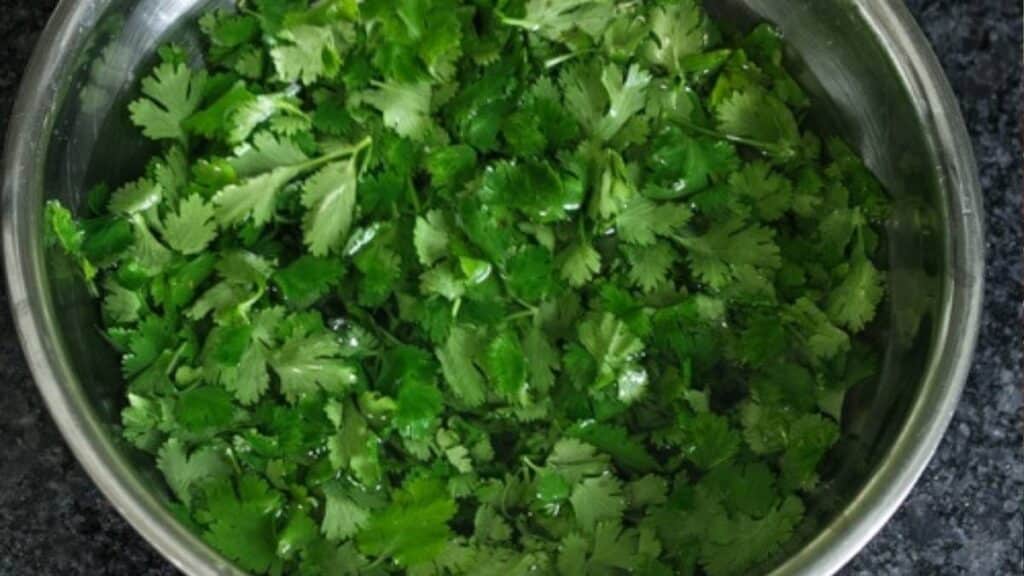
Wash 2 cups of fresh coriander leaves thoroughly. Drain well, then chop finely—not minced to a paste, but finely chopped so the pieces are small and uniform.
Time: 5 minutes
Step 2: Make the Batter

Using your hands, mash and mix everything together vigorously. The mixture should start coming together into a thick, cohesive mass. The research describes the desired consistency as “thick, halwa-like consistency.”
Time: 5 minutes
Step 3: Steam the Vadi

Grease a steaming plate (thali or cake pan) with oil. Spread the batter evenly on the plate to approximately 1-inch thickness. Don’t make it too thin (it will dry out) or too thick (the center won’t cook through).
Place the plate with batter in the steamer, cover, and steam for 18 to 20 minutes on medium heat. Test doneness by inserting a knife or toothpick in the center—it should come out clean. If not, steam for another 2 minutes.
Time: 20 minutes steaming
Step 4: Cool Completely
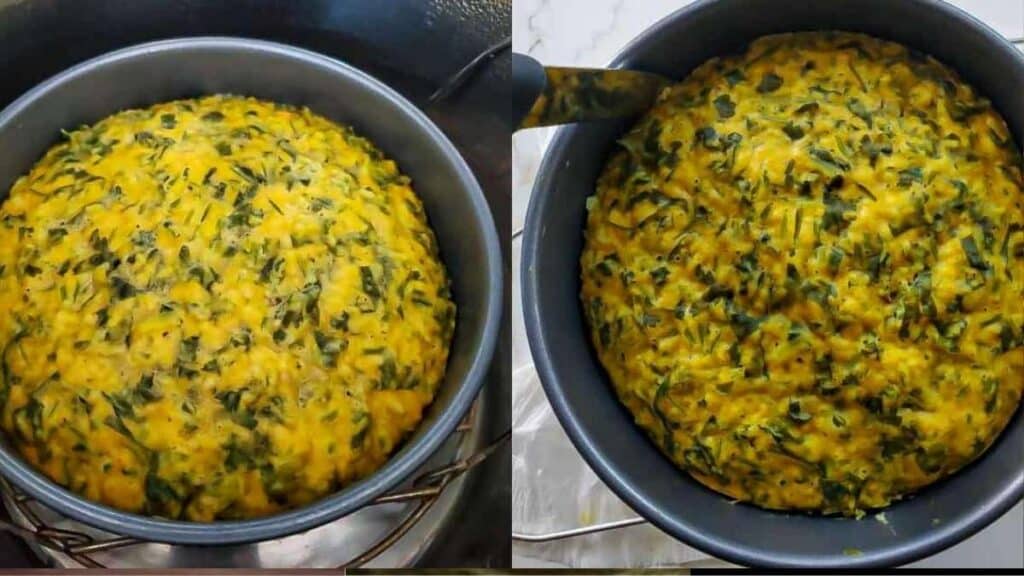
This step is critical and often rushed: let the steamed vadi cool completely at room temperature. This takes approximately 30 minutes.
The research warns: “Cool fully (approx. 30 minutes) before slicing” and identifies cooling as essential to prevent breakage: “Cracking while slicing? Steam extra 2 minutes and cool fully.”
Time: 30 minutes (passive)
Step 5: Slice the Vadi
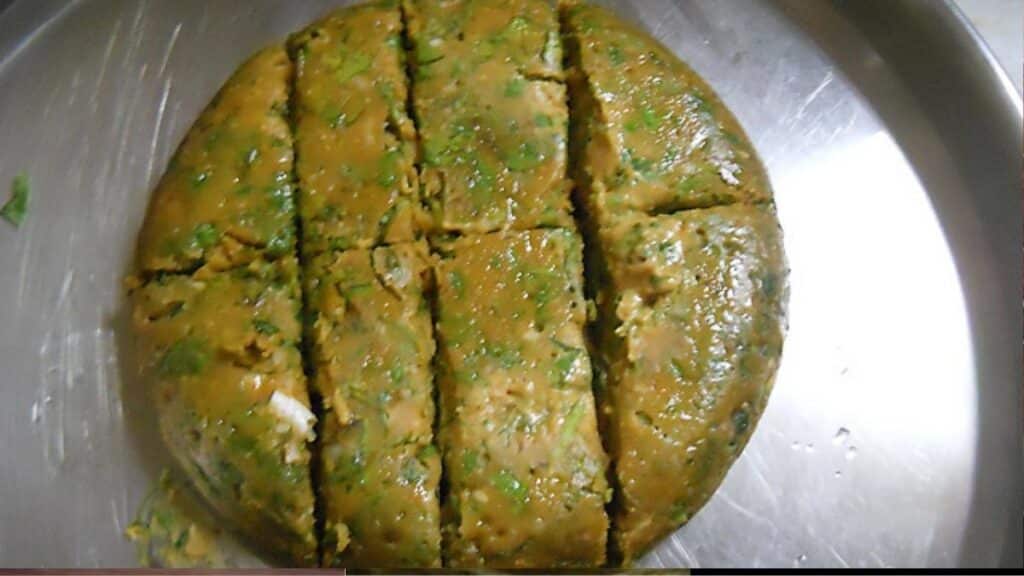
Cut into approximately ½-inch thick slices. You can make them slightly thinner (⅓ inch) for extra crispness or slightly thicker (¾ inch) for softer centers—it’s personal preference. The research advises: “Slice thin for maximum crunch.”
You should get approximately 24 pieces from one batch.
Time: 5 minutes
Step 6: Fry Until Crispy

Heat oil for shallow frying in a wide pan—you need enough oil to come approximately 2-3 mm up the sides of the vadi slices, or you can deep fry if you prefer.
Time: 10 minutes for all batches
Make-Ahead Strategy for Gudi Padwa
Day Before (March 28):
- Prepare and steam the vadi logs
- Cool completely and refrigerate
- Keep slices un-fried
Festival Morning (March 29):
- Slice the chilled steamed logs
- Fry fresh for maximum crispness
- Total morning time: Just 15 minutes
The research confirms: “Steam logs one day prior; fry fresh on festival morning”—this strategy gives you fresh-tasting vadi without morning stress.
Why This Recipe Still Matters
In the landscape of Gudi Padwa celebrations, kothimbir vadi occupies a specific and important niche: it’s the savory, herb-forward element that prevents sweet fatigue. The research documents that approximately 80 percent of Maharashtrian households include vadi in festive thalis—not as an afterthought but as an essential component.
What makes kothimbir vadi particularly valuable is how it addresses a genuine functional need. The research states this clearly: “Festive thalis require savory balance against sweet-heavy dishes like puran poli and sakhar bhat.” Without something sharp and savory, a sweet-dominated thali becomes overwhelming. Kothimbir vadi provides exactly that balance through its approximately 70 percent fresh coriander base—aggressive, herbal flavor that cuts through richness and resets the palate.
The nutritional profile adds substance to this role. With approximately 8 grams of protein per serving from besan and approximately 300 percent daily value of vitamin K from coriander, kothimbir vadi is one of the few festival starters that delivers genuine nutrition alongside taste. The research emphasizes: it provides “protein, fiber, and crunch in a festive menu.”
Why is my kothimbir vadi batter too runny?
The most common cause is not squeezing the coriander thoroughly enough to remove excess moisture.
My vadi slices turned out soggy instead of crispy. What went wrong?
The research provides the solution: “Soggy slices? Ensure hot oil and thin slicing.” Two factors cause sogginess
The steamed vadi is cracking when I try to slice it. How do I fix this?
The research addresses this directly: “Cracking while slicing? Steam extra 2 minutes and cool fully.”
