


From hand-draped sarees to Swarovski-studded gowns, the Miss India crown has witnessed an extraordinary style evolution.
“The crown is not just a jewel; it is a responsibility.”
Since 1947, Miss India has been far more than a beauty title. It has mirrored the changing face of Indian womanhood—graceful yet bold, rooted yet global. Over nearly eight decades, the pageant has evolved from modest cultural elegance to a powerful platform that celebrates confidence, individuality, and international glamour.
This blog traces how Miss India legends shaped style trends from 1947 to 2025, exploring how fashion, confidence, and representation transformed with every generation—while honouring every queen who wore the crown.
The Foundation Years: When Six Yards Made History (1947-1960s)
1947: Esther Victoria Abraham (Pramila) – The Revolutionary First
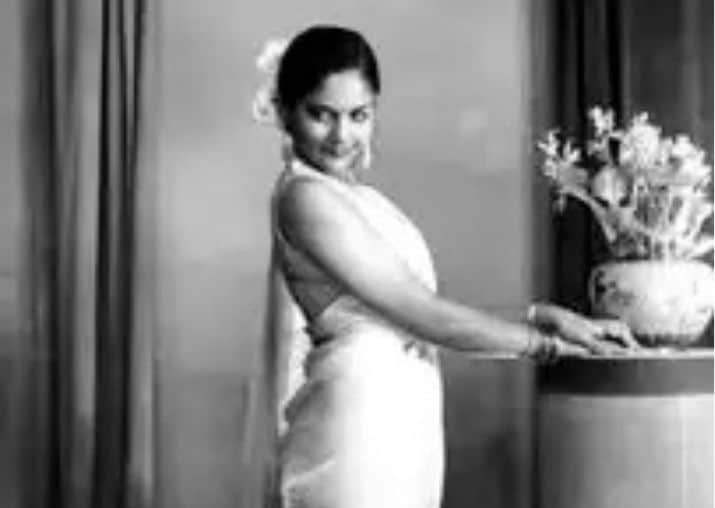
Miss India 1947
Picture this: India has just won independence. Partition wounds are fresh. The nation is finding its feet, and in walks Pramila—bold, beautiful, already a film actress—draping her saree with a Western twist that nobody had seen before. She didn’t just win a crown; she made a statement that Indian women would define beauty on their own terms.
Born in Kolkata on December 30, 1916, Pramila was ahead of her time in ways that still inspire. She designed her own finale look—a saree that honored tradition while refusing to be bound by it. That spirit? That’s where it all began.
1952: Indrani Rahman – Cultural Pride on the Global Stage
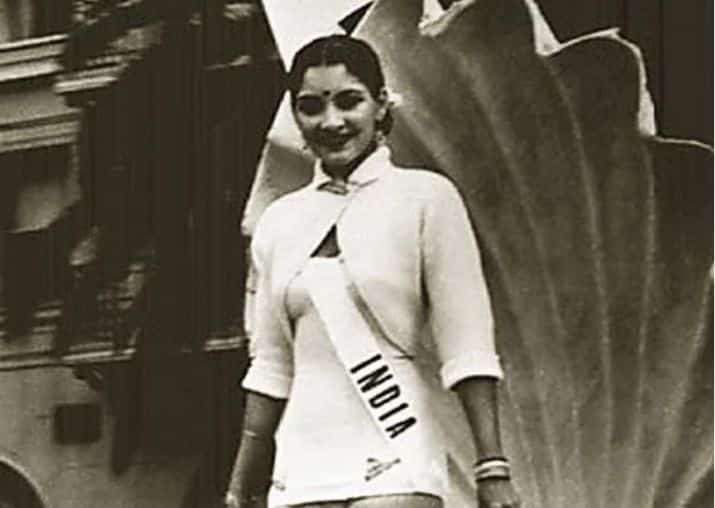
Miss India 1952
Chennai-born Indrani Rahman (September 19, 1930) took that revolutionary spirit and doubled down on cultural authenticity. While the world expected Indian contestants to conform to Western beauty standards, Indrani walked into Miss Universe in a traditional silk saree, complete with bindi and jasmine gajra in her hair.
Even during the swimsuit round—yes, you read that right—she maintained elements of her cultural identity. The judges didn’t know what to make of it, but she didn’t care. She was representing India, not apologizing for it.
1954: Leela Naidu – When Vogue Noticed
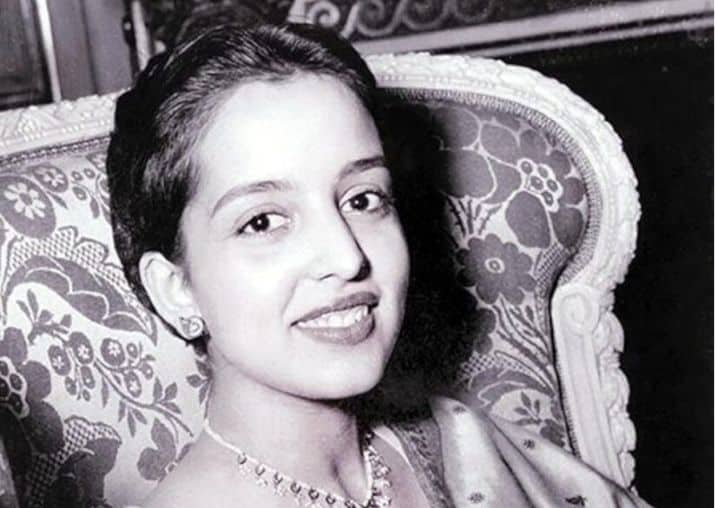
Miss India 1954
Mumbai’s Leela Naidu proved that understated elegance could steal every spotlight. Her classic silk chiffon saree was poetry in motion—no drama, no gimmicks, just pure, breathtaking grace. Vogue would later name her one of the ten most beautiful women in the world, and honestly, those pictures still hold up today.
1966: Reita Faria – The World Conqueror in Six Yards
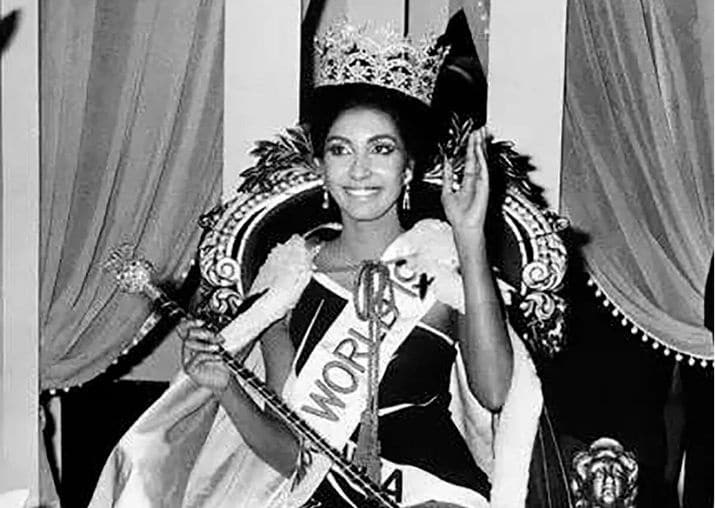
Miss India 1966 | Miss World 1966
Here’s where it gets really good. Mumbai-born Reita Faria (August 23, 1943) became the first Asian woman to win Miss World, and she did it wearing a dark silk saree while every other contestant wore Western gowns.
Let that sink in.
She walked onto that London stage representing a country that had been independent for less than 20 years, wearing traditional attire, and made the entire world stop and stare. And then? She went on to become a doctor. Because the crown was never the destination—it was just one beautiful stop along the way.
The Bollywood Era: When Pageants Became Star Factories (1980s-1990s)
1984: Juhi Chawla – That Infectious Smile
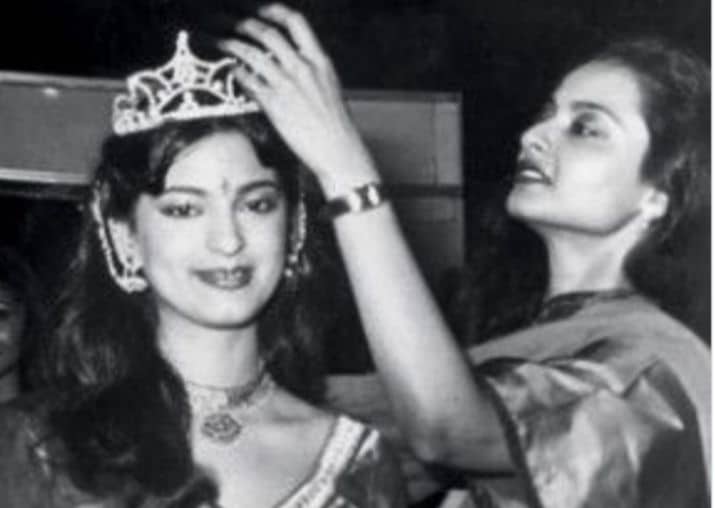
Miss India 1984
The 1980s brought a shift. Winning Miss India now meant a potential Bollywood career, and Juhi Chawla from Ambala, Haryana (November 13, 1967) embodied this new era perfectly.
Her pink lehenga-choli fusion for Miss Universe wasn’t just gorgeous—it won her “Best National Costume” and signaled a new fashion direction. We were mixing traditional elements with contemporary silhouettes, creating something uniquely Indian yet globally appealing. That smile, though? That was pure, unfiltered joy. The kind that makes you believe good things can happen.
1994: The Year That Changed Everything
If you were alive and conscious in 1994, you remember where you were when it happened. Two Indian women—Sushmita Sen and Aishwarya Rai—won Miss Universe and Miss World in the same year. The same. Year.
Sushmita Sen (Hyderabad, November 19, 1975) wore a beige gown that has become the stuff of legends—not because of its price tag, but because it had none. Stitched by a local Delhi tailor using Meena Bazaar curtain fabric, with gloves fashioned from socks, that gown proved what every immigrant knows in their bones: it’s not about having the most expensive thing. It’s about having the most heart.
When Sushmita answered that famous question about the essence of a woman being a mother, she wasn’t following a script. She was speaking her truth. And the world listened.
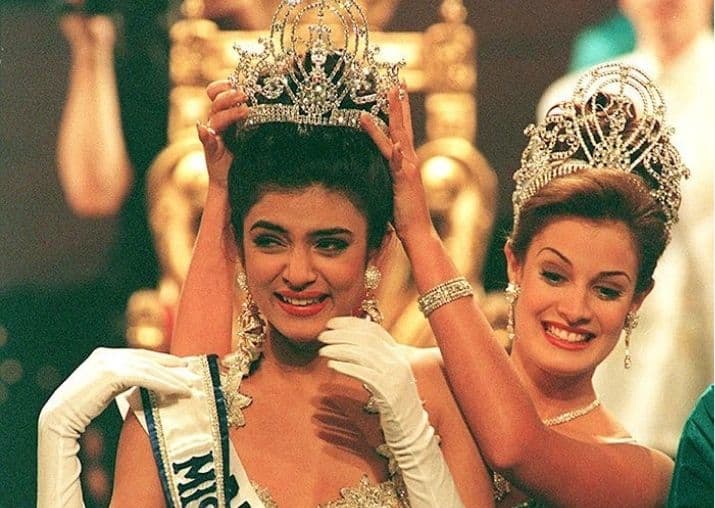
Miss India 1994 | Miss Universe 1994
Aishwarya Rai (Mangalore, Karnataka, November 1, 1973) took a different route—a sparkling white, one-shoulder gown that became instantly iconic. That look has been recreated a thousand times since, and it still holds up. Those eyes, that poise, that gown—perfection meeting possibility.
The fashion lesson from 1994? Confidence fits better than any designer label ever could.
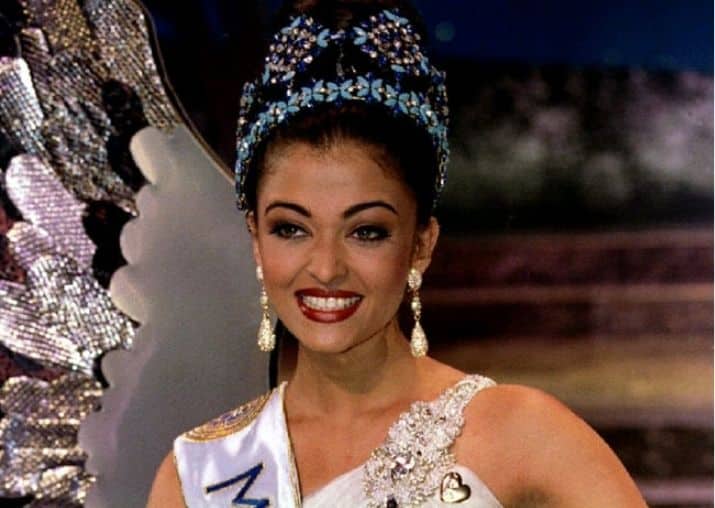
Miss India 1994 | Miss World 1994
The Golden Year 2000: The Trinity of Triumph

Miss India 2000 | Miss Universe 2000

Miss India 2000 | Miss World 2000

Miss India 2000 | Miss Asia Pacific 2000
Lara Dutta, Priyanka Chopra, Dia Mirza
Then came the year 2000, and suddenly the millennium felt full of promise. Three women, three different paths, three unforgettable finale looks.
Lara Dutta (Ghaziabad, UP, April 16, 1978) owned that stage in a striking red gown that commanded every eye in the room. Her 9.99 score in the interview round at Miss Universe remains unbeaten. Red wasn’t just her color that night—it was power personified.
Priyanka Chopra (Jamshedpur, Jharkhand, July 18, 1982) chose pink—a strapless gown by Hemant Trivedi with a sweetheart neckline. Years later, she’d reveal she taped that dress to her body to prevent wardrobe malfunctions. Behind every flawless pageant moment is a woman making it work with tape, prayer, and pure determination. We love the honesty.
Dia Mirza (Hyderabad, December 9, 1981) shimmered in blue and silver, looking like she’d captured the ocean itself. Fitting for someone who’d become an environmental champion. Even in 2000, her fashion choice was speaking to values larger than the stage.
The Modern Era: Intelligence, Identity, and Innovation (2017-2025)
2017: Manushi Chhillar – The Medical Marvel
After 17 years, the Miss World crown came home, carried by Rohtak’s Manushi Chhillar (May 14, 1997) in a plunging, crystal-embellished pink gown by Falguni Shane Peacock. The gown was designed to look like a “dream,” and that’s exactly what her win felt like—a medical student proving you don’t choose between ambition and beauty. You embody both.
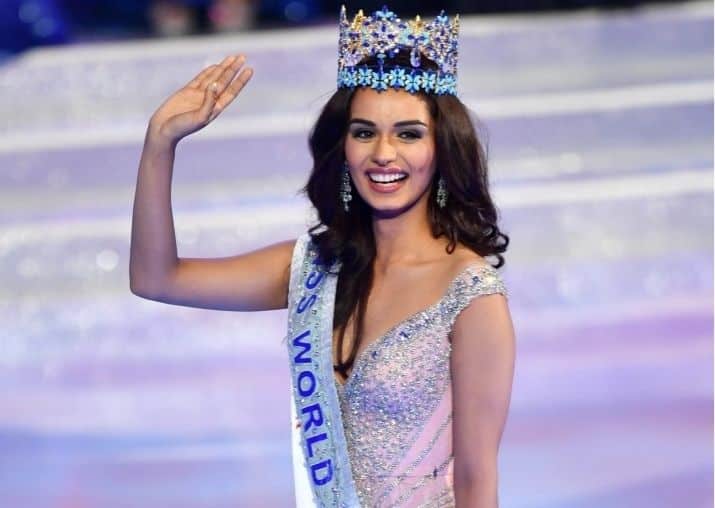
Miss India 2017 | Miss World 2017
2022: Sini Shetty – The Dancing Queen
Mumbai’s Sini Shetty (June 20, 2001) brought something new to the stage—a metallic silver gown with strategic high slits designed for movement. As a professional Bharatanatyam dancer, she needed fashion that flowed with her, not against her. That attention to functional beauty? That’s the modern Miss India understanding that fashion serves the woman, not the other way around.

Miss India 2022
2023: Nandini Gupta – The Young Dreamer
Kota’s Nandini Gupta showed sophistication beyond her young age in a classic black velvet gown with silver embellishments by Rohit Bal. Black velvet in the age of Instagram sparkle? Bold. Beautiful. Timeless. She reminded us that trends come and go, but elegance is forever.

Miss India 2023
2024: Nikita Porwal – The Reigning Grace
Ujjain’s Nikita Porwal, just 18 at her crowning, stunned everyone in a champagne-colored gown encrusted with Swarovski crystals, featuring a dramatic train and intricate beadwork. That moment when the stage lights caught her gown during the crowning? Pure magic.
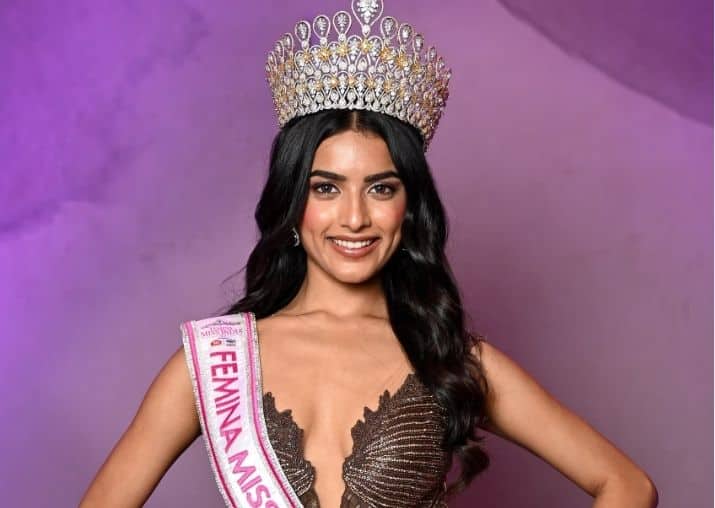
Miss India 2024
2025: Manika Vishwakarma – The Future Is Now
And now we arrive at Jaipur’s Manika Vishwakarma (2003, age 22), representing India at Miss Universe in a daring sheer silver gown with metallic embellishments by Nhà Mốt 9192. The “naked dress” trend has hit the pageant stage, and Manika is owning it with fearless confidence.
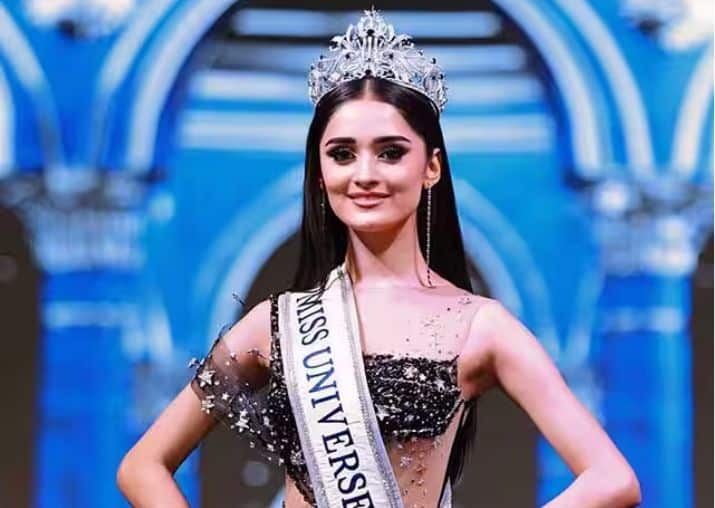
Miss Universe India 2025
From Pramila’s carefully draped saree to Manika’s barely-there shimmer, we’ve traveled light-years in fashion philosophy. But here’s the thing—both looks required the same thing: audacity.
How Miss India Fashion Has Changed Over Time
| Era | Fashion Identity |
|---|---|
| 1940s–60s | Sarees, minimalism, cultural pride |
| 1980s–90s | Glamour, Bollywood influence |
| 2000s | Power gowns, global dominance |
| 2017–2025 | Individuality, couture, purpose |
From Sarees to Statements
From Esther Abraham’s self-styled saree to Manika Vishwakarma’s futuristic couture, Miss India fashion tells the story of India itself—evolving, expressive, and empowered.
At Dazzlerr, we believe every aspiring model, actor, or creator can draw inspiration from these legends. Style changes. Trends fade. But confidence? That never goes out of fashion.
Your crown doesn’t start on a stage—it starts with visibility, courage, and a professional profile.
For Every Girl Dreaming of Her Own Crown
Here’s what these 78 years of Miss India winners really tell us: the crown doesn’t make you worthy. Your courage, your voice, your willingness to stand on that stage and say “I belong here”—that’s what makes you queen.
Whether you’re wearing your grandmother’s repurposed wedding saree or a couture gown that costs more than a car, whether you’re a medical student or a dancer or an engineer or all three—there’s room for you in this legacy.
The beauty of Miss India’s evolution is that there’s no longer one acceptable way to look, speak, or dream. Pramila opened that door in 1947. Every woman since has walked through it and kicked it a little wider for the ones coming behind.
The crown doesn’t define the woman. The woman defines what the crown can become. And looking at these 78 years of grace, grit, and gorgeous gowns, it’s clear—Indian women have been redefining beauty, success, and possibility one six-yard drape, one sparkling gown, one fearless answer at a time.
