


Valentine’s Day has a way of putting pressure on everything — the dinner reservation, the gift, the whole evening. But here is the thing nobody tells you: the most romantic meal is almost always the one made at home, in your own kitchen, for someone who matters. And if that meal ends with a molten chocolate lava cake — warm, gooey, deeply chocolatey, with that moment when the centre spills open on the plate — no restaurant in the city can compete with that.
This recipe makes two perfect lava cakes in under 30 minutes, with ingredients you likely already have. It is the Valentine’s Day dessert that looks like it took all day and actually takes less time than getting ready for a dinner out.
Quick Answer
Melt chocolate and butter, beat eggs and sugar until fluffy, combine with a touch of flour, pour into greased ramekins, and bake at 450°F for 9–13 minutes until the edges are set and the centre is still jiggly. Two restaurant-quality molten lava cakes, ready in under 30 minutes.
Table of Contents
Why Molten Chocolate Lava Cake Is the Ultimate Valentine’s Day Dessert
There is a reason this dessert has appeared on every romantic restaurant menu for the last two decades. The lava cake is theatrical in the best possible way — it looks composed and elegant on the outside, and then you break into it and something warm and molten pours out, like it has been holding something in reserve just for this moment. As a Valentine’s Day metaphor, it is almost too perfect.
For the Indian diaspora community specifically, Valentine’s Day has always occupied an interesting space. It is not quite a traditional celebration, but it has been adopted warmly — and when you are living abroad, away from the elaborate family celebrations of home, small intimate gestures carry extra weight. A homemade dessert made specifically for your person, on a Tuesday evening in February, says something that a restaurant booking simply cannot.
This lava cake is that gesture. Rich, warm, made with care, finished in under half an hour.
CHECK MORE ON:Thandai Recipe: Traditional Spiced Milk Drink
What You Need to Make Molten Chocolate Lava Cakes
The ingredient list here is short and purposeful. Every single item earns its place:
| Ingredient | Why It Matters |
|---|---|
| 70% cacao bittersweet chocolate | The foundation — deep, complex flavour without being too sweet |
| Unsalted butter | Richness and that silky ganache-like base |
| 1 whole egg + 1 egg yolk | The two yolks add fat and moisture; the white adds structure and rise |
| Granulated sugar | Sweetness and helps create that slightly airy beaten texture |
| All-purpose flour | Just a touch — too much and you lose the molten centre |
| Instant espresso powder | Optional but transformative — deepens the chocolate flavour significantly |
| Vanilla extract | Warmth and aromatic depth |
| Cocoa powder | For dusting the ramekins — ensures clean release |
| Salt | Balances the sweetness and sharpens the chocolate |
The espresso powder deserves a special mention because it surprises people. You cannot taste coffee in the finished cake — what it does is amplify the chocolate, making it taste more intensely of itself. It is one of those baker’s secrets that makes the difference between a good lava cake and one that someone talks about afterwards. If you do not have it, leave it out, but if you do have it, use it.
Equipment: What You Actually Need
The right vessel makes a meaningful difference here. Two 8-oz ramekins or cocottes are ideal — the Staub mini cocottes in cast iron are a beautiful option if you want something that goes from oven to table looking like it belongs in a fine dining kitchen. Cast iron retains heat beautifully and gives the exterior a slightly firmer edge, which makes that molten centre contrast even more dramatic.
If you only have ceramic ramekins, they work perfectly well — they just need a slightly longer bake time, around 11 to 13 minutes versus 9 to 10 for cast iron. Metal conducts heat faster than ceramic, so adjust accordingly and do not swap between the two without accounting for the time difference.
In a pinch, a muffin tin works too. You will get smaller cakes and the bake time will be shorter, so keep a close eye on them. The presentation is less dramatic but the flavour is identical.
How to Make Molten Chocolate Lava Cakes Step by Step
The method moves quickly once you start, so it helps to have everything measured and ready before you begin.
Step 1: Prepare the Ramekins
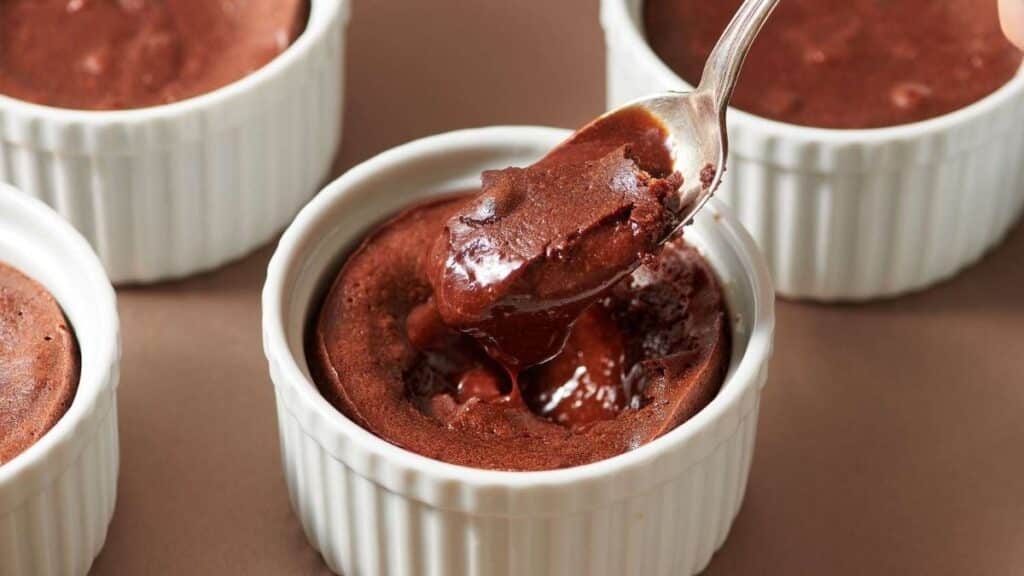
Preheat your oven to 450°F (230°C). Coat the interior of each ramekin with softened butter or cooking spray, making sure to cover every surface including the base. Using a small strainer, dust the interior with cocoa powder and tap the ramekin upside down to remove any excess.
Step 2: Melt the Chocolate and Butter
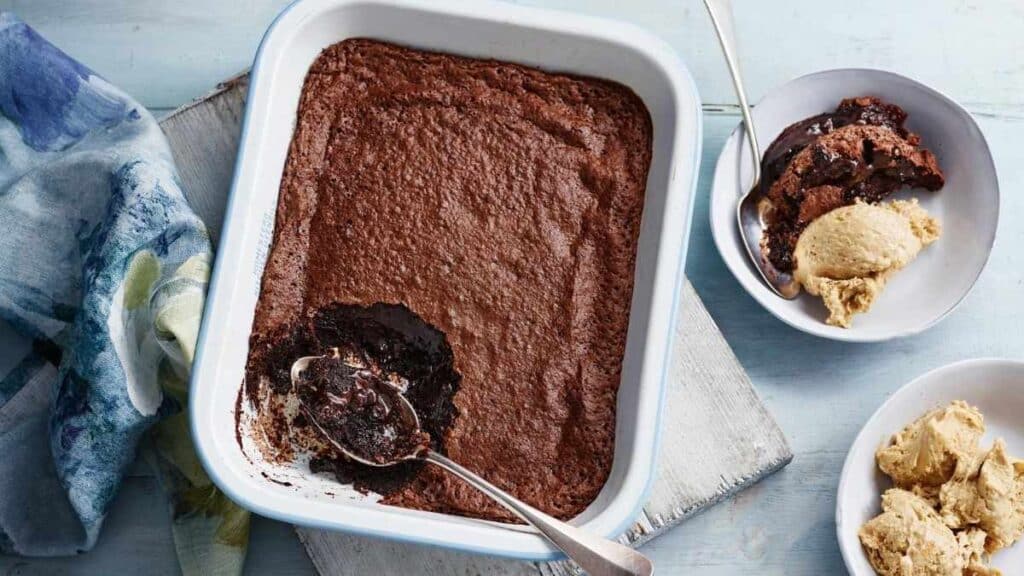
In a small microwave-safe bowl, melt the chocolate and butter together in 20-second intervals, stirring between each. Continue until fully melted and smooth — what you are looking for is a silky, ganache-like consistency with no lumps. Set it aside to cool slightly while you prepare the eggs.
Step 3: Beat the Eggs and Sugar

In a medium mixing bowl, beat the whole egg, egg yolk, and sugar together on high speed for 2 to 4 minutes until the mixture is pale, slightly airy, and increased in volume. This step is what gives the lava cake its structure — the air beaten into the eggs is what allows the edges to set while the centre stays molten. Do not skip or shorten it.
Step 4: Combine and Fold
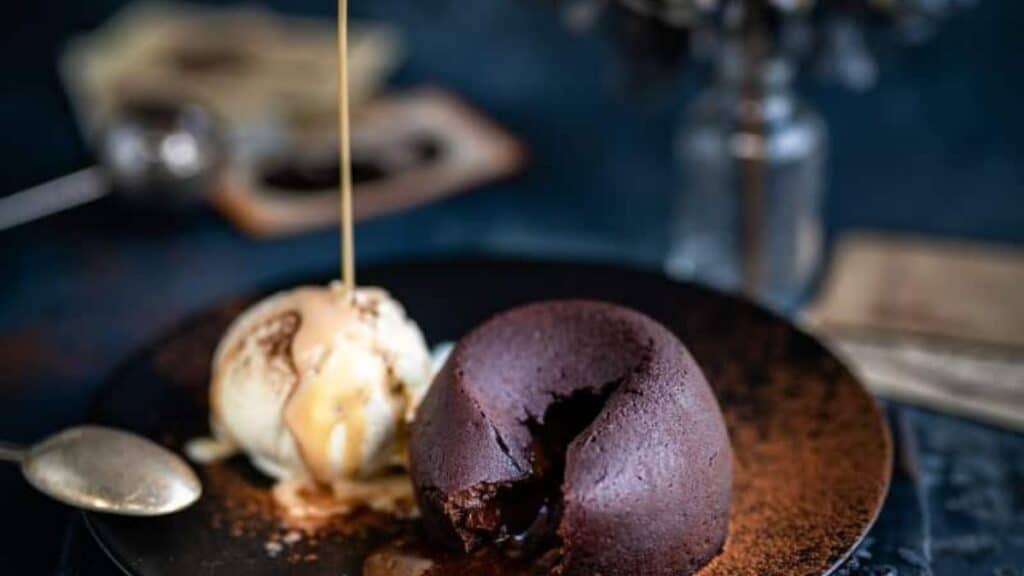
Add the chocolate mixture, flour, vanilla extract, espresso powder, and a pinch of salt to the beaten eggs. Fold everything together lightly until just incorporated. The key word here is fold, not stir
Step 5: Fill the Ramekins and Bake
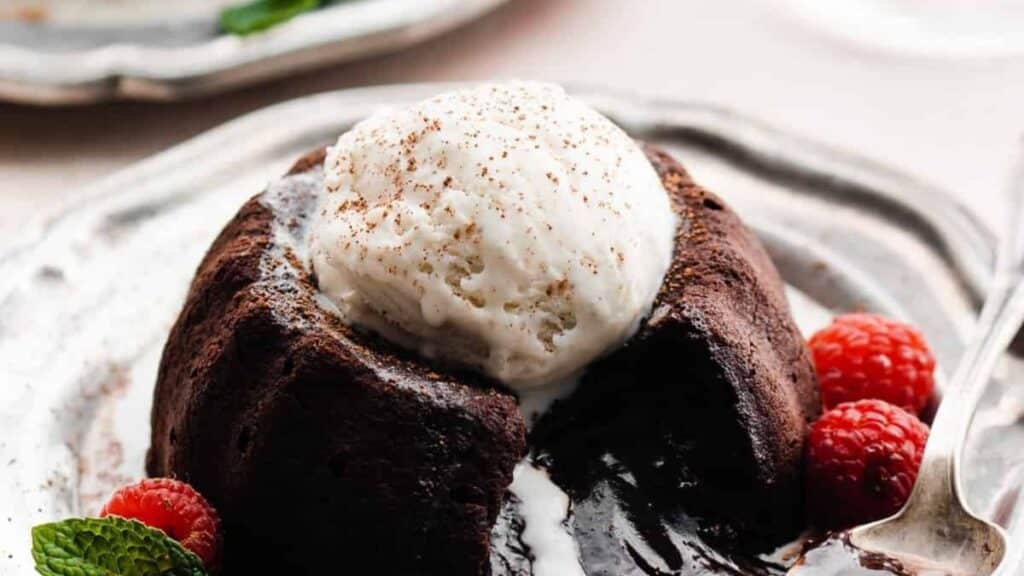
Divide the batter evenly between the two prepared ramekins. Place them on a baking tray and bake for 9 to 10 minutes if using cast iron, or 11 to 13 minutes if using ceramic. The lava cakes are ready when the edges are visibly set and the centre is still jiggly when you give the ramekin a gentle shake. They will puff up slightly during baking — once they stop rising, they are close to done. The jiggly centre is not underbaking — it is exactly what you want.
Step 6: Release and Plate
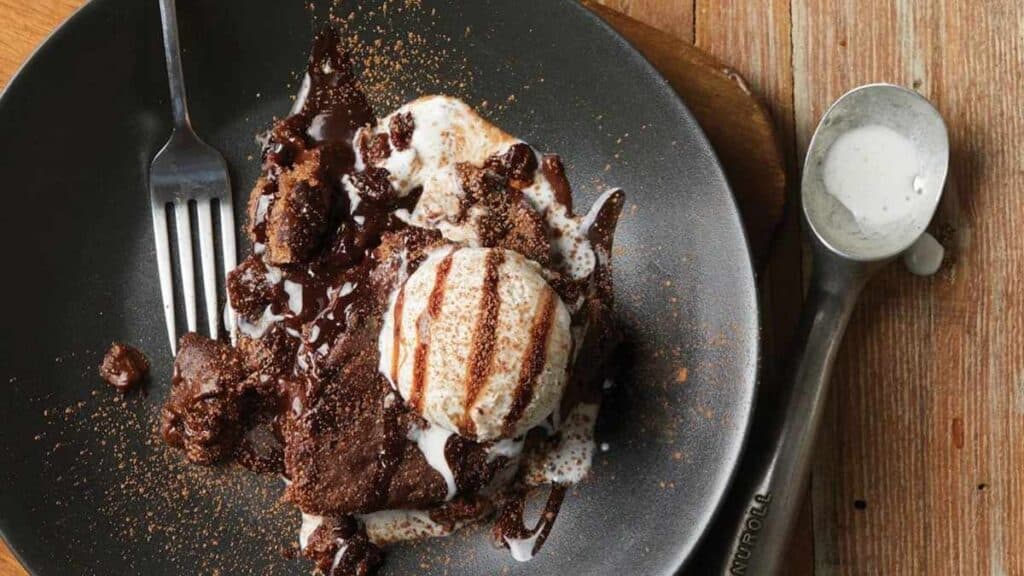
Run a small paring knife carefully around the edge of each ramekin to loosen the sides. Place a small plate on top of the ramekin, then flip the whole thing over in one confident motion. Hold it for a moment, then tap the top of the ramekin firmly.
Step 7: Garnish and Serve Immediately
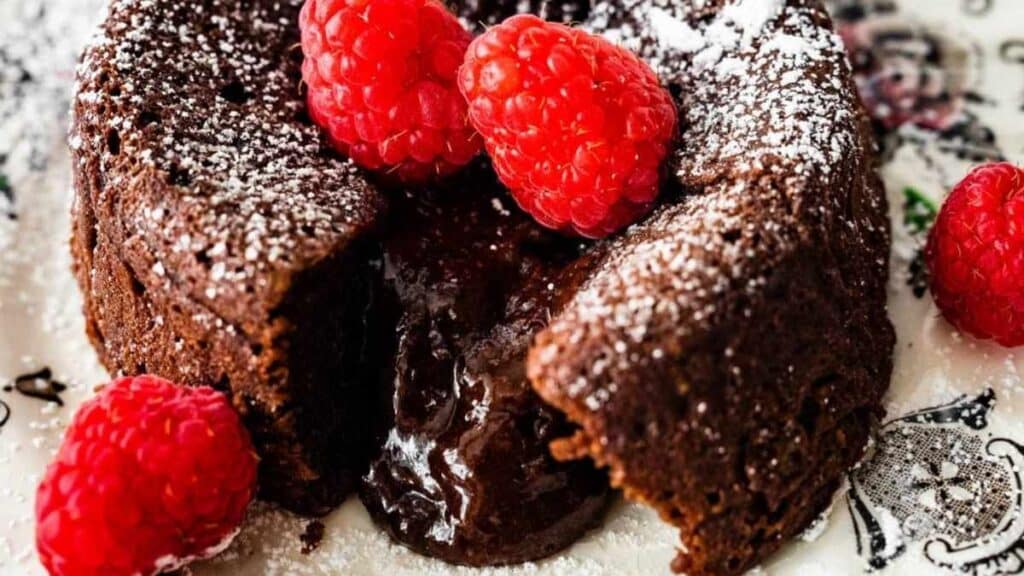
Dust lightly with powdered sugar. Add a few fresh raspberries or strawberries on top and a sprig of mint if you have it. Serve immediately — lava cakes do not wait, and the molten centre continues to set the longer it sits. The moment you cut into it at the table and that warm chocolate centre flows out is the entire point.
How to Know When Your Lava Cake Is Done
This is the part that makes first-time lava cake bakers nervous, and it genuinely should not. The visual cues are very clear once you know what to look for. The cake will puff up during baking, almost like a soufflé. Once it stops rising, remove it from the oven and give the ramekin a gentle jiggle. The sides should be set and hold their shape. The centre should wobble — not liquid, but clearly not solid either. That wobble is the lava waiting inside.
If you want extra reassurance, insert a toothpick into the very top of the cake. If it comes out wet with batter, you are done. If it comes out with cooked crumbs, you have gone slightly too far — the centre will still be soft but may not pour as dramatically. Either way, it will taste extraordinary.
The most important thing to remember: these cakes continue cooking from residual heat after they leave the oven. What looks slightly underdone at 9 minutes will be perfect by the time it reaches the table. Trust the jiggle.
Valentine’s Day Serving Suggestions
The lava cake is complete on its own, but a few additions make the experience feel even more considered:
- Vanilla ice cream alongside a warm lava cake is one of the great dessert combinations — hot and cold, rich and clean, all at once.
- Fresh raspberries or strawberries cut through the richness of the chocolate and add a brightness that makes the whole plate feel more complete.
- Strawberry coulis drizzled around the base of the cake adds colour, flavour, and a restaurant-level presentation.
- A light dusting of powdered sugar just before serving is the simplest finishing touch and the one that makes it look most elegant.
- Pair with a strawberry vanilla cocktail for a full Valentine’s Day date night at home that genuinely rivals anything you would pay for outside.
Storage and Make-Ahead Tips
Lava cakes are unambiguously best the moment they come out of the oven. The molten centre is a live thing — it sets as the cake cools, and while the leftovers are still delicious, they are more fudgy brownie than molten lava. If you somehow have leftovers, cool them to room temperature, store in an airtight container, and refrigerate for up to 2 days. To reheat, place on a plate, cover with a damp paper towel, and microwave for about 30 seconds.
The genuinely useful make-ahead tip is this: you can prepare the unbaked batter in the ramekins, wrap them tightly in cling film, and freeze for up to 6 months. On Valentine’s Day, you can either thaw them in the refrigerator overnight and bake as directed, or bake straight from frozen with a few extra minutes added to the bake time. It is a genuinely brilliant option for a celebration dinner where you want to be present at the table rather than in the kitchen.
How do I know when molten lava cakes are done?
The edges should be set and the centre should still jiggle when you shake the ramekin gently.
Can I make lava cakes ahead of time for Valentine’s Day?
Yes. Prepare the batter in the greased ramekins, wrap tightly in cling film or foil, and freeze for up to 6 months
What is the best chocolate to use for lava cakes?
70% cacao bittersweet baking chocolate gives the deepest, most complex flavour.
