


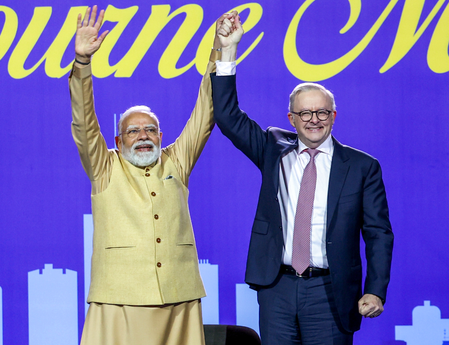
India’s Council of Scientific and Industrial Research (CSIR) has granted IP Australia access to its Traditional Knowledge Digital Library during the 3rd India–Australia Annual Summit in Melbourne. This agreement, known as the TKDL Access Agreement, is a significant outcome of the summit. It enables IP Australia to utilize the database to identify relevant prior art during the examination of patent applications in alignment with Australia’s patent laws.
The TKDL is a unique prior art database established by India to safeguard its traditional knowledge from being wrongly patented. This initiative aims to prevent the misappropriation of India’s rich traditional knowledge through the issuance of patents. The agreement is expected to streamline patent examination processes by ensuring that patents are not granted for knowledge that already exists within India’s documented traditional heritage.
The signing of this agreement took place in the presence of Indian Prime Minister Narendra Modi and Australian Prime Minister Anthony Albanese MP. Both India and Australia possess diverse indigenous knowledge systems, traditional practices, and cultural expressions that are susceptible to misappropriation. This collaboration underscores the joint commitment of both nations to protect traditional knowledge and enhance intellectual property systems by leveraging documented prior art effectively.
The CSIR-TKDL, designed to avoid the erroneous granting of patents based on Indian traditional knowledge, currently houses data on over 5.2 lakh formulations and practices from Ayurveda, Unani, Siddha, Sowa Rigpa, and Yoga. This information has been translated into five international languages for the benefit of patent examiners globally. With the inclusion of IP Australia, a total of eighteen patent offices now have access to this database under Non-Disclosure Agreements (NDAs).
