


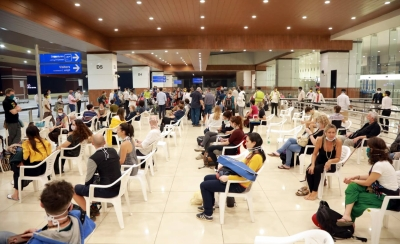
Health authorities at Cochin International Airport in Kerala’s Kochi have increased surveillance and precautionary measures against the Ebola virus. This action follows a meeting jointly organized by Cochin International Airport Limited (CIAL) and the Airport Health Organisation (APHO) to enhance emergency preparedness. The objective is to bolster early detection and public health response systems at the airport amidst global worries about Ebola outbreaks in Africa.
The official media release issued on Friday confirmed the escalation of health surveillance and precautionary protocols against the Ebola virus at Kochi airport. The meeting’s decision includes plans to enhance passenger monitoring systems and reinforce coordinated public health response measures to prevent potential infection spread. As part of the heightened surveillance, a 24×7 monitoring system for international passengers has been activated. Thermal screening, verification of 21-day travel history, and mandatory submission of self-declaration forms are now required for passengers arriving from abroad.
Special monitoring will be conducted for travelers arriving from countries like the Democratic Republic of the Congo, Uganda, and South Sudan, where concerns regarding Ebola outbreaks are significant. The emergency preparedness meeting was attended by various officials, including CIAL Airport Director Manu G, Airport Health Officer Dr. Raphael Teddy, and other representatives from different authorities and organizations. APHO Public Health Specialist Dr. Anna presented a detailed preparedness and response plan focusing on Ebola prevention, case identification, and infection control protocols.
Officials highlighted that among the five reported species of the Ebola virus, there is currently no approved vaccine or specific treatment for the Bundibugyo Ebola Virus (BDBV) variant. They emphasized that the disease can be transmitted from animals to humans and through direct contact with the bodily fluids of infected individuals. Health authorities mentioned that the incubation period of the disease ranges from two to 21 days, with early warning signs including fever, sore throat, headache, and flu-like symptoms. The mortality rate, they stated, varies between 30 and 50 percent.
To enhance emergency preparedness, isolation wards have been set up at Ernakulam General Hospital, Government Hospital Kalamassery, and District Hospital Aluva. Authorities stressed the importance of strict adherence to infection prevention measures, such as wearing three-layer masks and maintaining proper hand hygiene through regular handwashing with soap.
