


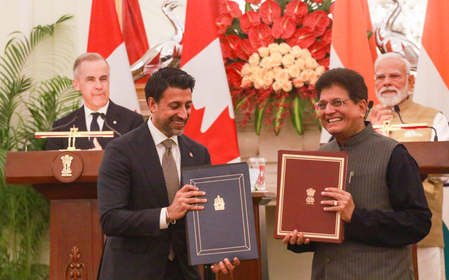
The Indian government, under Prime Minister Narendra Modi, has finalized a significant $2.6 billion agreement with Canada for the long-term supply of uranium. This move is crucial for India’s goal of achieving 100 gigawatts of nuclear capacity by 2047. With India’s domestic uranium production expected to fall short of demand, the deal with Canada becomes essential to meet the fuel requirements for both current and future nuclear reactors.
Experts highlight that India’s reliance on uranium imports is likely to increase due to the gap between domestic production and demand. While Kazakhstan has been a major uranium supplier to India, the new deal with Canada will provide an additional source of this vital fuel for the country’s nuclear reactors. The agreement is strategically significant in ensuring a steady supply of uranium for India’s expanding nuclear energy sector.
In a move to boost its nuclear energy capabilities, India’s Parliament approved reforms in 2025 that allow domestic and foreign companies to build, own, and operate nuclear power plants. This overhaul of the civilian nuclear energy framework aims to attract foreign technology partners and private investments necessary for India’s nuclear expansion plans. The reforms address long-standing supplier liability concerns and establish a more predictable regulatory environment.
Canada, known for its strong uranium mining sector, is well-positioned to fulfill India’s uranium requirements. The country’s growing uranium output from new mining projects instills confidence in the long-term success of the supply agreement. Prime Minister Modi hailed the uranium deal with Canada as a landmark achievement, emphasizing collaboration on small modular reactors, advanced technologies, and the nuclear value chain. The two countries are set to launch a strategic energy partnership to enhance cooperation in the energy sector.
A joint statement issued after a summit between the leaders of India and Canada highlighted the significance of the $2.6 billion commercial agreement between Cameco and the Department of Atomic Energy. This deal is expected to contribute to India’s civil nuclear energy generation, clean energy transition goals, and long-term energy security. Both nations aim to deepen cooperation across the energy value chain, focusing on clean energy, conventional energy, civil nuclear energy, and critical minerals to promote sustainability and economic growth.
