


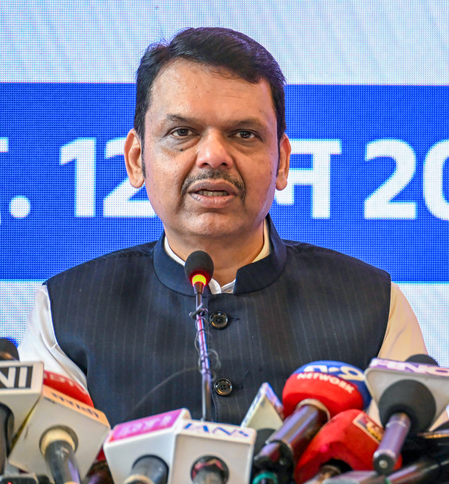
Chief Minister Devendra Fadnavis clarified in the Legislative Council that the ‘Grid Support Charge’ aims to prevent the financial impact of increased solar energy usage on the power grid from affecting regular electricity consumers. This charge affects only 0.13% of consumers and is not a loss but a slight reduction in excessive profits.
Responding to a query by Legislative Council member Satej Patil on the rise in electricity sales tax for industrial and commercial consumers, CM Fadnavis highlighted that the Grid Support Charge was implemented on February 1, 2016, without retrospective application. The Maharashtra Electricity Regulatory Commission (MERC) has halted its decision following a government intervention regarding a Rs 40,000 crore double-counting error.
Fadnavis also mentioned that industrial electricity rates in Maharashtra are lower than those in Tamil Nadu, Telangana, and Madhya Pradesh, with tariffs locked until 2029-30 under the Multi-Year Tariff (MYT) framework. The state’s power rates are set to remain competitive, reflecting its industrial growth and a 20% increase in power demand over the past two years.
The CM explained the challenges of solar energy, stating that only 35% of generated solar power is used during the day, leading to a demand for the remaining 65% at night, stressing the need for Battery Energy Storage Systems (BESS). With renewable energy contributing 15% to the state’s power generation in 2022, Maharashtra aims to reach 52% by 2029-30 through ongoing projects totaling 38,000 MW capacity.
Fadnavis expressed the government’s willingness to engage in further discussions with solar power producers on the Grid Support Charge and the Time of Day (ToD) policy, ensuring the protection of common consumers from financial burdens. The state leads in solar agricultural pump installations, with nearly 60% of India’s pumps in Maharashtra, setting an example for other states to follow.
