


Mahashivratri prasad holds sacred significance, and Panjiri stands among the most cherished offerings to Lord Shiva. This nutrient-dense mixture of roasted wheat flour, crunchy dry fruits, aromatic spices, and pure desi ghee creates an energizing prasad that devotees have prepared for generations during the Great Night of Shiva.
Quick Summary:
Panjiri is a traditional Mahashivratri prasad made by roasting wheat flour, edible gum (gond), fox nuts, and mixed nuts in desi ghee, then sweetening with jaggery or sugar and flavoring with warming spices. This high-energy mixture provides sustained nourishment during fasting and serves as blessed prasad for Lord Shiva.
Table of Contents
Complete Ingredients List for Authentic Mahashivratri Panjiri
Understanding every ingredient and its precise quantity ensures your Panjiri achieves the authentic taste and texture that makes this prasad so beloved. Here’s the comprehensive list of everything you’ll need.
Main Ingredients
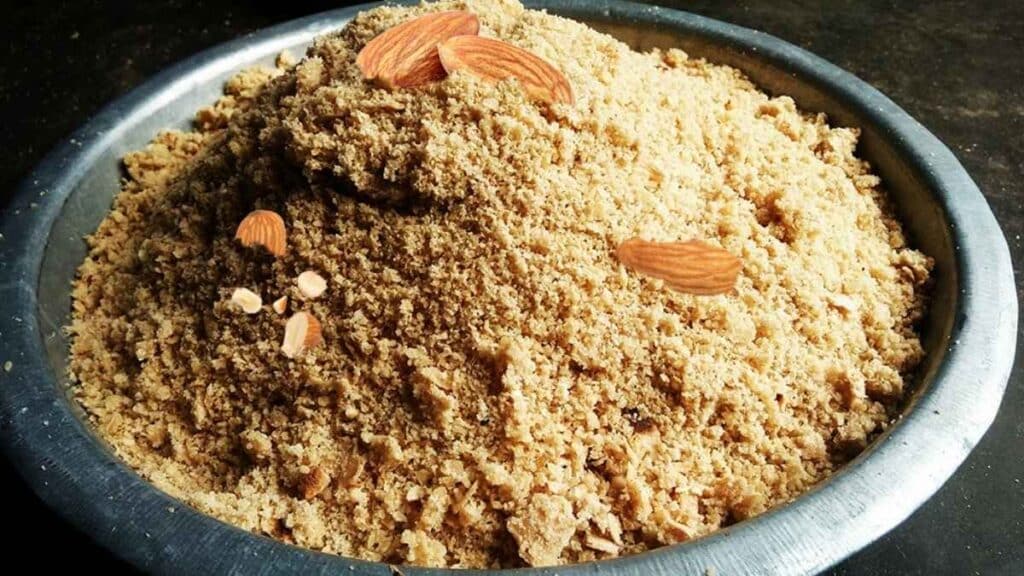
Whole Wheat Flour (Atta): 1.5 cups (approximately 180 grams) – This forms the base of your Panjiri. Use fresh, finely ground whole wheat flour for best results. Alternatively, you can use suji (semolina/rava) in the same quantity for a lighter texture.
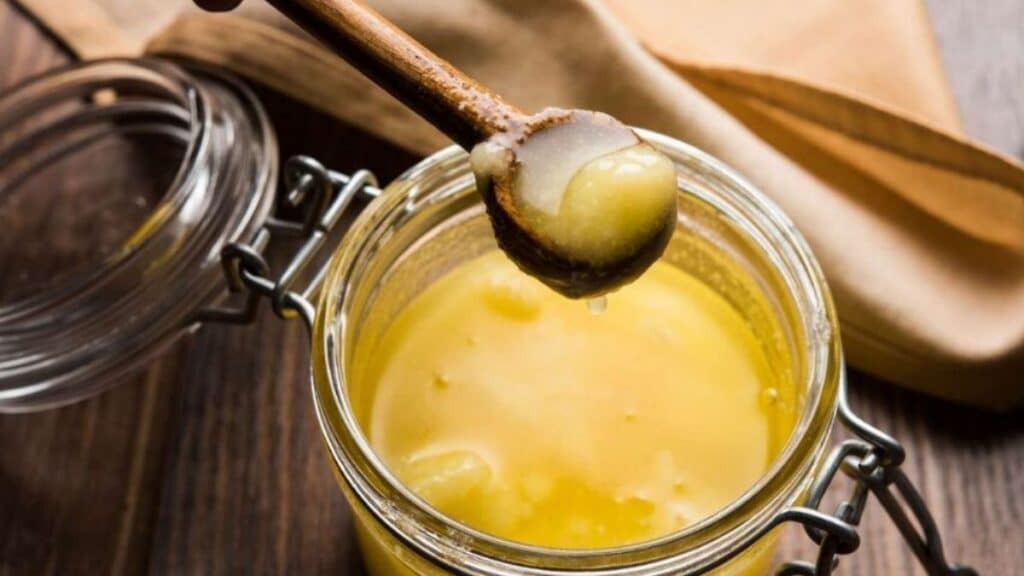
Desi Ghee (Clarified Butter): 150 grams (approximately ¾ cup) – Pure, homemade desi ghee creates the most aromatic prasad. The ghee serves multiple purposes: roasting medium, flavor carrier, and binding agent. Quality matters enormously here.
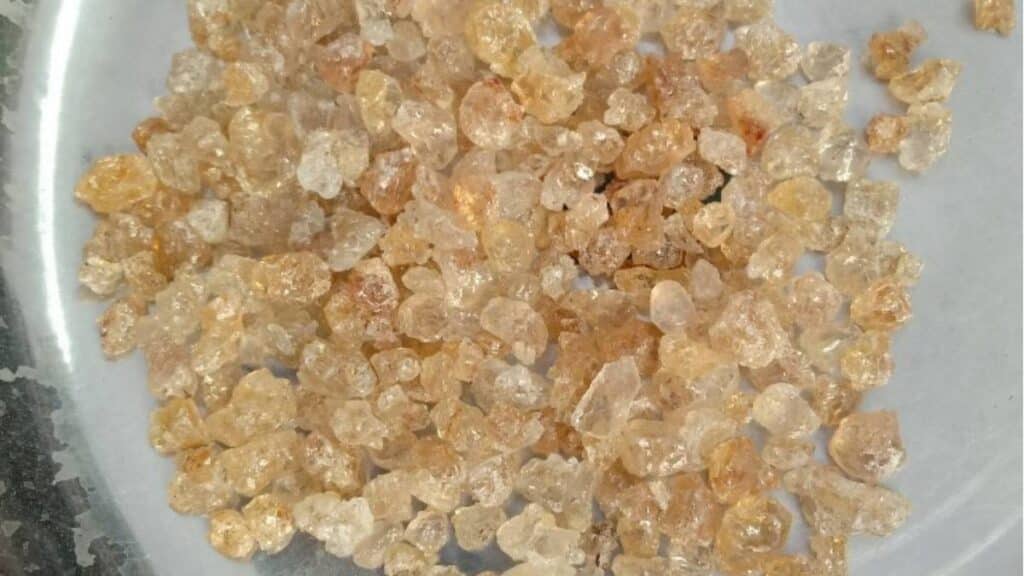
Edible Gum (Gond): 100 grams – This traditional ingredient puffs up when fried and adds distinctive crunch. Available at Indian grocery stores in the spice or dry goods section. Choose clean, amber-colored pieces.
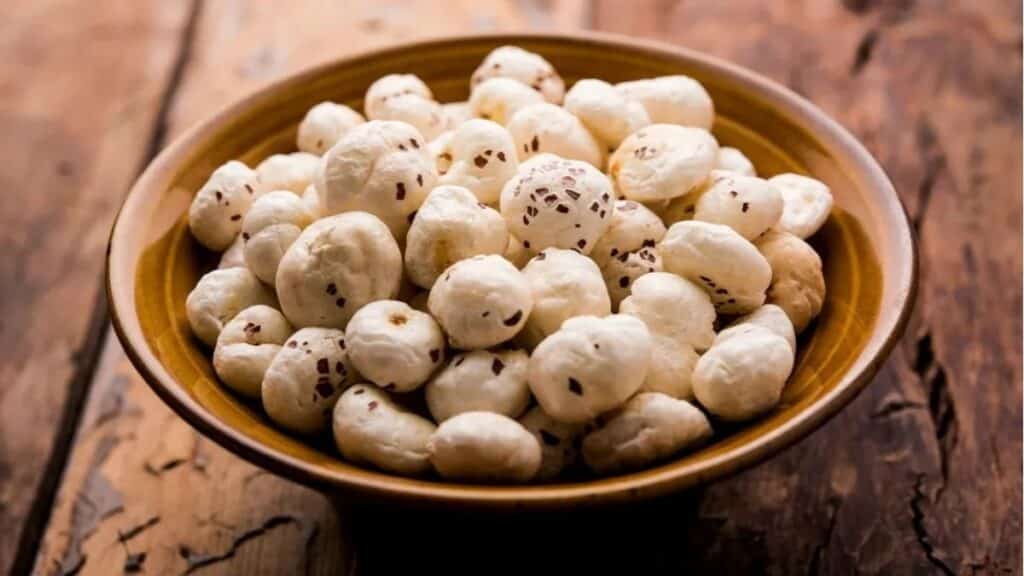
Fox Nuts (Makhana): 3 cups (approximately 60 grams) – These white, puffy seeds add lightness and nutrition. Ensure they’re fresh and crisp, not stale or chewy.
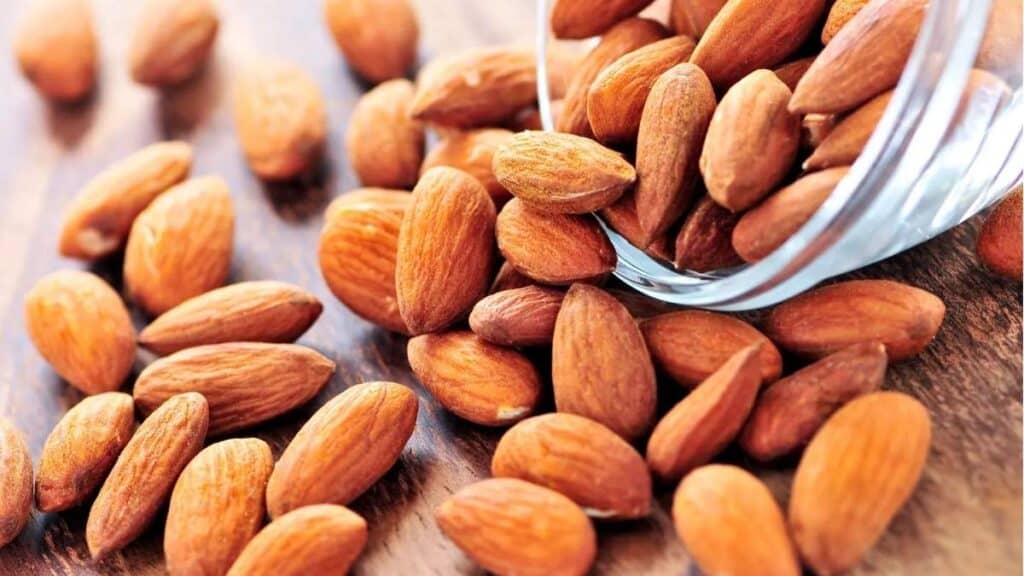
Almonds (Badam): 100 grams (approximately ⅔ cup) – Whole almonds with skin provide maximum nutrition and authentic flavor. You can blanch and peel them if you prefer, though the skin contains valuable antioxidants.
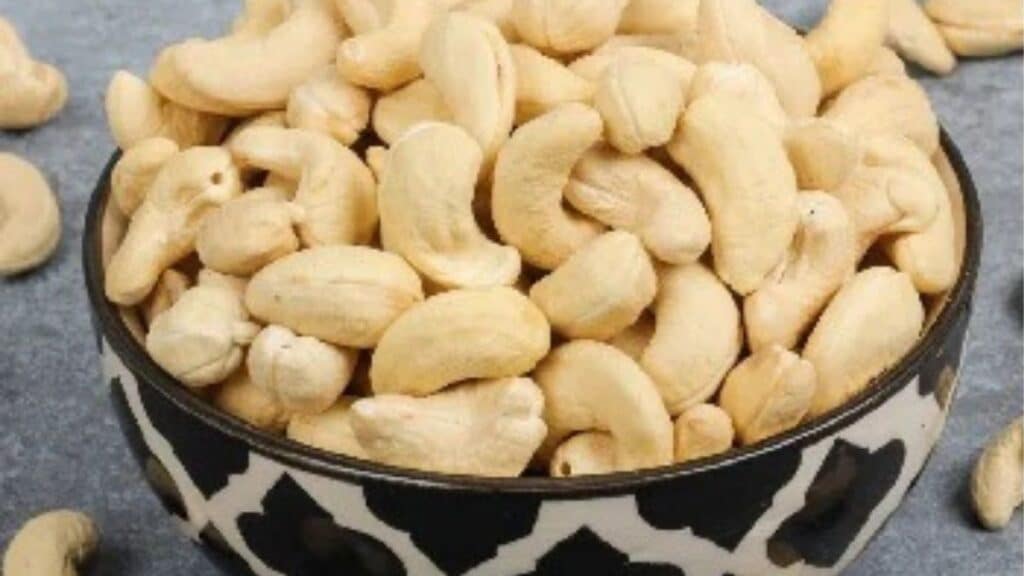
Cashews (Kaju): 100 grams (approximately ¾ cup) – Whole cashews work best. Their natural sweetness and creamy texture balance the other nuts perfectly.
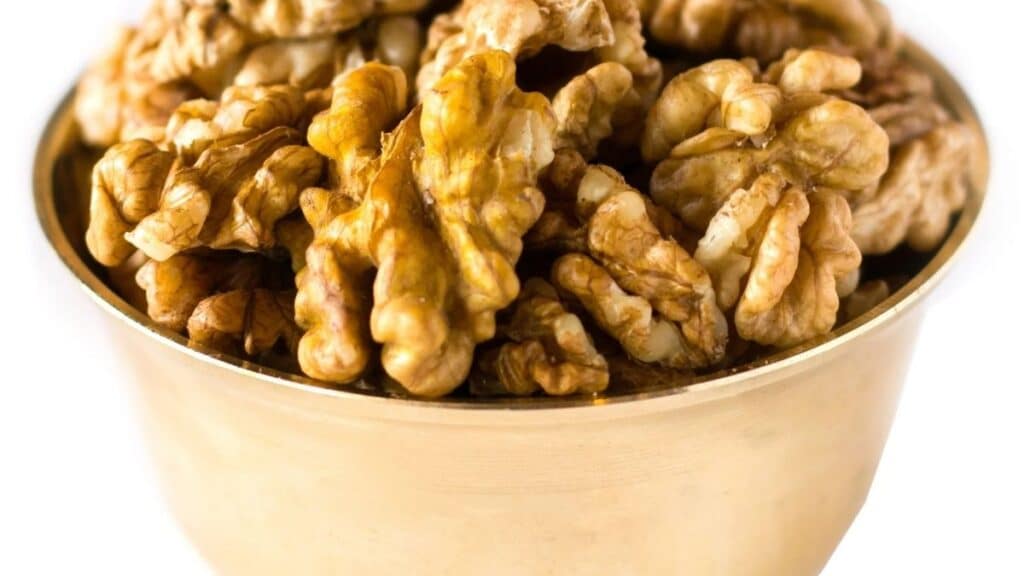
Walnuts (Akhrot): 100 grams (approximately ¾ cup) – Walnut halves or pieces both work. Their slight bitterness and omega-3 content make them nutritionally valuable.
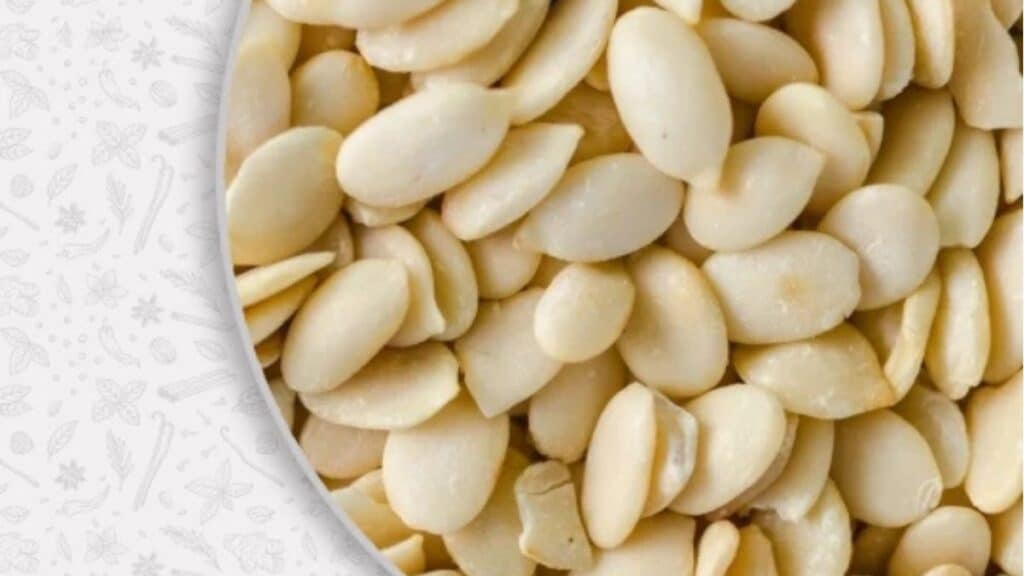
Melon Seeds (Magaz/Char Magaz): ¼ cup (approximately 30 grams) – These tiny seeds add texture and traditional authenticity. Found in Indian grocery stores, sometimes sold as “watermelon seeds.”
Sweeteners (Choose One)
Powdered Sugar (Cheeni): 1 cup (approximately 200 grams) – For lighter-colored Panjiri with clean sweetness. Use confectioner’s sugar or powder granulated sugar at home.
OR Jaggery (Gur): 1 cup (approximately 200 grams) – Traditional choice for Shiva prasad. Provides iron and minerals along with complex sweetness. Use organic, chemical-free jaggery.
Aromatic Spices and Flavorings
Dry Ginger Powder (Sonth): 1 teaspoon (approximately 3 grams) – Provides warmth and digestive benefits. Use fresh, aromatic powder for best results.
Cardamom Powder (Elaichi Powder): ½ teaspoon (approximately 1.5 grams) – Freshly ground green cardamom creates the most fragrant prasad. Pre-ground powder loses aroma quickly.
Black Pepper Powder (Kali Mirch Powder): ½ teaspoon (approximately 1.5 grams) – Freshly ground black pepper enhances nutrient absorption and adds subtle warmth.
Rock Salt (Sendha Namak): A pinch (optional, only if making vrat version) – For fasting-compliant Panjiri, use rock salt instead of regular salt. Many recipes omit salt entirely.
Optional Additions for Enhanced Flavor
Saffron Strands (Kesar): 8-10 strands soaked in 2 tablespoons warm milk – Adds luxurious aroma and golden color. Completely optional but creates special prasad.
Dried Coconut (Copra): ¼ cup grated (approximately 20 grams) – Roasted with other ingredients, adds tropical sweetness and texture.
Sesame Seeds (Til): 2 tablespoons (approximately 20 grams) – White or black sesame seeds roasted until fragrant add calcium and crunch.
Poppy Seeds (Khus Khus): 1 tablespoon (approximately 10 grams) – Roasted lightly, these tiny seeds add nutty flavor and cooling properties.
Fennel Seeds (Saunf): 1 teaspoon (approximately 3 grams) – Roasted and coarsely crushed, fennel adds digestive benefits and sweet-licorice notes.
Dried Rose Petals: 2 tablespoons – Food-grade dried rose petals add color, fragrance, and traditional elegance to your prasad.
Why Panjiri Is the Perfect Mahashivratri Prasad
Panjiri embodies everything devotees seek in Mahashivratri prasad—spiritual significance paired with practical nourishment. The lengthy roasting process transforms simple ingredients into something far greater than the sum of their parts, creating a fragrant offering that fills your home with devotional warmth.
Beyond spiritual dimensions, Panjiri serves crucial nutritional purposes during Mahashivratri’s demanding fast. The combination of roasted grains, nuts, seeds, ghee, and natural sweeteners creates a concentrated energy source that sustains devotees through the day-long fast and nighttime vigil. Unlike sweets that spike blood sugar and leave you depleted hours later, Panjiri’s complex carbohydrates, healthy fats, and proteins provide steady energy that lasts.
The warming spices—dry ginger, cardamom, and black pepper—aren’t merely flavor enhancers. These ingredients support digestion during fasting when your stomach isn’t processing regular meals, help maintain body warmth during nighttime prayers, and align with Ayurvedic principles of sattvic foods that promote clarity and spiritual awareness. When you’re staying awake through the night for Shiva bhajans and meditation, these properties make meaningful differences in how you feel.
Understanding the Sacred Ingredients in Mahashivratri Panjiri
Each ingredient in traditional Panjiri carries both nutritional value and symbolic meaning. Understanding these components helps you appreciate why this particular combination has endured through centuries of devotional practice.
Whole Wheat Flour or Suji: The Foundation
Whole wheat flour forms Panjiri’s base, providing approximately 1.5 cups (180 grams) that anchor all other ingredients. The roasting process transforms raw flour into something magical—the wheat’s natural sugars caramelize, releasing a nutty aroma that signals readiness. This isn’t quick toasting; proper roasting takes 15-20 minutes of patient stirring over low heat.
The mineral content in whole wheat flour includes iron (3.6mg per 100g), magnesium (126mg), phosphorus (288mg), and zinc (2.6mg). These minerals support everything from oxygen transport in blood to bone health to immune function—critical when your body is under the stress of fasting.
Desi Ghee: The Sacred Fat
Desi ghee isn’t just cooking fat in Panjiri—it’s the sacred medium that carries flavors, aids digestion, and transforms simple ingredients into prasad worthy of Lord Shiva. Traditional recipes call for approximately 150 grams (about ¾ cup) of ghee, which might seem excessive until you understand its multiple roles.
Ghee’s high smoke point (around 250°C or 482°F) allows the extended low-heat roasting that Panjiri requires without burning or developing off flavors. As ingredients roast in ghee, they absorb its richness while releasing their own aromatic compounds into the fat, creating flavor synergy that defines authentic Panjiri.
One tablespoon (15ml) of ghee provides approximately 112 calories, 12.7 grams of fat (including 7.9 grams saturated fat, 3.7 grams monounsaturated fat, and 0.5 grams polyunsaturated fat). The fat-soluble vitamins include vitamin A (438 IU per tablespoon), vitamin E (0.4mg), and trace amounts of vitamin D and K2.
The quality of ghee directly impacts your Panjiri’s final taste and aroma. Homemade desi ghee prepared from organic cow’s milk creates the most aromatic prasad. The ghee should be golden yellow with a nutty aroma—avoid white or pale ghee which indicates either buffalo milk source or improper preparation. Fresh ghee stored properly can last 3-4 months at room temperature without refrigeration.
Edible Gum (Gond): The Traditional Secret Ingredient
Gond, or edible gum, might seem mysterious to modern cooks, but this traditional ingredient has appeared in Indian winter preparations and prasad recipes for centuries. About 100 grams of gond undergoes a fascinating transformation when dropped into hot ghee—it puffs up dramatically, becoming light, crunchy, and completely unlike its original hard, resinous form.
Edible gum is actually dried sap from certain trees, primarily the Acacia tree (kikar in Hindi). The raw gum appears as irregular, translucent amber crystals or chunks. When exposed to hot oil or ghee at the correct temperature, the moisture within the gum rapidly expands, causing it to puff like popcorn.
Nutritionally, 100 grams of gond provides approximately 360 calories, 80 grams of carbohydrates (primarily complex polysaccharides), 2 grams of protein, and negligible fat. The carbohydrates in gond digest slowly, contributing to sustained energy release. Gond also contains calcium (approximately 50mg per 100g), magnesium, and trace minerals.
Fox Nuts (Makhana): Lightness and Crunch
Makhana, those puffy white seeds that have recently gained superfood status, have been Panjiri staples forever. About three cups (approximately 60 grams) of fox nuts roast in ghee until they develop a golden tinge and become even crunchier than their raw state. Their mild, neutral flavor allows spices and sweetness to shine while their distinctive texture creates variety in each mouthful.
Fox nuts are actually the seeds of the Euryale ferox plant, which grows in wetlands and ponds across India and other Asian countries. After harvesting, the seeds are dried and roasted, causing them to pop and expand into the white puffs we recognize.
The micronutrient profile impresses even more. Makhana provides calcium (60mg per 100g), magnesium (210mg), phosphorus (390mg), and potassium (1368mg). The high potassium content particularly benefits fasting devotees, as it helps maintain electrolyte balance and supports proper muscle and nerve function.
Almonds: Premium Nutrition
Almonds at 100 grams (approximately ⅔ cup or 70-75 whole almonds) form one of Panjiri’s nutritional pillars. These nuts provide exceptional protein, healthy fats, and micronutrients that justify their premium price.
Per 100 grams, almonds deliver 579 calories, 21.2 grams of protein, 49.9 grams of fat (primarily heart-healthy monounsaturated fats at 31.6 grams), and 21.6 grams of carbohydrates including 12.5 grams of dietary fiber. This nutrient density means even small quantities contribute significantly to your nutritional intake.
The vitamin E content in almonds deserves special mention—100 grams provides 25.6mg of this powerful antioxidant, covering over 170% of daily requirements. Vitamin E protects cell membranes from oxidative damage and supports immune function, particularly valuable during fasting when your body experiences increased metabolic stress.
Almonds contain L-arginine, an amino acid that serves as a precursor to nitric oxide, which helps blood vessels relax and improve circulation. They also provide folate (44mcg per 100g), riboflavin (1.1mg), and niacin (3.6mg)—B vitamins essential for energy metabolism.
Cashews: Creamy Sweetness
Cashews at 100 grams (approximately ¾ cup or 60-65 whole cashews) contribute unique creamy texture and natural sweetness that balances harder nuts like almonds and walnuts. Their softer consistency also makes Panjiri easier to consume, especially for children or elderly devotees.
Nutritionally, 100 grams of cashews provides 553 calories, 18.2 grams of protein, 43.8 grams of fat (primarily monounsaturated at 23.8 grams), and 30.2 grams of carbohydrates with 3.3 grams of fiber. The fat composition makes cashews heart-healthy despite their richness, and the moderate protein contributes to Panjiri’s overall amino acid profile.
Cashews excel in mineral content, particularly copper (2.2mg per 100g, covering over 200% of daily needs). Copper supports iron absorption, aids in collagen formation, and helps maintain healthy immune function. The magnesium content (292mg) exceeds even almonds, while phosphorus (593mg), zinc (5.8mg), and manganese (1.7mg) all appear in significant quantities.
Cashews contain tryptophan, an essential amino acid that serves as a precursor to serotonin, the neurotransmitter associated with mood regulation and feelings of wellbeing. While the amounts are modest, regular consumption might contribute to the sense of contentment and spiritual ease devotees seek during Mahashivratri.
Walnuts: Omega-3 Powerhouse
Walnuts at 100 grams (approximately ¾ cup or 25-30 whole walnuts or 50-60 halves) bring crucial omega-3 fatty acids rarely found in plant foods. Their slightly bitter flavor and firm texture provide important contrast to sweeter cashews and the neutral base of wheat flour.
Per 100 grams, walnuts contain 654 calories, 15.2 grams of protein, 65.2 grams of fat, and 13.7 grams of carbohydrates with 6.7 grams of fiber. The fat composition sets walnuts apart—they provide 47.2 grams of polyunsaturated fats including 9.1 grams of alpha-linolenic acid (ALA), the plant-based omega-3 fatty acid that converts partially to EPA and DHA in the body.
Omega-3 fatty acids support heart health, reduce inflammation, and play crucial roles in brain function and mental clarity. For devotees spending the night in meditation and spiritual contemplation, the cognitive support from walnut omega-3s offers practical benefits alongside traditional symbolic value.
Sweeteners: Jaggery vs Sugar
The sweetener choice significantly impacts both flavor and nutritional value. Traditional recipes use approximately one cup (200 grams) of either jaggery or sugar, though quantities adjust based on personal preference and the intended sweetness level.
Jaggery (Gur): This unrefined sweetener made from sugarcane juice or palm sap provides approximately 383 calories per 100 grams, primarily from carbohydrates (98 grams). Unlike refined sugar, jaggery retains minerals from its source material including iron (11mg per 100g), calcium (80mg), magnesium (70mg), phosphorus (20mg), and potassium (1056mg).
The iron content makes jaggery particularly valuable for fasting devotees, especially women who may be more prone to iron deficiency. The complex flavor profile—hints of molasses, caramel, and even slight smokiness depending on preparation method—adds depth that refined sugar cannot match.
Sugar (Cheeni): Refined white sugar provides approximately 387 calories per 100 grams, entirely from carbohydrates (99.9 grams) with zero protein, fat, fiber, or micronutrients. It offers pure sweetness without additional flavors, creating lighter-colored Panjiri with cleaner taste.
Some families prefer sugar because it dissolves and integrates more easily than granular jaggery, creating smoother texture. Powdered sugar (confectioner’s sugar) works even better, incorporating seamlessly without grittiness. You can powder regular granulated sugar at home using a mixer grinder.
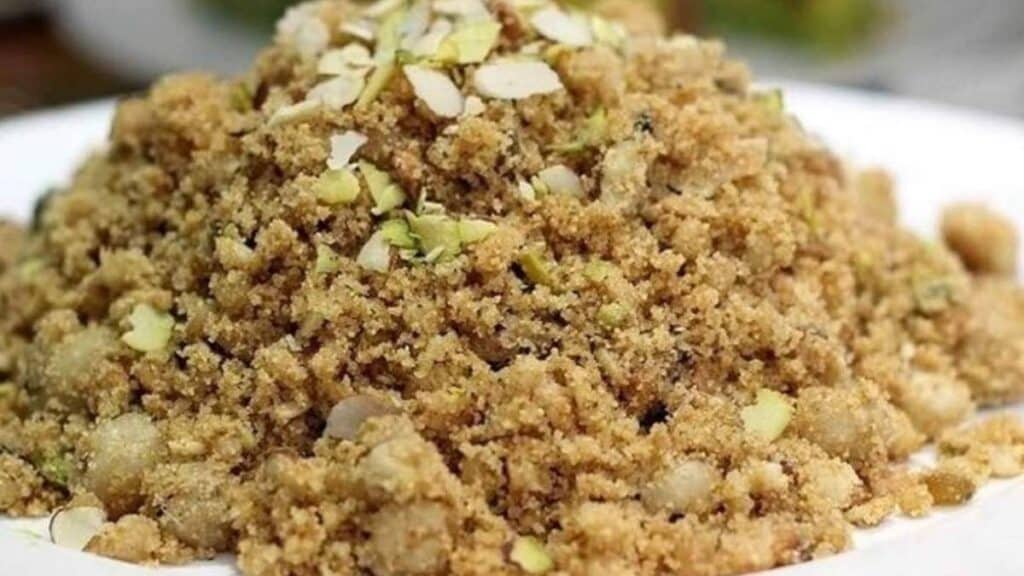
Detailed Step-by-Step Preparation Instructions
Creating authentic Panjiri requires patience and attention, but the process itself becomes meditative when approached with devotional intent. Follow each stage carefully to achieve perfect texture and flavor.
Stage 1: Preparing and Roasting Fox Nuts (Makhana)
Begin with the makhana since these require the longest roasting time among the nuts and seeds. Heat approximately 50 grams (about 3.5 tablespoons) of desi ghee in a heavy-bottomed kadhai or deep pan over medium heat. The heavy bottom distributes heat evenly and prevents hot spots that could burn ingredients.
Listen for subtle crackling sounds as moisture escapes from the makhana. The aroma shifts from neutral to pleasantly nutty. The texture becomes noticeably crispier—you can test by removing one piece, letting it cool for a few seconds, and biting into it. Properly roasted makhana shatters crisply with no hint of chewiness.
Stage 2: Roasting Almonds
In the same ghee remaining in your kadhai (add another tablespoon if needed), add your 100 grams of almonds. Whole almonds with skin provide the most authentic texture and flavor, plus maximum nutritional benefit from the antioxidants concentrated in the skins.
The aroma development tells you when almonds reach perfect doneness. Initially they smell raw and faintly sweet; as roasting progresses, the smell intensifies to a rich, toasted nuttiness that fills your kitchen. When you can smell them from across the room and the color has deepened noticeably, they’re ready.
Stage 3: Roasting Cashews
Cashews require the most vigilant attention since their high natural sugar content and softer texture makes them burn faster than other nuts. In your ghee, add 100 grams of cashews over low heat with constant stirring.
Watch them carefully—cashews can go from perfect to burnt in literally 30 seconds of inattention. They should turn from pale cream to light golden brown over 4-5 minutes. The moment you see color developing across most pieces and smell their characteristic sweet aroma intensifying, remove them immediately.
The ghee will now be deeply flavored and golden from roasting three types of ingredients. This enriched ghee will add incredible depth to the wheat flour in upcoming steps.
Stage 4: Roasting Walnuts
Add 100 grams of walnut halves or pieces to your flavored ghee over low heat. Walnuts contain higher oil content than almonds or cashews, which means they release some of their own oil during roasting and can burn relatively quickly despite their density.
Stir constantly over low heat for 5-6 minutes until they darken noticeably and smell intensely nutty. The color change is more dramatic in walnuts than other nuts—they’ll go from light tan to rich brown. Unlike almonds where slight under-roasting is acceptable, walnuts taste bitter and astringent if under-roasted, so ensure they reach full aromatic development.
Test doneness by removing one piece, letting it cool briefly, and tasting it. Properly roasted walnuts should taste rich, nutty, and slightly sweet without any bitter aftertaste. Remove and spread on your cooling tray when ready.
Stage 5: Roasting Melon Seeds (Magaz)
Add your ¼ cup (30 grams) of melon seeds to the remaining ghee over low heat. These tiny seeds need just 2-3 minutes with constant stirring. They’ll begin popping like miniature popcorn when they reach the right temperature—this is normal and entertaining to watch.
The seeds will puff slightly and develop a golden tinge. Their aroma shifts from neutral to pleasantly nutty. Once the popping slows to just occasional pops, remove them immediately using a fine-mesh strainer or slotted spoon with small holes. These tiny seeds can slip through regular slotted spoons.
Transfer to your cooling tray. If you’re using optional additions like sesame seeds or fennel seeds, roast them now in the same manner—2-3 minutes over low heat with constant stirring until fragrant.
Stage 6: Frying Edible Gum (Gond)
The gond requires its own dedicated ghee session since it needs higher heat than the delicate nuts can tolerate. Pour the ghee you’ve been using into a container (you’ll use it later for the flour) and add about 50 grams of fresh ghee to your clean, dry kadhai.
Heat this fresh ghee until quite hot—test the temperature by dropping a single small piece of gond into the ghee. If it immediately puffs up and floats to the surface within 2-3 seconds, your temperature is correct at approximately 180-190°C (356-374°F). If it sinks and slowly rises, the ghee isn’t hot enough. If it burns or turns dark immediately, the ghee is too hot.
Use a slotted spoon to move them around gently, ensuring all pieces puff evenly and don’t stick together. The entire frying process for each batch takes just 10-15 seconds. The color should remain light golden to white—any browning indicates over-frying or too-hot ghee.
Stage 7: Roasting Wheat Flour (The Critical Stage)
This stage demands the most patience and attention of the entire Panjiri-making process. Pour all your accumulated ghee back into the kadhai—you should have approximately 70-80 grams total (the original 150 grams minus what was absorbed by nuts, makhana, and gond). If you have less than 50 grams remaining, add more fresh ghee to reach at least 50-60 grams. The flour needs adequate fat for proper roasting.
Heat the ghee over low heat until warm and melted but not smoking. Add your 1.5 cups (180 grams) of whole wheat flour when the ghee is warm. The flour should integrate into the ghee, creating a thick, sandy paste. If your flour seems dry and not absorbing the ghee well, add another tablespoon of ghee.
Stir continuously using a wooden spatula or large spoon, scraping the bottom and sides of the kadhai to prevent any flour from settling and burning. Your arm will get tired—this is normal and unavoidable. Some cooks sit comfortably with the kadhai positioned at a safe height on a low flame to make the stirring marathon more sustainable.
Watch for gradual color changes over 15-20 minutes:
- Minutes 0-5: Flour remains pale cream, smells raw, feels grainy and slightly sticky
- Minutes 5-10: Color begins warming to light tan, raw smell diminishes, texture becomes less sticky as moisture evaporates
- Minutes 10-15: Color deepens to golden tan, toasted grain scent emerges, texture becomes dry and free-flowing
- Minutes 15-20: Color reaches rich golden brown, deep nutty aroma fills your kitchen, flour flows freely like sand
The aroma progression is equally important—from raw flour smell to toasted grain scent to the deep, caramelized nuttiness that signals perfect doneness. When you can smell the roasted flour from across your kitchen and the color is consistently several shades darker than when you started with no white or pale patches remaining, it’s ready.
If using suji (semolina) instead of wheat flour: The process is similar but faster. Suji roasts in 10-12 minutes over the same low heat with constant stirring. Watch for it to turn golden and aromatic. Suji’s coarser texture means it won’t form as thick a paste with ghee—it will remain more granular throughout roasting.
Stage 8: Adding Spices to Roasted Flour
When your flour reaches perfect golden roasted perfection, add all your ground spices directly to the hot flour while still on the stove. Add one teaspoon of dry ginger powder, half teaspoon of cardamom powder, and half teaspoon of black pepper powder.
Stir constantly for another 1-2 minutes over low heat to bloom the spices in the hot ghee-flour mixture. This brief cooking integrates the spices completely while releasing their essential oils and intensifying their aromatic properties. You’ll notice the fragrance shift dramatically as the spices bloom—the cardamom becomes more pronounced, the ginger’s warmth emerges, and the pepper adds subtle background heat.
Stage 9: Grinding Nuts and Seeds
Once every component has cooled completely to room temperature (this is crucial—warm ingredients won’t grind properly), you can begin preparing them for final assembly. Take all your roasted nuts—the almonds, cashews, walnuts—along with the melon seeds. Reserve about 2 tablespoons each of whole almonds, cashews, and walnut pieces if you want visual appeal in your finished Panjiri.
The texture you’re aiming for resembles coarse breadcrumbs or cornmeal rather than fine powder. You should see visible nut pieces ranging from 2-4mm in size—some slightly larger pieces are fine and add textural interest. The mixture should feel slightly moist from the nuts’ natural oils but not wet or paste-like.
Empty the ground nuts into a large mixing bowl. If you have larger pieces that didn’t grind well, you can remove and re-grind them separately or leave them whole for textural interest in your finished Panjiri.
Stage 10: Breaking and Preparing Fried Gond
Take your cooled fried gond and break or crumble it into smaller pieces using your hands. You want pieces roughly 1-2cm in size—some larger chunks are fine for visual interest, but very large pieces make Panjiri difficult to eat.
The puffed gond should shatter easily with gentle pressure. If you encounter any hard, un-puffed pieces, discard them as they’ll be unpleasantly hard in the finished prasad. Add the broken gond pieces to your bowl with the ground nuts.
Stage 11: Combining All Ingredients
Add your cooled roasted spiced flour to the bowl containing ground nuts and broken gond. Mix gently but thoroughly using clean hands or a large spoon. The goal is even distribution so every spoonful of Panjiri contains balanced amounts of flour, nuts, and gond.
If using powdered sugar: Add your one cup (200 grams) of powdered sugar to the flour-nut mixture now. Mix thoroughly for 2-3 minutes, ensuring the sugar distributes evenly throughout. Use your hands for best results—you can feel lumps and ensure complete integration more effectively than with a spoon.
If using jaggery: You have two methods available.
Taste and adjust sweetness if needed—you can always add more sugar or jaggery powder, though you cannot remove it if you’ve added too much. Keep in mind that Panjiri’s sweetness will seem slightly more pronounced when cool than when you taste the warm mixture.
Stage 12: Final Touches
Stir in your reserved whole roasted nuts (the almonds, cashews, and walnut pieces you set aside earlier) for visual appeal. These whole nuts create beautiful presentation and give devotees recognizable pieces to appreciate.
If using optional aromatic additions, add them now. Stir in your saffron-infused milk if you prepared it. Add dried rose petals if using. Some families sprinkle an additional pinch of cardamom powder over the top for extra fragrance.
Comprehensive Storage Instructions
Properly stored Panjiri maintains freshness, flavor, and nutritional value for 1-2 months, making it practical to prepare larger batches. Understanding storage science helps preserve your carefully made prasad.
Choosing the Right Containers
Select containers that create an effective moisture and air barrier. The best options include:
Glass jars with rubber-sealed lids: These create excellent airtight seals and don’t absorb odors or transfer flavors. Choose wide-mouth jars for easy scooping. Amber or dark-colored glass provides extra protection from light exposure that can degrade fats and vitamins over time.
Stainless steel containers with tight-fitting lids: These offer durability and complete opacity to protect from light. Ensure the lids seal well—cheaper containers often have loose-fitting lids that allow air exchange.
Food-grade plastic containers: These work acceptably if you’re using Panjiri within 2-3 weeks, though they’re not ideal for longer storage. Plastic can absorb odors over time and typically doesn’t seal as effectively as glass or steel. If using plastic, choose thick, high-quality containers rather than thin, flimsy ones.
Avoid containers with previous food residues or strong odors—these can transfer to your Panjiri. Wash containers thoroughly with hot soapy water, rinse completely, and dry absolutely completely before use. Even slight residual moisture can trigger spoilage.
Preparing Panjiri for Storage
Before storing, ensure your Panjiri has cooled completely to room temperature—approximately 25°C (77°F). Storing warm Panjiri creates condensation inside containers, introducing the moisture that leads to spoilage.
Check the mixture’s moisture level by squeezing a handful. It should feel slightly moist from ghee but not wet or sticky. If it seems excessively dry and powdery (unlikely if you’ve followed the recipe), you can drizzle a tablespoon of melted ghee and mix thoroughly before storing. If it seems too wet (more common with jaggery versions), spread it on a tray and let it air-dry for 1-2 hours before storing.
Filling Containers Properly
Fill containers to approximately 90-95% capacity, leaving about half an inch of headroom at the top. This minimizes air space where oxidation can occur while providing room for the lid to close without compressing the Panjiri too much.
Pack Panjiri gently without compressing it excessively, which could release oils from the nuts and create an overly dense, almost paste-like texture over time. A gentle, natural settling is fine—you’re not trying to create vacuum-packed density.
Some families add food-grade silica gel packets to each container to absorb any stray moisture, though this isn’t strictly necessary if your Panjiri is properly dry and your containers seal well. If using silica gel, place one small packet on top of the Panjiri before sealing—don’t mix it into the prasad.
Recipe Time & Yield Information
| Preparation Details | Time/Yield |
|---|---|
| Prep Time | 15 minutes |
| Cook Time | 60-75 minutes |
| Cooling Time | 30-40 minutes |
| Total Time | 2 hours |
| Yield | 800-900 grams |
| Servings | 16-20 people (2-3 tablespoons per serving) |
| Shelf Life | 1-2 months in airtight containers |
| Difficulty Level | Medium (requires patience and constant stirring) |
Time Breakdown by Stage:
- Roasting Makhana: 8-10 minutes
- Roasting Almonds: 6-8 minutes
- Roasting Cashews: 4-5 minutes
- Roasting Walnuts: 5-6 minutes
- Roasting Melon Seeds: 2-3 minutes
- Frying Gond: 5 minutes (in batches)
- Roasting Wheat Flour: 15-20 minutes (most critical stage)
- Blooming Spices: 1-2 minutes
- Grinding & Mixing: 10 minutes (after complete cooling)
Optimal Storage Conditions
Store sealed containers in a cool, dark, dry place away from heat sources and direct sunlight. A kitchen cabinet or pantry away from the stove works perfectly. Ideal storage temperature ranges from 15-25°C (59-77°F)—cooler is generally better for extending shelf life, but refrigeration isn’t recommended despite the lower temperature.
Avoid storing Panjiri in the refrigerator even though cooler temperatures might seem beneficial. Refrigerators contain moisture that can compromise texture when you open containers. The cold environment also dulls flavors—spices and nuts taste less aromatic when cold. If your kitchen runs very hot (above 30°C/86°F regularly), refrigeration becomes acceptable, but let Panjiri come to room temperature before serving for best flavor.
Keep containers away from strong-smelling foods like onions, garlic, or spices. While sealed containers protect against most odor transfer, prolonged exposure can lead to subtle flavor contamination over weeks.
Maintaining Freshness During Use
Minimize how often you open containers. If you’ve prepared a large batch, consider dividing it among 3-4 smaller containers rather than one large one. This way you only expose a portion of your total Panjiri to air repeatedly while the rest remains sealed and fresh.
Always use a clean, completely dry spoon when serving Panjiri. Never use a spoon that’s been in your mouth or in other foods—introducing external moisture or food particles can trigger mold growth surprisingly quickly. Keep a dedicated serving spoon with your Panjiri container.
Open containers quickly, remove what you need, and reseal promptly. Extended exposure to humid air, particularly during monsoon season, can soften the crispy elements like gond and make the entire mixture less appealing.
Signs of Proper Storage vs. Spoilage
Properly stored Panjiri should:
- Maintain its fragrant aroma of roasted nuts, spices, and ghee
- Feel slightly moist but free-flowing, not clumpy or sticky
- Taste fresh with clear nut flavors and no off notes
- Show no visible mold growth or discoloration
- Retain the crispy texture of gond and makhana
Signs of spoilage include:
- Rancid or sour smell instead of fresh, nutty aroma (indicates oxidized fats)
- Visible mold growth (appears as fuzzy spots, usually green, white, or black)
- Clumping or caking that doesn’t break apart easily (indicates moisture absorption)
- Off taste—bitter, sour, or generally unpleasant flavors
- Loss of crispness in gond and makhana despite dry storage
If you detect any signs of spoilage, discard the entire batch rather than trying to salvage it. Consuming rancid nuts or moldy foods can cause digestive upset and provides no nutritional value. The investment in quality ingredients justifies the caution—when in doubt, throw it out.
Complete Nutritional Breakdown of Panjiri
Understanding Panjiri’s comprehensive nutritional profile helps explain why this traditional prasad sustains devotees so effectively through demanding Mahashivratri fasts. The carefully balanced combination creates concentrated, complete nutrition.
Macronutrient Analysis (Per 50-gram Serving)
A typical 50-gram serving (approximately 3-4 tablespoons) of Panjiri provides:
Calories: 280-320 calories depending on ghee content and sweetener choice. This caloric density makes Panjiri substantial enough to serve as a complete meal or significant snack during fasting when you’re eating only 1-2 times daily.
Carbohydrates: 28-32 grams total, including:
- Complex carbohydrates from wheat flour: 18-20 grams (providing sustained energy release)
- Simple sugars from jaggery/sugar: 10-12 grams (providing immediate energy)
- Dietary fiber: 3-4 grams (supporting digestive health and satiety)
The fiber content slows sugar absorption and helps maintain stable blood glucose levels, preventing the energy crashes that make fasting uncomfortable.
Protein: 7-9 grams from the combination of:
- Wheat flour: ~2.5 grams
- Almonds: ~1.8 grams
- Cashews: ~1.5 grams
- Walnuts: ~1.3 grams
- Makhana: ~0.8 grams
- Melon seeds: ~0.6 grams
- Gond: ~0.2 grams
This protein mix provides a good balance of essential amino acids. While not quite “complete” protein by strict nutritional standards, the combination covers most amino acid requirements effectively.
Fats: 14-18 grams total, including:
- Monounsaturated fats: 8-10 grams (primarily from almonds, cashews, and ghee)
- Polyunsaturated fats: 3-4 grams (including omega-3s from walnuts)
- Saturated fats: 4-5 grams (primarily from ghee)
This diverse fat profile supports hormone production, vitamin absorption, cellular function, and lasting satiety. The predominance of unsaturated fats makes Panjiri’s fat content relatively heart-healthy despite the richness.
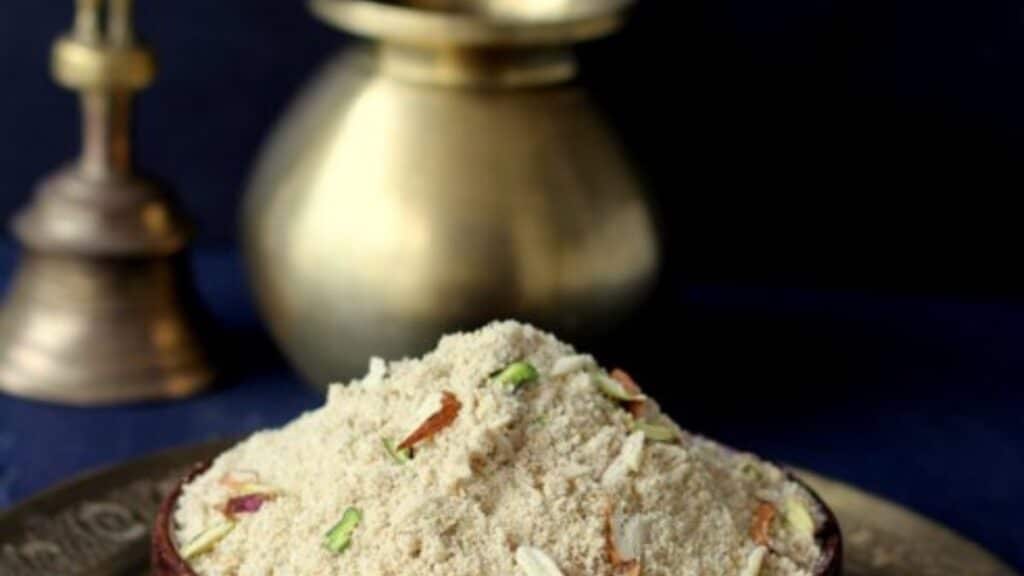
The Critical Importance of Complete Cooling
Never shortcut the cooling process. Trying to grind or mix warm ingredients creates serious problems:
Warm nuts release oils when ground: The friction from grinding generates heat, and warm nuts already have oils closer to the surface. Together, these factors create nut butter instead of the dry, coarse texture Panjiri requires. Let nuts cool to room temperature (about 25°C/77°F) before grinding.
Warm flour can’t incorporate sweeteners properly: Sugar or jaggery added to warm flour creates uneven distribution and may partially melt, leading to clumping. The flour must reach room temperature for proper integration.
Warm ingredients create condensation in storage containers: Any residual heat trapped in sealed containers produces moisture that triggers spoilage. Cool completely before storing.
Speed cooling effectively: Spread ingredients in thin layers on wide plates or trays, maximizing surface area exposed to air. Place near open windows or fans (but not directly under fans for fine powders that might blow away). Stir occasionally to bring warmer interior portions to the surface.
Expect cooling to take 20-40 minutes depending on quantities and ambient temperature. Use this time to clean your workspace, prepare containers, or simply rest—the process demands patience.
Achieving Perfect Texture Through Grinding Technique
The grinding stage determines Panjiri’s mouthfeel and how well ingredients integrate:
Pulse, don’t run continuously: Short 2-3 second pulses give you control. Run continuously and you’ll suddenly have nut butter before you can react.
Shake between pulses: After each pulse, shake your grinder jar to redistribute contents. Larger pieces fall to the bottom near blades while smaller pieces rise. This prevents some pieces from turning to paste while others remain whole.
Check frequently: Open the jar every 4-5 pulses to assess progress. Better to pulse 20 times while checking than to pulse 10 times and overshoot.
Accept some variation: You want mostly uniform coarseness but some larger pieces add textural interest. Don’t strive for absolute uniformity—it’s unnecessary and risks over-processing.
Getting Sweetness Right
The sweetness level makes or breaks Panjiri’s palatability:
Start conservative: You can always add more sweetness but cannot remove excess. Begin with ¾ cup of sugar/jaggery, mix thoroughly, taste, then add more if needed until you reach desired sweetness.
Remember sweetness intensifies as it cools: Warm Panjiri tastes less sweet than the same mixture at room temperature. Add sweetener, mix, let it cool for 5-10 minutes, then taste and adjust.
Account for individual ingredients’ sweetness: Jaggery tastes sweeter than sugar at equivalent quantities. Very sweet cashews need less added sweetener than batches using more almonds and walnuts. Adjust based on your specific ingredients.
Consider serving context: Panjiri served as fasting meal benefits from moderate sweetness that doesn’t overwhelm. Panjiri served as prasad in small quantities can be sweeter since people consume less at once.
Balance with spices: The warming spices provide savory complexity that balances sweetness. If your Panjiri seems too sweet, adding an extra pinch of dry ginger or cardamom powder can restore balance without removing sugar.
The Spiritual Practice of Making Panjiri
Beyond its nutritional value, preparing Panjiri for Mahashivratri constitutes a spiritual practice when approached with proper consciousness. The hours spent roasting, stirring, and assembling ingredients offer opportunities for meditation and devotional focus.
Creating Sacred Space
Many devotees begin Panjiri preparation by bathing and wearing clean clothes, treating the kitchen as a sacred space during the cooking process. This physical purification mirrors the internal purification sought through fasting and prayer.
Some light incense—perhaps sandalwood or jasmine—or play devotional music during preparation. The gentle background of Shiva bhajans or mantras creates an atmosphere of reverence that elevates cooking from mundane task to spiritual offering.
Approach your ingredients with respect and gratitude. These simple elements—wheat, nuts, ghee, spices—represent nature’s abundance and will become prasad that nourishes both body and spirit. Some families begin with a brief prayer asking Lord Shiva’s blessings for the preparation and those who will consume it.
Offering and Prasad
When you offer completed Panjiri to Lord Shiva during your Mahashivratri puja, you’re offering not just food but the time, attention, and devotion invested in its creation. The prasad carries the spiritual energy of your focused preparation, making it sacred nourishment in the truest sense.
The act of consuming prasad after offering reminds us that material and spiritual aren’t separate realms but interconnected aspects of existence. The same substance that nourishes your body carries divine blessing that nourishes your spirit. This integration—body and spirit sustained by the same blessed food—embodies the holistic approach to life that Hinduism teaches.
Sharing Panjiri with family and community strengthens bonds and creates collective spiritual energy. When everyone gathers to eat prasad together during Mahashivratri, the simple meal becomes communion—blessed food that nourishes both individual and collective consciousness. The preparation and sharing of traditional recipes connects you to generations of devotees who’ve observed the same practices, creating continuity across time.
A Sweet Tradition Across Fasting Festivals
Panjiri is a beloved prasad and fasting-friendly dish not just for Mahashivratri but also during other Indian vrat days like Navratri and Ekadashi. If you’d like to learn more about the significance, rituals, and traditions of Mahashivratri, visit our detailed festival guide here:
Mahashivratri Festival Guide
