


Chhatrapati Shivaji Maharaj Jayanti honors the birth anniversary of one of India’s greatest warrior kings who established the Maratha Empire. The celebration in 2026 falls on specific dates according to both the Hindu lunar calendar and the Gregorian calendar, with historical significance that continues to inspire millions.
Quick Summary:
Shivaji Jayanti 2026 is observed on February 19 (as per government declaration) or March 1 (Hindu calendar date – Phalguna Krishna Paksha Tritiya). The festival celebrates the birth of Chhatrapati Shivaji Maharaj, founder of the Maratha Empire.
Table of Contents
Shivaji Jayanti 2026 Date: When Is It Celebrated?
Chhatrapati Shivaji Maharaj Jayanti in 2026 will be observed on two different dates depending on which calendar system is followed:
February 19, 2026 – Official date declared by the Maharashtra government (based on Julian calendar conversion)
March 1, 2026 – Hindu lunar calendar date (Phalguna Krishna Paksha Tritiya)
This dual observance stems from historical calendar conversion complexities and different scholarly interpretations of Shivaji’s actual birth date. Both dates are considered valid, with different communities and organizations choosing one or both for celebrations.
Who Was Chhatrapati Shivaji Maharaj?
Shivaji Bhosale, known as Chhatrapati Shivaji Maharaj, was born in 1630 near Junnar in present-day Pune district, Maharashtra. His parents were Shahaji Bhosale and Jijabai, who instilled in him values of courage, administration, and devotion to his land.
Key Achievements:
- Established the Maratha Empire through military prowess and strategic governance
- Introduced progressive administrative reforms and naval innovations
- Championed religious tolerance and efficient tax systems
- Built a network of forts across Maharashtra for strategic defense
- Created a disciplined military organization that challenged Mughal dominance
Shivaji ruled from 1630 to 1680 C.E., leaving behind a legacy that transformed the political landscape of India and inspired future generations of freedom fighters.
The Birth Date Controversy: Why Two Dates Exist
The exact birth date of Chhatrapati Shivaji has been debated by historians for decades, with two primary dates proposed:
February 19, 1630 (Official Date)
In 1968, the Maharashtra government established a committee of eminent historians to determine Shivaji’s birth date definitively. The committee included respected scholars like M.N. Dixit, Babasaheb Purandare, Datto Vaman Potdar, G.H. Khare, B.C. Bendre, N.R. Phatak, and Appasaheb Pawar.
This committee concluded that Phalguna Krishna Paksha Tritiya on the Hindu calendar corresponded to February 19 on the English calendar. However, this February 19 date was marked on the Julian calendar, not the Gregorian calendar currently used worldwide.
April 6, 1627 (Alternate Proposed Date)
Some scholars propose April 6, 1627 (Julian calendar) or April 16, 1627 (Gregorian calendar) as Shivaji’s birth date. When converted to the Hindu calendar, this corresponds to Vaishakha Shukla Paksha Dwitiya, Vikram Samvat 1684.
This date finds support among certain historians but has not been officially adopted by the Maharashtra government.
Understanding the Calendar Conversion
The confusion around Shivaji Jayanti dates stems from conversions between three different calendar systems:
Julian Calendar: Used in India during the 17th century
Gregorian Calendar: Currently used worldwide
Hindu Lunar Calendar: Traditional Indian calendar system based on moon phases
When February 19, 1630 (Julian calendar) is converted to the Gregorian calendar, it becomes March 1, 1630. This Gregorian date corresponds to Phalguna Krishna Paksha Tritiya on the Hindu lunar calendar—the date agreed upon by the 1968 committee of scholars.
Lokmanya Tilak’s Contribution to the Date Debate
Lokmanya Bal Gangadhar Tilak, one of India’s foremost freedom fighters and historians, played a significant role in establishing Shivaji Jayanti as a celebrated occasion. In a paper presented at the Bharat Itihas Sanshodhan Mandal’s annual convention in 1916, Tilak advocated for Phalguna Vadya Tritiya (Krishna Paksha Tritiya) as Shivaji’s birth date.
Tilak’s scholarly work and nationalist vision helped popularize the celebration of Shivaji Jayanti as a day of pride and remembrance for Marathi people and Indians at large.

How Shivaji Jayanti Is Celebrated
Shivaji Jayanti is observed with great enthusiasm, particularly in Maharashtra, with celebrations that honor the warrior king’s legacy:
Public Celebrations:
- Grand processions featuring Shivaji’s portraits and statues
- Cultural programs showcasing Marathi folk traditions
- Historical plays and dramas depicting Shivaji’s life
- Speeches by political leaders and historians
Educational Events:
- School and college programs on Shivaji’s governance and military strategies
- Essay competitions and debates on Maratha history
- Museum exhibitions featuring Maratha Empire artifacts
Community Activities:
- Distribution of sweets and food to underprivileged communities
- Blood donation camps organized in Shivaji’s honor
- Cleanliness drives near forts and historical monuments
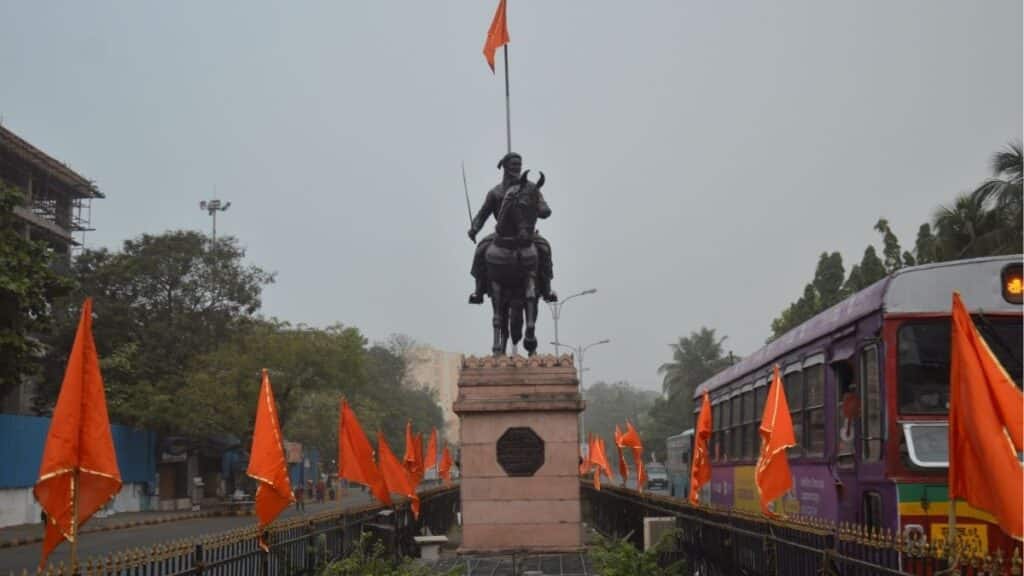
The day is a public holiday in Maharashtra, allowing people to participate in commemorative activities and reflect on Shivaji’s contributions to Indian history.
Shivaji Maharaj’s Legacy for Modern India
Chhatrapati Shivaji’s influence extends far beyond his 17th-century reign. His administrative innovations, military strategies, and commitment to justice continue to inspire contemporary governance and leadership.
Enduring Principles:
- Swarajya (Self-Rule): His vision of independent governance inspired India’s freedom movement
- Religious Tolerance: Shivaji protected temples, mosques, and places of worship equally
- Merit-Based Administration: He appointed officials based on capability rather than caste or birth
- Naval Innovation: Recognized the importance of sea power, establishing a formidable Maratha navy
- Women’s Dignity: Strictly enforced codes protecting women’s honor during military campaigns
These values resonate with modern democratic ideals and continue to be referenced in discussions about ethical governance and national pride.
Why the Date Matters to the Indian Diaspora
For Indians living abroad, Shivaji Jayanti represents more than a historical commemoration—it’s a connection to cultural roots and shared heritage. Diaspora communities in the United States, United Kingdom, Canada, Australia, and the Middle East organize events to celebrate the occasion.
Diaspora Celebrations Include:
- Cultural programs at Indian community centers
- Educational sessions for second-generation Indians about Maratha history
- Social media campaigns sharing Shivaji’s quotes and achievements
- Virtual gatherings connecting families across time zones
Observing Shivaji Jayanti abroad helps maintain cultural continuity and introduces younger generations to the historical figures who shaped India’s identity.
When is Shivaji Jayanti in 2026?
Shivaji Jayanti 2026 is celebrated on February 19 (official government date) and March 1 (Hindu lunar calendar date – Phalguna Krishna Paksha Tritiya).
Why are there two dates for Shivaji Jayanti?
The dual dates result from calendar conversion complexities between the Julian calendar (used in 17th century India), Gregorian calendar (current international standard), and Hindu lunar calendar.
Is Shivaji Jayanti a public holiday?
Yes, Shivaji Jayanti is a public holiday in Maharashtra. It is observed in other states as well, though not always as an official holiday.
