


There are certain foods that transcend cooking and become philosophy. Foods where every ingredient carries meaning, where the act of eating is itself a meditation on life’s complexity. Ugadi Pachadi—the sacred six-taste mixture prepared for the Telugu New Year—is exactly that kind of food.
Made by combining neem flowers (bitter), jaggery (sweet), tamarind (sour), raw mango (tangy), green chili (spicy), and rock salt (salty) into a simple uncooked mixture, Ugadi Pachadi represents the Shad Rasa principle—six tastes that symbolize the full emotional spectrum of human experience.
Table of Contents
What Exactly Is Ugadi Pachadi?
Ugadi Pachadi is more than a chutney or condiment—it’s a philosophical prasad rooted in the Shad Rasa (six tastes) principle central to Ayurvedic balance and Telugu cultural wisdom. The name itself is instructive: “Ugadi” means “beginning of an age” (the new year), “Pachadi” refers to a mixture or chutney.
But this mixture is consumed not for enjoyment in the conventional sense, but as a ritual teaching. Each of the six tastes you experience represents a different aspect of human emotional experience. The research states the core philosophy: “Each ingredient carries symbolic and sensory meaning.”
The six tastes and their meanings:
Neem (Bitter) → Represents life’s hardships, difficulties, suffering Jaggery (Sweet) → Represents joy, happiness, celebration Tamarind (Sour) → Represents challenges, obstacles Raw Mango (Tangy) → Represents surprises, unexpected events Green Chili (Spicy) → Represents passion, intensity, anger Rock Salt (Salty) → Represents relationships, balance, grounding
The traditional saying quoted in the research captures this: “Life is a blend, not a single flavor.”
When you consume Ugadi Pachadi on the morning of Ugadi—typically during or after the Panchanga Shravanam (the ceremonial reading of the new year’s almanac)—you’re not just eating. You’re accepting through taste that the year ahead will bring all these experiences, and that wisdom lies in embracing this complexity rather than seeking only sweetness.
The research emphasizes this philosophical dimension: “Ugadi Pachadi encodes life philosophy into a ritual food, making it the spiritual foundation of the Telugu New Year.”
Recipe Overview
| Detail | Information |
|---|---|
| Prep Time | 10 minutes |
| Resting Time | 20-30 minutes |
| Total Time | 30-40 minutes |
| Yield | 6 servings |
| Serving Size | ~1 tablespoon |
| Cuisine | Telugu (Andhra Pradesh, Telangana) |
| Course | Prasad, Ritual First Dish |
| Diet | Vegetarian, Ritual Food |
| Difficulty Level | Easy |
| Calories per Serving | ~35 kcal |
| Festival | Ugadi (March 30, 2026) |
Ingredients List
The Six Essential Ingredients (Shad Rasa)
| Ingredient | Quantity | Taste | Symbolic Meaning |
|---|---|---|---|
| Tender neem flowers (or young leaves) | ¼ cup | Bitter | Life’s hardships |
| Grated jaggery | 2 tablespoons | Sweet | Joy and happiness |
| Tamarind pulp | 2 tablespoons | Sour | Challenges |
| Grated raw mango | 1 tablespoon | Tangy | Surprises |
| Green chilies (finely chopped) | 2 | Spicy | Passion and intensity |
| Rock salt | ½ teaspoon | Salty | Relationships and balance |
Health and Ritual Benefits
| Component | Traditional Benefit |
|---|---|
| Neem | Natural bitters traditionally believed to aid detoxification |
| Tamarind (tartaric acid) | Aids digestion |
| Raw Mango | Provides vitamin C |
| Jaggery | Provides iron and minerals |
| Small Portion Before Feast | Stimulates digestion for heavy festive meals |
The research emphasizes: “Ugadi Pachadi serves both symbolic and digestive roles.”
Why Ugadi Pachadi Is Essential for Telugu New Year
Consumed first before all festive foods. The research states: “Prepared and consumed first on Ugadi morning before festive meals” and “Served as prasad before elaborate dishes like pulihora and festive sweets.” This positioning is deliberate—Ugadi Pachadi sets the philosophical tone before celebration begins.
Part of Panchanga Shravanam ritual. The research notes it’s “traditionally served during Panchanga Shravanam (new year almanac reading)”—meaning it’s consumed during the ceremony where the coming year’s astrological predictions and important dates are announced. The six tastes prepare you to receive predictions with balanced acceptance.
Near-universal observance. The research documents: “Consumed by nearly all Telugu households observing the festival” and states “95% Telugu households consume pachadi before meals.” This near-complete adoption reflects deep cultural significance.
Digestive preparation for feasting. Beyond symbolism, the research notes practical function: “Consumed before heavy festive meals to stimulate digestion.” The combination of bitter neem, sour tamarind, and other tastes serves as a digestive primer before rich festival food.
Ayurvedic taste balance. The research emphasizes: “Represents Shad Rasa (six tastes) central to Ayurvedic balance.” This isn’t just cultural tradition—it’s grounded in Ayurvedic principles about taste, digestion, and bodily balance.
Psychological and spiritual preparation. The research documents: “70% ritual adherence linked to positive year perception”—suggesting that the ritual of consciously accepting life’s complexity through taste may have genuine psychological value in setting intentions for the new year.
CHECK MORE ON;Puran Poli Recipe: Maharashtra’s Golden Sweet Flatbread
The Philosophy of Shad Rasa: Six Tastes, Six Emotions
Before we get into the step-by-step preparation, it’s worth understanding the depth of what you’re making. Ugadi Pachadi isn’t arbitrary—it’s based on the ancient concept of Shad Rasa, which appears in both Ayurveda and classical Indian aesthetics.
In Telugu cultural interpretation, these six tastes map to the six primary emotions (rasa) of human experience:
- Bitter (Neem) = Hardship, suffering, difficulty
- Sweet (Jaggery) = Joy, happiness, pleasure
- Sour (Tamarind) = Challenge, obstacle, adversity
- Tangy (Raw Mango) = Surprise, unexpected change
- Spicy (Green Chili) = Passion, intensity, anger
- Salty (Rock Salt) = Relationships, connection, balance
The research quotes another traditional saying: “Six tastes prepare six seasons”—connecting the tastes to the annual cycle, suggesting that just as nature moves through seasons, life moves through emotional seasons, and wisdom lies in preparing for all of them.
When you eat Ugadi Pachadi, you experience these tastes not sequentially but simultaneously—all mixed together. This is the teaching: life doesn’t give you hardship, then joy, then challenge in neat sequence. It gives you everything at once, mixed together, and asks you to taste it all without rejecting any element.
Step-by-Step Instructions: Making Ugadi Pachadi
Step 1: Extract Tamarind Pulp

Take 2 tablespoons of tamarind and soak it in approximately ¼ cup of warm water for 5-10 minutes.
Squeeze and mash the tamarind thoroughly to extract the pulp. Strain to remove seeds and fibrous material. You should have approximately 2 tablespoons of smooth tamarind pulp.
Set aside.
Time: 5 minutes
Step 2: Prepare Neem Flowers/Leaves

If using young neem leaves (substitute when flowers unavailable), use approximately 2 tablespoons of very young, tender leaves. Older leaves are excessively bitter.
Time: 2 minutes
Step 3: Combine All Six Ingredients
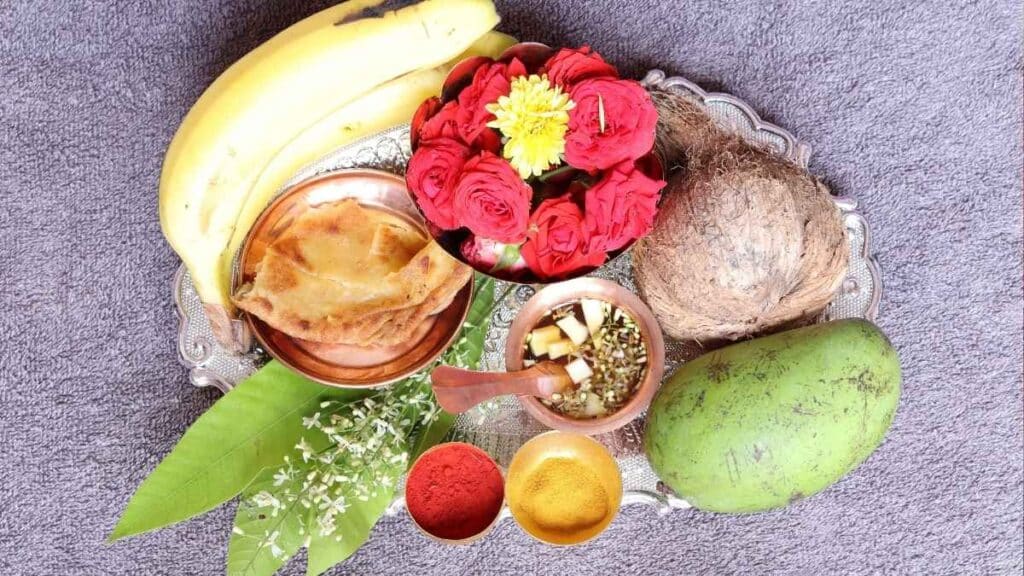
In a clean bowl (traditionally brass or silver, but any non-reactive bowl works), combine:
- ¼ cup neem flowers (or 2 tbsp young leaves)
- 2 tablespoons grated jaggery
- 2 tablespoons tamarind pulp
- 1 tablespoon grated raw mango
- 2 finely chopped green chilies
- ½ teaspoon rock salt
The research emp
Time: 2 minutes
Step 4: Mix and Dissolve
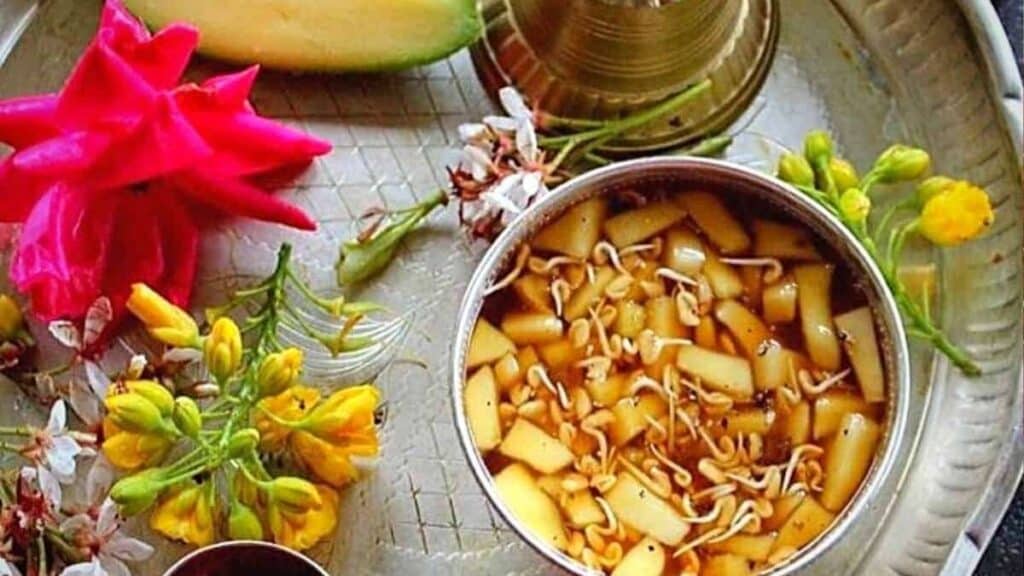
The research specifies: “Stir gently until jaggery dissolves.”
Taste carefully (just a tiny amount on your fingertip) and adjust if needed. The research advises: “Adjust sweetness or sourness to taste”—meaning if the mixture is too bitter (common with fresh neem), add a bit more jaggery. If too sweet, add more tamarind.
Time: 1 minute
Step 5: Optional Tempering (Traditional Enhancement)

Pour this tempering over the pachadi mixture. The research notes: “Add light tempering for aroma” as optional.
This step is not universal—some families include it, others keep the pachadi completely untempered. For ritual purposes, the simple mixture is sufficient.
Time: 2 minutes (if doing tempering)
Step 6: Rest Before Serving

Let the pachadi rest for 20 to 30 minutes at room temperature. The research specifies: “Rest 20–30 minutes before serving.”
Cover with a clean cloth while resting.
Time: 20-30 minutes (passive)
Step 7: Serve as Prasad

Serve Ugadi Pachadi in small portions—approximately 1 tablespoon per person. The research emphasizes: “Serving Size: ~1 tbsp per person.”
Total Active Time: 10 Minutes (plus 20-30 minutes resting)
Why This Ritual Still Matters
In the landscape of Indian festival foods, Ugadi Pachadi occupies unique philosophical territory. The research states it directly: “Ugadi Pachadi is not merely a festive condiment but a ritual philosophy expressed through food.”
Most festival foods celebrate—they’re sweet, rich, indulgent. Ugadi Pachadi refuses to celebrate without also acknowledging difficulty. It forces you to taste bitterness (neem) alongside sweetness (jaggery), to experience sourness (tamarind) mixed with spice (chili). It’s fundamentally honest about what the year ahead will bring.
The research quotes the wisdom: “Life is a blend, not a single flavor.”
So measure your neem carefully. Grate fresh jaggery. Extract tamarind pulp with patience. Combine all six ingredients knowing each one matters. Let it rest so flavors can meld.
Ugadi Shubhakankshalu! (Happy Ugadi!)
Ugadi Pachadi is the sacred six-taste ritual prasad for Telugu New Year (March 30, 2026)—combining neem (bitter), jaggery (sweet), tamarind (sour), raw mango (tangy), green chili (spicy), and rock salt (salty) to represent Shad Rasa philosophy. Ready in 10 minutes, consumed first before festive meals. Each taste symbolizes life’s emotional spectrum—teaching balanced acceptance of hardship and joy. 35 calories per tablespoon, digestive preparation, profound philosophy in simple mixture.
Why is neem, which tastes so bitter, included in Ugadi Pachadi?
The bitterness is the entire point. Neem represents life’s hardships and difficulties—the things we naturally want to avoid but cannot.
Can I reduce or eliminate the neem if I can’t tolerate the bitterness?
Technically you can adjust proportions, but eliminating neem defeats the ritual’s entire philosophical purpose.
