


There’s a specific kind of craving that hits around 5 PM on a Navratri evening. You’ve been fasting since morning, you’ve finished the afternoon puja, and your body is quietly asking for something—not heavy, not fried, just something that tastes good and gives you a little boost before the evening aarti. That’s when shakarkandi chaat shows up, and suddenly everything feels manageable again.
Sweet potato chaat isn’t trying to be fancy. It’s not restaurant food or Instagram bait. It’s just roasted sweet potato cubes tossed with yogurt, a drizzle of tangy chutney, a sprinkle of roasted cumin, and a handful of pomegranate seeds that crack between your teeth. Simple, satisfying, and exactly what you need when you’re halfway through a long fasting day and still have hours to go.
Table of Contents
What Exactly Is Shakarkandi Chaat?
But here’s the key difference: this version is completely vrat-friendly. No regular salt, no onions, no garlic, no grains. Just sendha namak (rock salt), vrat-safe chutneys, and toppings like pomegranate seeds, roasted peanuts, and sesame seeds that are allowed during Navratri fasting.
The texture is what makes it work. You get soft, slightly sweet potato on the inside, a crispy roasted exterior, creamy yogurt, tangy chutney, and then that final layer of crunch from the peanuts and pomegranate. It’s a lot happening in one bowl, but somehow it all balances out perfectly.
In Ayurvedic terms, sweet potato is considered sattvic and grounding. It doesn’t overstimulate your system, but it doesn’t leave you feeling empty either. It sits somewhere in the middle—nourishing, steady, and exactly what you need when you’re fasting.
Recipe Overview
| Detail | Information |
|---|---|
| Prep Time | 5 minutes |
| Cook Time | 15 minutes |
| Total Time | 20 minutes |
| Servings | 4 people |
| Cuisine | Indian (Vrat/Fasting) |
| Course | Snack/Evening Refreshment |
| Diet | Vegetarian, Gluten-Free, Vrat-Friendly, Sattvic |
| Difficulty Level | Easy |
| Calories per Serving | ~180 kcal |
Shakarkandi chaat is a North Indian street-style snack that’s been adapted for fasting. It’s made with sweet potatoes—scientifically known as Ipomoea batatas—that are boiled or roasted until tender, then crisped up on the outside and tossed with all the classic chaat elements: yogurt, chutneys, roasted spices, and crunchy toppings.
CHECK MORE ON: Kuttu Ki Puri Recipe
Ingredients List
| Ingredient | Quantity | Notes |
|---|---|---|
| Shakarkandi (Sweet potato) | 2 medium (~400g) | Orange-fleshed variety preferred |
| Ghee or oil | 2 tablespoons | For roasting |
| Roasted cumin powder | 1 teaspoon | Freshly roasted is best |
| Black pepper powder | ½ teaspoon | Adds warmth |
| Sendha namak (Rock salt) | To taste | Regular salt not allowed during fasting |
| Green chutney | 2 tablespoons | Vrat-safe version (no garlic) |
| Tamarind-jaggery chutney | 2 tablespoons | Vrat-safe sweet chutney |
| Beaten yogurt | ¼ cup | Fresh curd, whisked smooth |
| Pomegranate seeds | ¼ cup | Fresh arils for crunch |
| Roasted peanuts | 2 tablespoons | Crushed or whole |
| Sesame seeds | 1 teaspoon | White or black |
| Lemon juice | 1 tablespoon | Fresh squeezed |
| Fresh coriander leaves | For garnish | Chopped |
Why Shakarkandi Chaat Is Perfect for Navratri Fasting
Chaitra Navratri 2026 is expected to run from March 19 to 27, though exact dates depend on the lunar calendar and can vary slightly by region. During these nine days, you’re working with a very specific set of ingredients: kuttu, singhara, sabudana, sama rice, potatoes, sweet potatoes, and sendha namak. No wheat, no rice, no regular salt.
Shakarkandi fits perfectly into this framework, and it does three critical things that make it ideal for fasting:
1. It provides sustained energy. Sweet potatoes contain complex carbohydrates—about 20 grams per serving—that release energy gradually rather than spiking your blood sugar. They have a glycemic index of around 50 to 60, which is moderate compared to regular potatoes (75 to 85). This means you get steady fuel without the crash, which is exactly what you need when you’re spacing meals further apart and trying to make it through long puja hours.
2. It supports digestion. With roughly 4 grams of fiber per serving, shakarkandi chaat helps prevent the constipation that often comes with restricted diets. Fiber also enhances satiety, so you feel fuller longer. When you’re eating fewer meals and dealing with hunger pangs between fasting windows, that extra fullness matters.
3. It delivers micronutrients beyond just calories. Sweet potatoes are rich in beta-carotene, which your body converts to vitamin A—important for immunity and vision. They’re also high in potassium (around 400 to 475 milligrams per 100 grams), which supports muscle function and electrolyte balance, especially relevant if you’re standing through long aarti sessions or dancing during garba.
The Key to Getting It Right: Texture Layering
Here’s the thing about chaat: it’s all about texture. If everything is soft and mushy, it’s boring. If everything is crunchy, it’s exhausting to eat. You need layers—soft, crispy, creamy, crunchy—all working together in the same bite.
For shakarkandi chaat, that means two things: roasting the sweet potato properly so it has crisp edges and a soft center, and adding the crunchy toppings at the very end so they don’t get soggy.
Get those two steps right, and the rest is just assembly.
Step-by-Step Instructions: Making Perfect Shakarkandi Chaat
Step 1: Prepare the Sweet Potatoes

Wash 2 medium sweet potatoes (about 400 grams total). You can either pressure cook them for 1 to 2 whistles or boil them in a pot of water for about 10 to 12 minutes until they’re tender. You should be able to pierce them easily with a fork, but they shouldn’t be falling apart.
Time: 10-12 minutes
Step 2: Roast the Sweet Potato Cubes
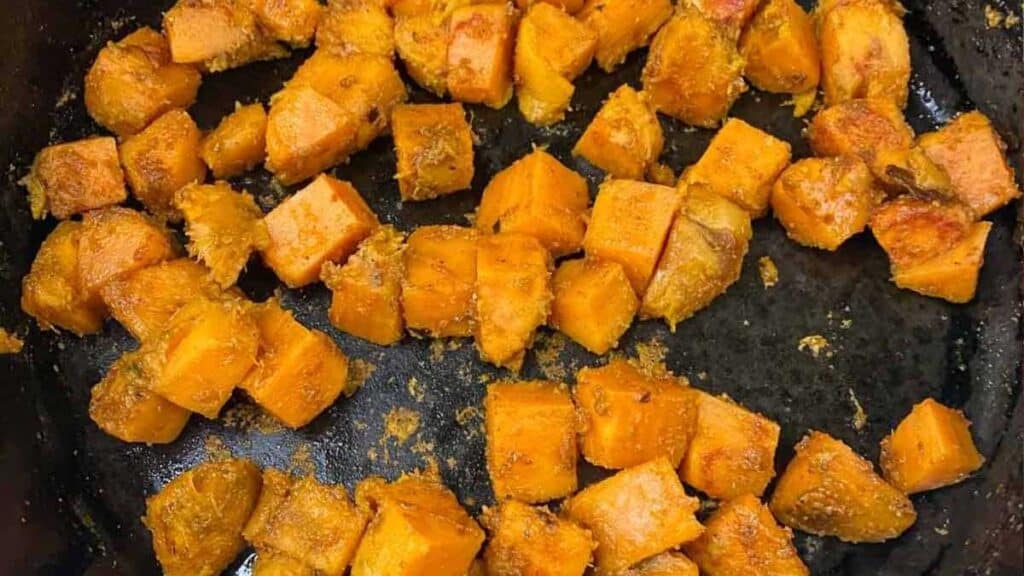
Heat 2 tablespoons of ghee or oil in a flat pan or tawa over medium-high heat. Once it’s hot, add the sweet potato cubes in a single layer. Don’t overcrowd the pan.
Time: 5 minutes
Step 3: Assemble the Chaat
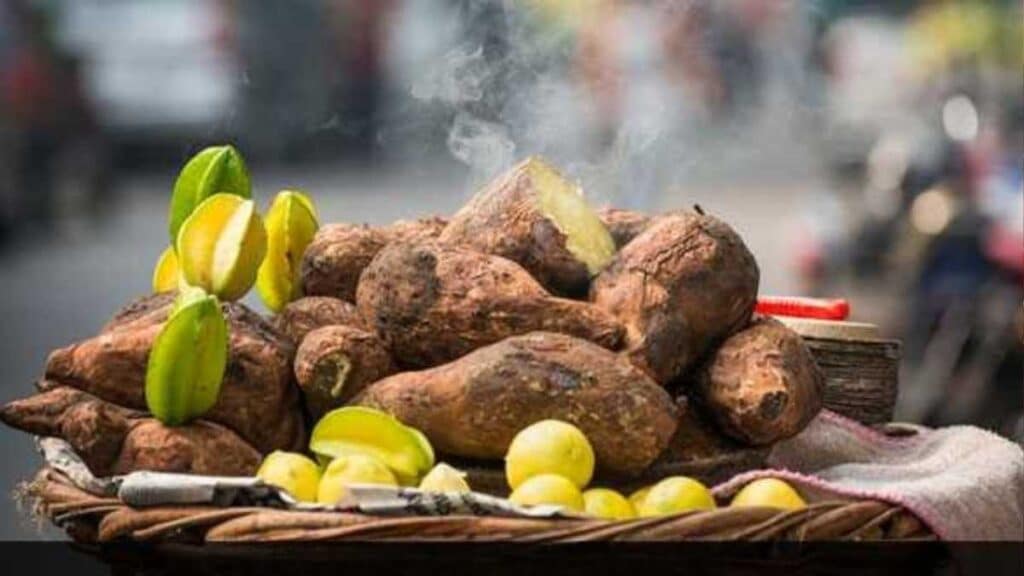
Transfer the roasted sweet potato cubes to a serving bowl. Let them cool slightly—you want them warm but not piping hot, or the yogurt will curdle.
Add ¼ cup of beaten yogurt. Drizzle 2 tablespoons of green chutney and 2 tablespoons of tamarind-jaggery chutney over the top. Don’t mix yet—just let the chutneys sit on top for visual appeal.
Time: 2 minutes
Step 4: Add the Crunch
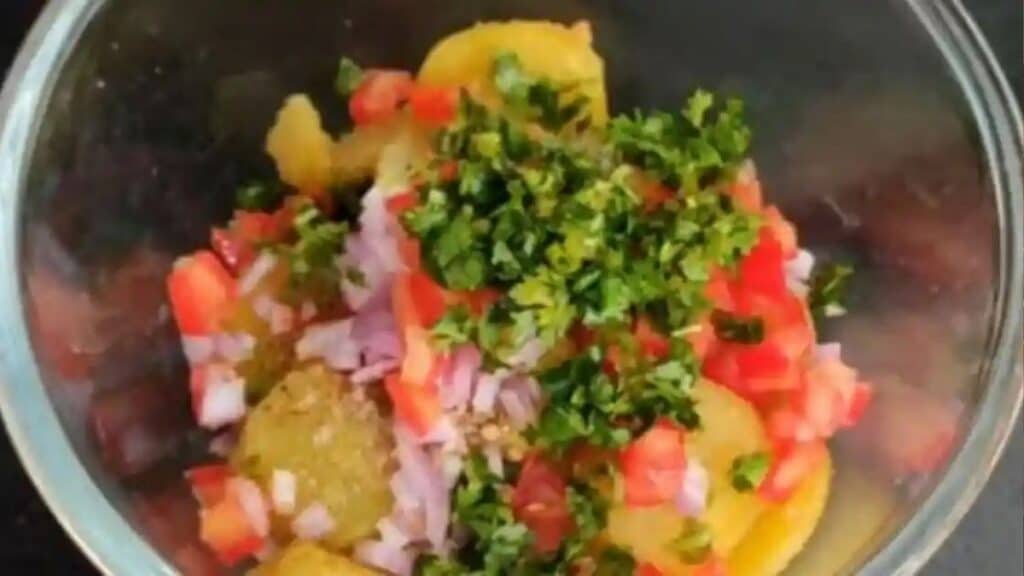
Now comes the fun part. Scatter ¼ cup of pomegranate seeds over the top. Add 2 tablespoons of roasted peanuts (you can crush them slightly if you want or leave them whole). Sprinkle 1 teaspoon of sesame seeds.
Garnish with fresh chopped coriander leaves.
Time: 1 minute
Step 5: Toss and Serve

Toss everything together gently so the yogurt and chutneys coat the sweet potato cubes and the toppings distribute evenly. Don’t overmix or you’ll crush the pomegranate seeds and turn everything mushy.
Serve immediately. Chaat is best eaten fresh when the roasted cubes are still slightly warm and the toppings are still crunchy.
Total Time: About 20 Minutes
From start to finish, you’re looking at roughly 20 minutes of active work. Quick, doable, and perfect for Navratri evenings.
Serving Suggestions and Timing
| Best Time | Why It Works |
|---|---|
| Evening snack (4-6 PM) | Bridges the gap between afternoon and evening meals |
| Post-garba refreshment | Quick energy after dancing |
| Ashtami or Kanjak day | Special occasion snack for guests |
| Post-puja break | Light refuel after long standing |
Pair With:
- Singhare ka halwa for a complete sweet-savory combo
- Lauki ki sabji for a balanced fasting thali
- Fresh fruit chaat for a lighter option
- Hot masala chai (vrat version)
Shakarkandi chaat works particularly well as an evening snack during Navratri. It’s substantial enough to hold you over until dinner but light enough that you don’t feel weighed down. And if you’re hosting for Ashtami or feeding young girls for Kanjak, it’s a festive, colorful option that feels special without being complicated.
Why This Dish Matters: Nutrition That Actually Works
Let’s talk about what shakarkandi chaat actually does for your body during fasting, because it’s more than just a tasty snack.
Sustained energy from complex carbs: Unlike refined snacks or even sabudana, which can spike your blood sugar quickly, sweet potato releases energy gradually. With a glycemic index of around 50 to 60 (compared to regular potato’s 75 to 85), it gives you steady fuel without the crash. When you’re fasting for hours and trying to avoid that mid-afternoon slump, that steady release matters.
Fiber for digestive comfort: The roughly 4 grams of fiber per serving helps prevent the constipation that often comes with restricted diets. Fiber also keeps you feeling full longer, which reduces those constant hunger pangs that can make fasting feel miserable.
Beta-carotene for immunity: Sweet potatoes are incredibly rich in beta-carotene, which your body converts to vitamin A. This supports your immune system and vision—both important when you’re eating less and potentially stressing your body with dietary restrictions.
Potassium for muscle function: With around 400 milligrams of potassium per serving, shakarkandi chaat helps maintain electrolyte balance. This is especially relevant if you’re standing through long pujas, climbing stairs to temples, or dancing during garba nights.
Vitamin C absorption: The lemon juice doesn’t just add flavor—it also enhances the absorption of vitamin C from the sweet potatoes and other ingredients.
All of this adds up to a snack that’s genuinely functional, not just filling.
Storage and Make-Ahead Tips
| Storage Method | Duration | Notes |
|---|---|---|
| Roasted sweet potato cubes (refrigerated) | 1 day | Store separately; reheat before assembling |
| Vrat chutneys (refrigerated) | 2-3 days | Keep in airtight containers |
| Assembled chaat | Not recommended | Yogurt makes it soggy; assemble fresh |
| Pre-boiled (unroasted) cubes | 1 day refrigerated | Roast just before serving |
The key to shakarkandi chaat is assembling it fresh. You can prep components ahead—boil the sweet potatoes in the morning, make the chutneys a day or two in advance, roast the peanuts—but don’t put it all together until you’re ready to eat. Once the yogurt hits the warm potato, the clock is ticking. Within 15 to 20 minutes, it’ll start getting soggy and lose that crucial textural contrast.
If you have leftover roasted cubes, store them in the refrigerator and reheat them quickly in a pan or air fryer before using. They won’t be quite as crispy as fresh, but they’re still usable.
Why This Recipe Still Matters
In a world where fasting snacks often mean sabudana vada or plain fruit, shakarkandi chaat is a reminder that vrat food doesn’t have to be boring or one-dimensional. It’s a snack that actually tastes like something you’d order from a street vendor—layered, textured, balanced between sweet and tangy and spicy and creamy.
But more than that, it’s functional. It’s not empty calories or fried indulgence masquerading as fasting food. It’s complex carbohydrates, fiber, potassium, beta-carotene, and protein all wrapped up in a bowl that happens to taste really, really good.
When you make shakarkandi chaat during Navratri, you’re not just following a recipe. You’re adapting a street food tradition to fit spiritual practice. You’re finding a way to enjoy the flavors you love while honoring the restrictions you’ve chosen. And you’re giving your body what it actually needs—sustained energy, digestive support, micronutrients—during a time when it’s working differently.
And when you take that first bite—sweet, tangy, creamy, crunchy, all at once—take a moment to appreciate what it is: not just a snack, but a small act of care. For your body, for your taste buds, and for the tradition that says fasting doesn’t have to mean deprivation.
Can I use white sweet potato instead of orange?
Yes, you can use any variety of sweet potato. Orange-fleshed sweet potatoes have more beta-carotene and a slightly sweeter flavor, but white or purple varieties work just as well.
Why is my chaat getting soggy?
Chaat gets soggy when the yogurt and chutneys sit on warm potato cubes for too long, or when you add the crunchy toppings too early.
Can I make shakarkandi chaat without yogurt?
Yes, but it won’t be as creamy or traditional. You can skip the yogurt and just use chutneys, lemon juice, and toppings.
