


There are practical realities about Navratri fasting that don’t get discussed enough. One of them is this: by day three or four, you’re tired of cooking. You’re managing puja schedules, family meals, work, possibly garba preparations—and the idea of making fresh snacks every single evening starts to feel overwhelming.
Made from thin potato wafers, roasted peanuts, coconut slivers, and sesame seeds, all fried separately at specific temperatures and tossed together with sendha namak and spices while hot, farali chevdo is the grain-free snack mix that stays crispy for up to two weeks when stored properly.
Table of Contents
What Exactly Is Farali Chevdo?
Farali chevdo is a grain-free, Navratri fasting snack mix made primarily from thin potato wafers, roasted peanuts, coconut slivers, and sesame seeds, all fried separately to maintain individual texture, then tossed together while hot with sendha namak (rock salt), black pepper, a touch of sugar, and roasted cumin powder.
It’s the vrat adaptation of regular chevdo/chivda—the popular Gujarati snack mix that typically includes poha (flattened rice), sev (gram flour noodles), and various nuts. During Navratri, when grains and gram flour are restricted, farali chevdo replaces those ingredients with potatoes (which are vrat-approved) while maintaining that essential characteristic: crunch.
The texture is what defines good farali chevdo. Each element should maintain its individual character—crispy potato wafers that shatter when you bite them, crunchy peanuts that provide substance, tender coconut slivers that add sweetness, tiny sesame seeds that contribute nutty depth. When combined, they create a textural symphony where every handful delivers multiple sensations.
Recipe Overview
| Detail | Information |
|---|---|
| Prep Time | 40 minutes (including 30 min drying) |
| Cook Time | 20 minutes |
| Total Time | ~60 minutes |
| Yield | 500g (approximately 4 cups) |
| Servings | 16 servings (¼ cup each) |
| Cuisine | Gujarati (Vrat/Fasting) |
| Course | Snack |
| Diet | Vegetarian, Gluten-Free, Grain-Free, Vrat-Friendly |
| Difficulty Level | Medium |
| Storage | Up to 2 weeks in airtight glass container |
| Calories per Serving (¼ cup) | ~120 kcal |
Ingredients List
For the Base
| Ingredient | Quantity | Notes |
|---|---|---|
| Large potatoes | 3 (for thin wafers) | Starchy variety preferred |
| Raw peanuts | ½ cup | Unsalted |
| Fresh coconut slivers | ½ cup | Thin-sliced |
| Sesame seeds | 1 teaspoon | White or black |
| Oil | For deep frying | Multiple batches |
For Seasoning
| Ingredient | Quantity | Notes |
|---|---|---|
| Sendha namak (Rock salt) | 1½ teaspoons | Fasting-compliant |
| Black pepper powder | ½ teaspoon | For warmth |
| Powdered sugar | 1 teaspoon | Balances savory-sweet |
| Roasted cumin powder | ½ teaspoon | For depth |
Why Farali Chevdo Is Essential for Navratri
Chaitra Navratri 2026 runs from March 19 to 27. Nine days when snacking becomes strategically important—not just for taste, but for managing energy levels between restricted meals. Farali chevdo addresses several specific fasting challenges:
Texture satisfaction during grain restriction. The research states the core insight directly: “Texture satisfaction is the primary reason for its popularity during fasting. When grains are restricted, crispy snacks become psychologically and physically satisfying.” After days without your regular crackers, chips, or namkeen, crunch becomes genuinely important for mental wellbeing.
Sustained energy from fiber and fats. With approximately 8 grams of fiber per serving and healthy fats from peanuts and coconut, farali chevdo provides the combination that prevents hunger spikes: “Crunch + fiber + fats = sustained energy and reduced hunger spikes during fasting.”
Electrolyte support. The approximately 300-400mg of potassium per serving helps reduce muscle cramps during long fasting hours. The research notes: “Electrolyte-rich sendha namak supports hydration during long fasts.”
Batch preparation efficiency. The research documents: “75% of Gujarati households prepare bulk batches before Navratri” because making one large batch eliminates daily snack preparation. This is genuinely practical—one hour of work on day zero gives you two weeks of ready snacking.
Portable and practical. The research notes farali chevdo is “often packed in small tiffin portions for office or post-garba snacking.” It doesn’t require refrigeration, travels well, and can be eaten anywhere—crucial during Navratri when you’re managing multiple locations and activities.
Market demand confirms value. Vrat snack searches reportedly increase by approximately 85 percent during festival periods according to the research. This spike isn’t random—it’s evidence of genuine need for exactly what farali chevdo provides.
CHECK MORE ON:Sweet Potato Chips Recipe: The Crispy Snack That’s Actually Good for You
The Three Techniques That Determine Crispness
Before we get into the step-by-step, let’s establish the three non-negotiable techniques that separate crispy, long-lasting farali chevdo from soggy disappointment:
1. Extremely thin slicing (1mm) and complete drying (30 minutes minimum)
Here’s what’s happening: when you slice potatoes and immediately fry them, they contain surface moisture and internal starch that hasn’t been removed. During frying, this moisture turns to steam but gets trapped, making the chips initially crisp but quickly soggy as they cool and the internal moisture redistributes.
The solution: Slice uniformly thin (mandolin strongly recommended), soak in cold water for 20 minutes to remove surface starch, then dry completely for at least 30 minutes with towels. Pat dry, then air dry. The potatoes should feel dry to the touch before frying. The research confirms: “Insufficient drying before frying” causes sogginess.
2. Progressive frying temperatures for different ingredients
The research specifies exact temperatures:
- Peanuts: ~160°C
- Coconut: ~180°C
- Potatoes: ~190°C
Why separate frying matters: “Each ingredient has different moisture and fat content. Frying together leads to uneven cooking.”
3. Immediate hot tossing and proper cooling
The research emphasizes: “Hot tossing while ingredients are warm ensures spices adhere properly.” And the critical technique: “Steam escape during cooling prevents sogginess.”
This means: Combine all fried elements while they’re still hot. Add spices immediately and toss to coat. Then spread in a single layer to cool completely before storing. Don’t pile them up. Don’t cover them while cooling. Let steam escape freely.
Get these three techniques right—thin slicing plus complete drying, progressive frying temperatures, and immediate hot seasoning with proper cooling—and your farali chevdo will stay crispy for two weeks.
Step-by-Step Instructions: Making Perfect Farali Chevdo
Step 1: Slice and Prepare Potatoes
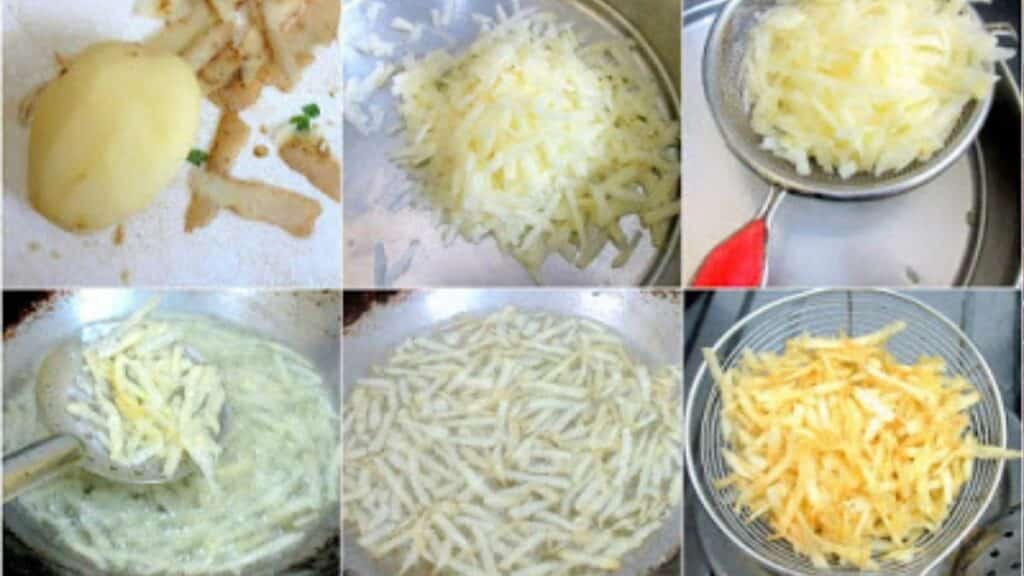
Wash and peel 3 large starchy potatoes. Using a mandolin slicer set to 1mm thickness, slice into uniformly thin rounds. Consistency is critical—uneven slices cook unevenly and some will burn while others stay pale.
Transfer sliced potatoes to a large bowl of cold water and soak for 20 minutes. This removes surface starch that would otherwise cause the chips to stick together during frying.
Time: 10 minutes slicing + 20 minutes soaking + 30 minutes drying = 60 minutes total (mostly passive)
Step 2: Fry Peanuts
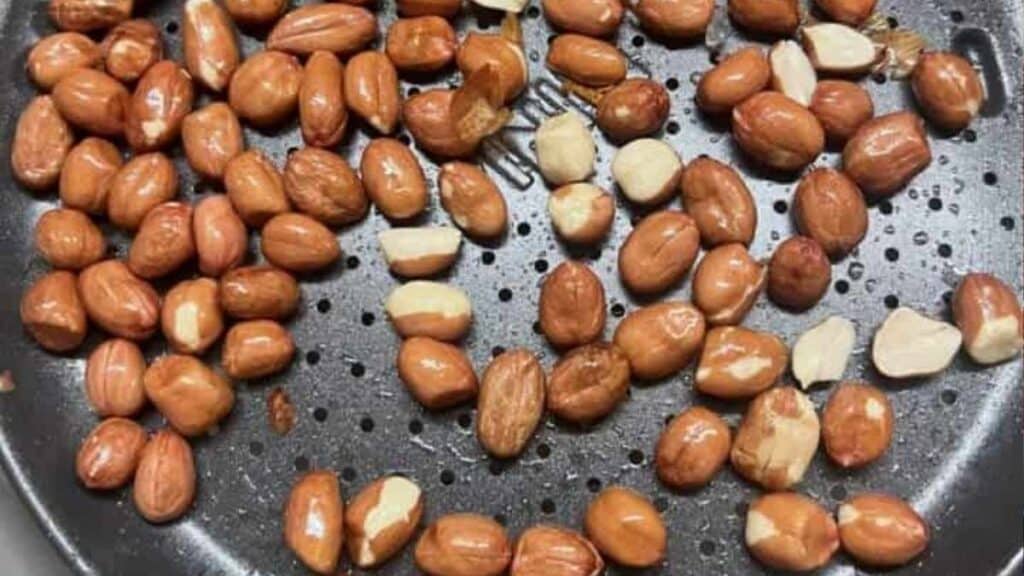
Add ½ cup raw peanuts and fry for 4-5 minutes, stirring occasionally, until they turn golden brown and smell nutty. Remove with a slotted spoon and drain on paper towels. Set aside.
Time: 6 minutes
Step 3: Fry Coconut Slivers
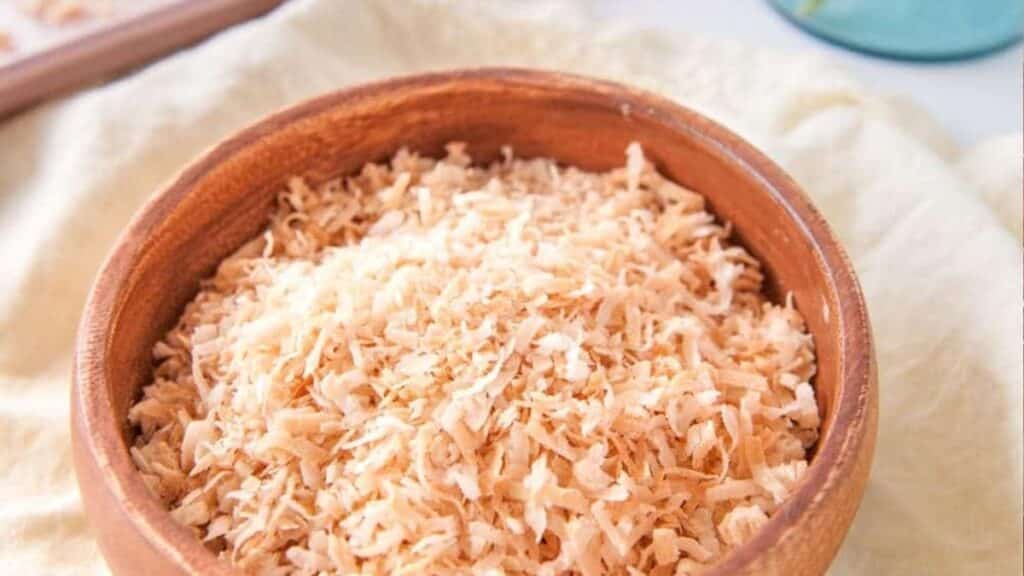
Increase oil temperature to approximately 180°C (medium-high heat).
Add ½ cup fresh coconut slivers and fry for 2-3 minutes until they turn golden at the edges. Coconut fries quickly because of its sugar content, so watch carefully to prevent burning.
Remove with a slotted spoon and drain. Set aside.
Time: 3 minutes
Step 4: Fry Sesame Seeds
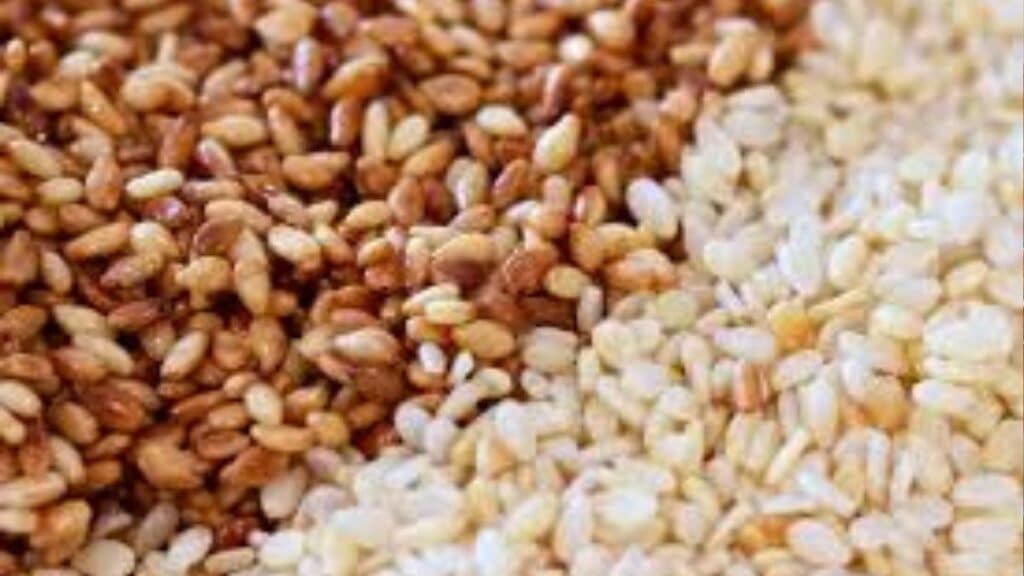
In the same oil at 180°C, quickly fry 1 teaspoon of sesame seeds for about 30 seconds until they’re lightly golden and aromatic. They cook very quickly, so don’t walk away. Remove and drain immediately.
Time: 1 minute
Step 5: Fry Potato Wafers
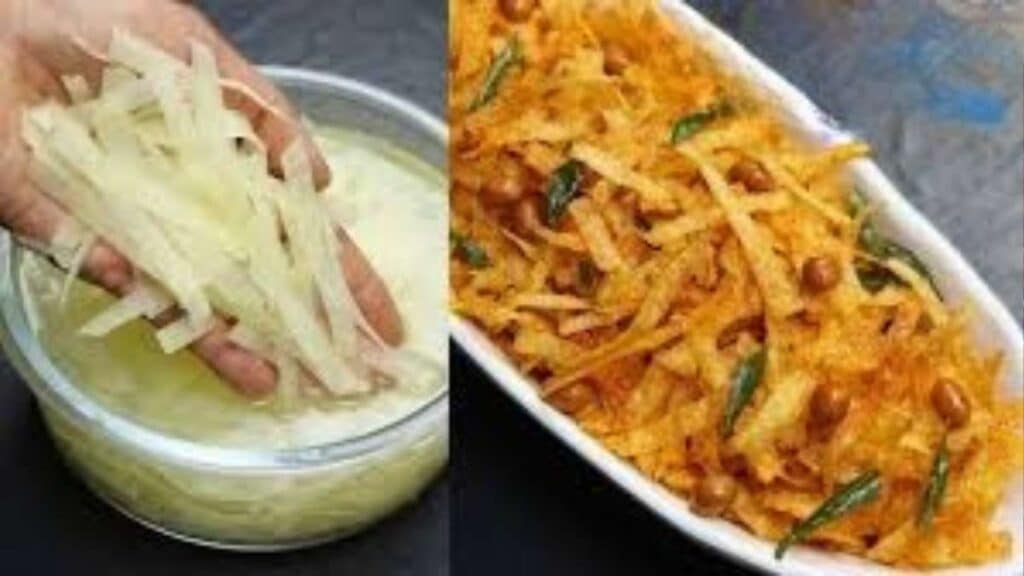
Increase oil temperature to approximately 190°C (high heat). This is critical—high heat seals the exterior immediately, preventing oil absorption.
Time: 15-20 minutes for all batches
Step 6: Hot Toss with Spices
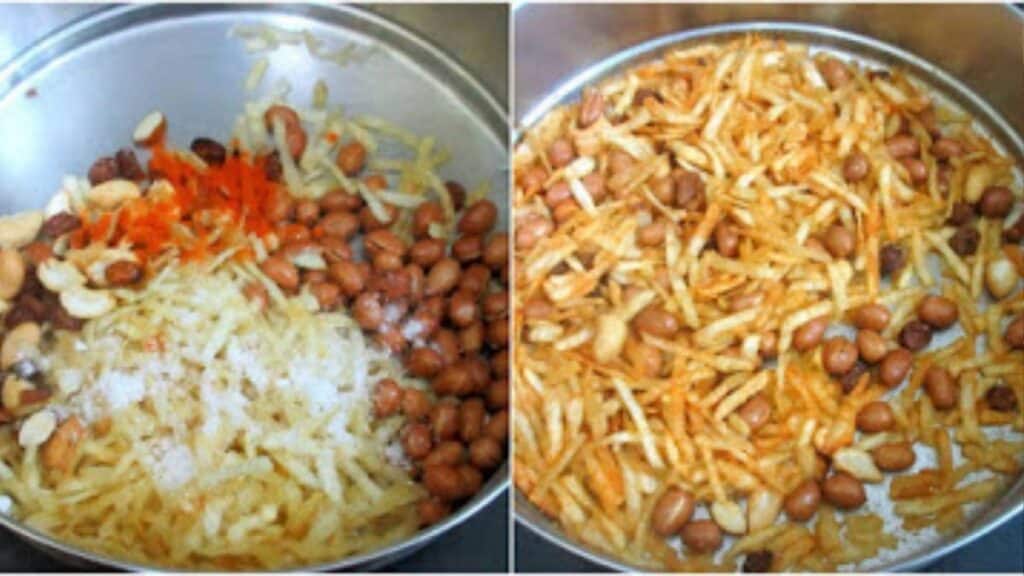
Immediately while everything is still hot (this timing is critical), combine all the fried elements—peanuts, coconut, sesame seeds, and potato wafers—in a large mixing bowl.
Time: 2 minutes
Time: 30 minutes cooling (passive)
Total Active Time: About 30 Minutes (plus 60 minutes passive time for drying and cooling)
Storage Strategy
The research confirms: “Glass storage prevents humidity transfer better than plastic.” Store in a completely airtight glass jar with a tight-fitting lid. Keep in a cool, dry place away from direct sunlight. Check after a week—if any pieces have softened, spread on a baking tray and refresh in a 180°C oven for 5 minutes, then cool completely before returning to storage.
Why This Recipe Still Matters
The research documents that vrat snack searches increase by approximately 85 percent during festival periods, and approximately 75 percent of Gujarati households prepare bulk batches before Navratri. These aren’t just interesting statistics—they’re evidence of collective wisdom about how to make extended fasting sustainable.
What makes farali chevdo specifically valuable is how it solves the texture satisfaction problem. The research states the core insight: “Texture satisfaction is the primary reason for its popularity during fasting. When grains are restricted, crispy snacks become psychologically and physically satisfying.”
After days without your regular crackers, chips, or namkeen, crunch becomes genuinely important for mental wellbeing. Farali chevdo delivers that crunch, plus the fiber and healthy fats that provide actual satiety, plus the shelf life that makes it practical rather than aspirational.
So use your mandolin for uniform slicing. Soak for 20 minutes. Dry for 30 minutes minimum. Fry at progressive temperatures. Toss hot with spices. Cool completely in a single layer. Store in airtight glass.
Why did my farali chevdo turn soggy after just one day?
Insufficient drying before frying is almost always the cause. The research is clear: “Moisture is the biggest cause of sogginess.
Do I really need to fry each ingredient separately at different temperatures?
Yes, for optimal results. The research explains: “Each ingredient has different moisture and fat content. Frying together leads to uneven cooking.”
Can I slice potatoes by hand if I don’t have a mandolin?
You can try, but achieving uniform 1mm thickness by hand is extremely difficult. Uneven thickness means uneven cooking—some chips will burn while others stay soft.
