


Modak, the sweet dumpling steeped in tradition and devotion, is more than just a festive delight—it’s a sacred offering to Lord Ganesha and a beloved delicacy in many Indian households. Whether you’re a seasoned home cook or a first-time festive chef, mastering the Modak recipe is a rewarding part of celebrating Ganesh Chaturthi. This guide walks you through the art of making Ukadiche Modak by hand and with a mold, along with expert tips and time-honored techniques.
What Is Ukadiche Modak?
Derived from the Marathi word “Ukad” meaning steam, Ukadiche Modak is a traditional Maharashtrian steamed sweet dumpling. It features a soft rice flour shell that encases a warm, fragrant filling of grated coconut, jaggery, and cardamom. Each dumpling is crafted with deep reverence and care, making it both a culinary and spiritual experience.
Why This Modak Recipe Is So Special
- Culturally Sacred – Known as Lord Ganesha’s favorite sweet, Modak is traditionally offered as bhog during Ganesh Chaturthi.
- Symbol of Devotion – The pleated shape symbolizes dedication and love offered to the deity.
- Family Bonding – Preparing Modak together is a cherished tradition that strengthens familial ties.
Ingredients You’ll Need
For the filling:
- Freshly grated coconut
- Grated or powdered jaggery
- Cardamom powder
- Nutmeg (optional)
- Ghee for sautéing
For the dough:
- Fine rice flour
- Water
- Salt
- Ghee
Step-by-Step: How to Make Ukadiche Modak
1. Prepare the Coconut-Jaggery Filling
- Heat a teaspoon of ghee in a pan.
- Add grated coconut and sauté briefly.
- Mix in jaggery until it melts and blends with the coconut.
- Add cardamom and nutmeg. Stir until thickened.
- Allow it to cool before using.
2. Make the Dough
- Boil water with salt and a spoonful of ghee.
- Gradually stir in rice flour to avoid lumps.
- Cover and let steam for a few minutes.
- Transfer to a plate and knead while still warm until smooth.
3A. Shaping Modak by Hand (Traditional Method)
- Grease your palms with ghee.
- Flatten a dough ball into a small disc.
- Place the filling at the center.
- Pinch and pleat the edges, then seal the top into a cone shape.
Tip: Don’t stress over the shape—devotion counts more than perfection.
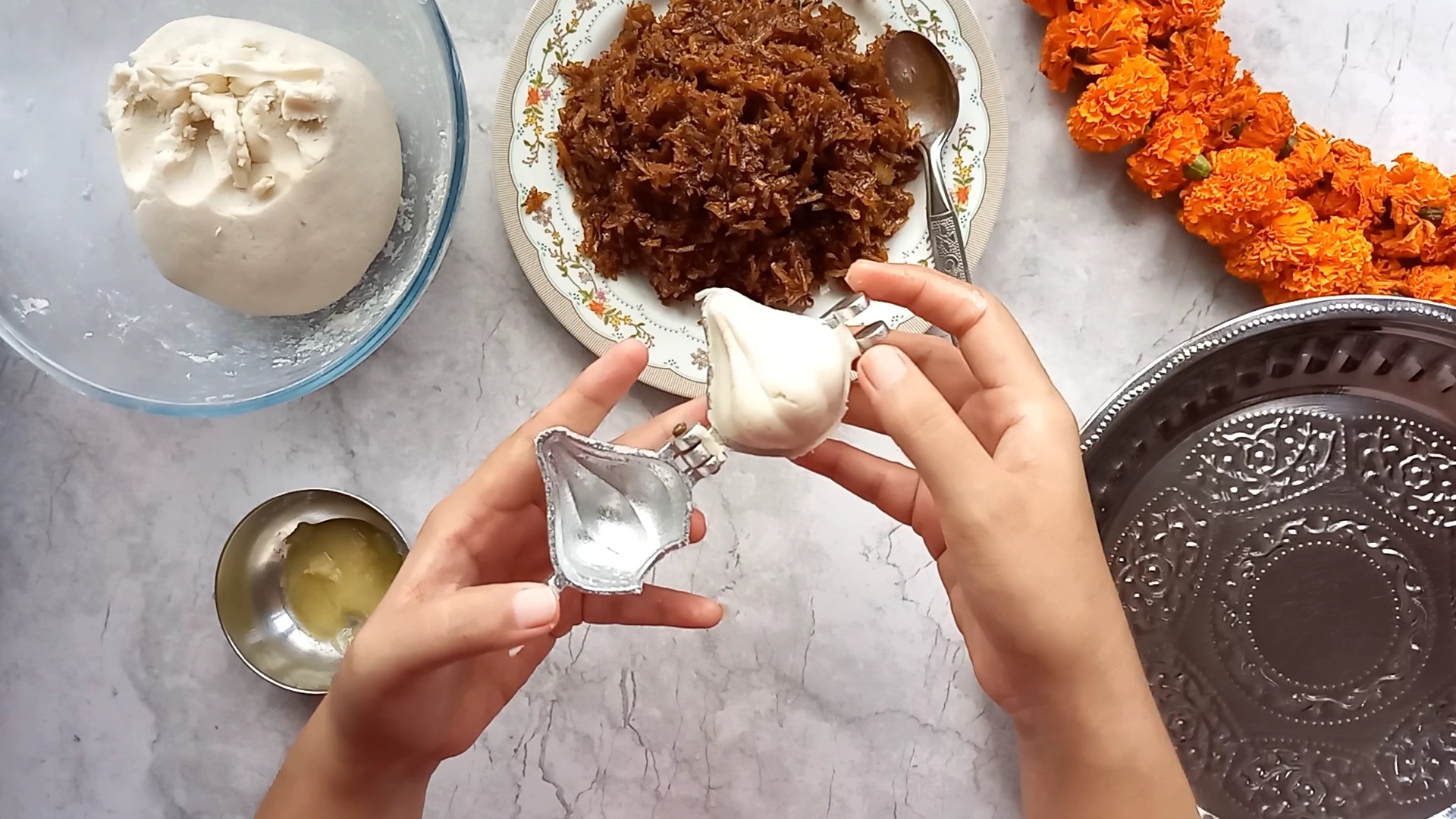
3B. Shaping Modak with a Mold (Easier Method)
- Grease the inside of the mold.
- Press dough into both sides of the mold.
- Fill the center with the coconut-jaggery mixture.
- Seal and open the mold carefully to release the shaped Modak.
4. Steam the Modaks
- Place Modaks on a greased banana leaf or parchment.
- Steam for 10 to 14 minutes in a steamer or pressure cooker without the whistle.
- Brush with ghee before serving.
Pro Tips to Perfect the Modak Recipe
- Use fine-quality rice flour for a smooth outer texture.
- Knead the dough while warm for a pliable consistency.
- Keep the dough covered while working to avoid drying.
- Wet your fingers while shaping to prevent cracks.
- Serve warm with a drizzle of melted ghee for the best taste.
Why Modak Matters During Ganesh Chaturthi
- Spiritual Significance – The offering of Modak is symbolic of seeking Lord Ganesha’s blessings for wisdom and prosperity.
- Cultural Ritual – Each family may have its unique method, passed down for generations.
- Flavor and Festivity – Beyond its spiritual role, the taste and texture of Modak make it a festive favorite.
Frequently Asked Questions
Can I make the Modak filling in advance?
Yes, it can be refrigerated for up to two days.
Why does my dough crack while shaping?
Dry dough or insufficient kneading is often the cause. Keep the dough moist and covered.
Do I need a mold?
Not necessarily. Handmade Modaks are more traditional and hold sentimental value.
Can Modak be deep-fried?
Yes, that version is known as Fried Modak and is also popular during festivals.
What’s the best way to serve Modak?
Serve them warm with a drizzle of melted ghee for the most authentic flavor.
Celebrate with Every Bite
Whether you prefer the meticulous art of hand-shaping or the convenience of molds, this Modak recipe brings divine sweetness to your festive table. Let this Ganesh Chaturthi be filled with blessings, tradition, and unforgettable flavors.
Latest Recipe Blogs
- Jaipuri Malai Ghevar Recipe to Sweeten Your Raksha Bandhan Celebrations
- Makhane ki Kheer Recipe: A Nourishing Festive Dessert for Fasting & Feasting
- Lauki ki Kheer Recipe: A Divine and Nourishing Sattvic Dessert for Sawan & Navratri
- Singhare Ke Atte Ka Halwa Recipe: Deliciously Easy Fasting Dessert You’ll Love
- Phirni Recipe for Raksha Bandhan | A Creamy, Festive Indian Dessert
