


Every February 14th, something shifts in the air. Store windows fill with red and pink, florists work overtime, and people suddenly remember they need to express feelings they’ve been carrying quietly for months. Valentine’s Day isn’t just a Hallmark creation, though it sometimes feels that way when you’re standing in a crowded card aisle on February 13th. It’s an ancient collision of Christian martyrdom, Roman fertility rites, medieval poetry, and our very human need to tell the people we love that they matter—before another year slips by without saying it.
Quick Summary:
Valentine’s Day, celebrated globally on February 14th, honors love and affection through cards, flowers, and gifts. Its origins blend Christian traditions honoring St. Valentine with the ancient Roman festival of Lupercalia, evolving into today’s celebration of romantic, platonic, and familial love.
Table of Contents
What Is Valentine’s Day and Why Do We Celebrate It?
Valentine’s Day is the one day each year designated specifically for expressing love—whether that’s the butterflies-in-your-stomach romantic kind, the I’d-help-you-move-apartments friendship kind, or the I-still-call-you-every-Sunday family kind. February 14th has become the global shorthand for “I love you,” delivered through chocolate hearts, handwritten cards, expensive dinners, and sometimes just a text message that says exactly that.
But unlike many holidays that have clear, traceable origins, Valentine’s Day is messy. It’s a tangle of competing legends, historical gaps, and cultural evolution that somehow coalesced into the day we know now. The saint is real. The legends around him? Murkier. The pagan festival that might have influenced it? Definitely real, and kind of wild.
What we know for certain is that by the Middle Ages, Valentine’s Day had become associated with romantic love in Europe, particularly through the work of poets. And once poets get involved, there’s no going back to practical origins. Love becomes art, and art becomes tradition.
The Origins: St. Valentine, Roman Festivals, and Medieval Romance
The Christian Story: Who Was St. Valentine?
The Catholic Church recognizes at least three different saints named Valentine, all of whom were martyred. The most popular legend involves a priest in third-century Rome during the reign of Emperor Claudius II. The emperor had banned marriage for young soldiers, believing single men made better warriors—fewer emotional attachments, more willingness to die for the empire.
According to tradition, this Valentine defied the decree and continued performing marriages in secret for young lovers. When Claudius discovered the disobedience, he had Valentine imprisoned and eventually executed on February 14th, around 269 CE. Before his death, Valentine allegedly healed the blind daughter of his jailer and sent her a letter signed “Your Valentine”—the first valentine in history, if the story holds.
It’s romantic. It’s dramatic. And historians aren’t entirely sure how much of it is true. But truth and legend blur beautifully when it comes to matters of the heart, and the image of a priest risking death to unite lovers struck a chord that echoed through centuries.
The Pagan Connection: Lupercalia and Fertility Rites
Before Christianity reshaped February 14th, mid-February belonged to Lupercalia, an ancient Roman festival dedicated to fertility and purification. Held from February 13-15, Lupercalia was earthy, visceral, and nothing like the sanitized version of romance we celebrate now.
Roman priests called Luperci would sacrifice goats and dogs, then cut the hides into strips and run through the streets, whipping women with the bloody skins. Women didn’t flee—they welcomed it. The ritual was believed to ensure fertility and ease childbirth. There was also a matchmaking lottery where young men drew the names of women from a jar, pairing them for the duration of the festival and sometimes longer.
When Christianity spread through Rome, the Church gradually absorbed and transformed pagan festivals. Some historians believe Pope Gelasius I replaced Lupercalia with St. Valentine’s Day in 496 CE, Christianizing the mid-February celebration. Others dispute this, pointing out that Valentine’s Day didn’t acquire romantic connotations until much later, making the Lupercalia connection more coincidental than causal.
Either way, February has been about love, fertility, and connection for over two millennia. The rituals change, but the impulse remains.
Medieval Poetry: Chaucer and the Birth of Romantic Valentine’s Day
The first clear link between St. Valentine’s Day and romantic love appears in Geoffrey Chaucer’s 1382 poem “Parlement of Foules,” written to honor the first anniversary of King Richard II’s engagement to Anne of Bohemia. Chaucer wrote:
“For this was on seynt Volantynys day / Whan euery bryd comyth there to chese his make.”
Translation: “For this was on St. Valentine’s Day, when every bird comes there to choose his mate.”
Chaucer popularized the idea that Valentine’s Day was when birds—and by poetic extension, humans—paired off for mating. It was a literary invention, not a historical fact, but it caught fire. Within a century, Valentine’s Day had become firmly associated with courtship, love letters, and romantic gestures across England and France.
Shakespeare later cemented this in the cultural imagination. In “Hamlet,” Ophelia sings, “Tomorrow is Saint Valentine’s day, / All in the morning betime, / And I a maid at your window, / To be your Valentine.” By the 17th century, exchanging handwritten notes and small tokens on February 14th was common among English aristocracy.
How Valentine’s Day Became a Global Phenomenon
Victorian Valentines: The Card Revolution
The 19th century transformed Valentine’s Day from an aristocratic custom into a mass phenomenon. The Victorians, who loved coded messages and elaborate courtship rituals, turned valentine cards into art forms. Handmade cards featured lace, ribbons, watercolors, and hidden messages—sometimes sweet, sometimes saucy.
In 1847, Esther Howland of Massachusetts began mass-producing valentines in the United States, using assembly-line techniques and decorative materials imported from England. She became known as the “Mother of the Valentine,” and her cards sold for anywhere from 5 cents to $50—a fortune at the time.
The anonymity of Victorian valentines added intrigue. You could send a card to someone you admired without revealing your identity, letting the recipient guess. Or you could send a “vinegar valentine”—a satirical, insulting card mocking someone you disliked. Not all Victorian romance was gentle.
By the early 20th century, printing advances made valentines cheap and accessible. Hallmark Cards entered the market in 1913, and Valentine’s Day became democratized. You didn’t need to be wealthy or artistically talented to express love. You just needed 10 cents and a mailbox.

Commercialization and Global Spread
The mid-20th century saw Valentine’s Day evolve into a commercial powerhouse. Florists promoted roses, jewelers pushed diamond rings, restaurants offered prix-fixe menus, and chocolate companies like Cadbury and Hershey’s linked their products irrevocably with romance.
The holiday spread globally, adapting to local cultures. In India, Valentine’s Day gained popularity in the 1990s among urban youth, though it also faced backlash from conservative groups who saw it as Western cultural imperialism. In Japan, women give chocolates to men on February 14th, while men reciprocate on “White Day” on March 14th. In South Korea, there’s a different love-related day every month.
For Indian diaspora communities in countries like Canada, the UK, and the US, Valentine’s Day often becomes a hybrid celebration—dinner at an Indian restaurant, roses and mithai, Bollywood love songs playing in the background. It’s a day when cultural duality feels less like tension and more like richness.
Symbols of Valentine’s Day: Hearts, Cupids, and Roses
The visual language of Valentine’s Day is universal. You could walk into a store anywhere in the world on February 10th and immediately recognize the holiday aisle.
Hearts
The heart symbol predates Valentine’s Day, but the two are now inseparable. Medieval physicians believed the heart was the seat of emotions, particularly love. The stylized shape we use today probably comes from the silphium seed—an ancient contraceptive plant whose seed pod resembled the symbol. By the 15th century, heart imagery appeared on playing cards and romantic illustrations, cementing its association with love.
Cupid
Cupid, the chubby winged baby with a bow and arrow, comes from Roman mythology. He’s the son of Venus, the goddess of love, and his arrows cause people to fall in love—sometimes against their will. It’s a more coercive view of romance than we’d accept today, but Cupid endures as a playful, mischievous symbol of attraction and desire.
Roses
“A rose by any other name would smell as sweet,” Shakespeare wrote, but on Valentine’s Day, only red roses will do. The association comes from Roman mythology again—Venus, goddess of love, loved roses. In Victorian flower language (floriography), red roses specifically meant passionate love, while pink signaled admiration and white represented purity.
Every Valentine’s Day, millions of roses are sold worldwide. For florists, it’s the Super Bowl. For couples, it’s a gesture that transcends words—though the environmental and labor costs of that global rose supply chain are worth considering.
How People Celebrate Valentine’s Day Today
Valentine’s Day looks different depending on where you are, who you’re with, and what love means to you that year.
For Couples: Romance and Connection
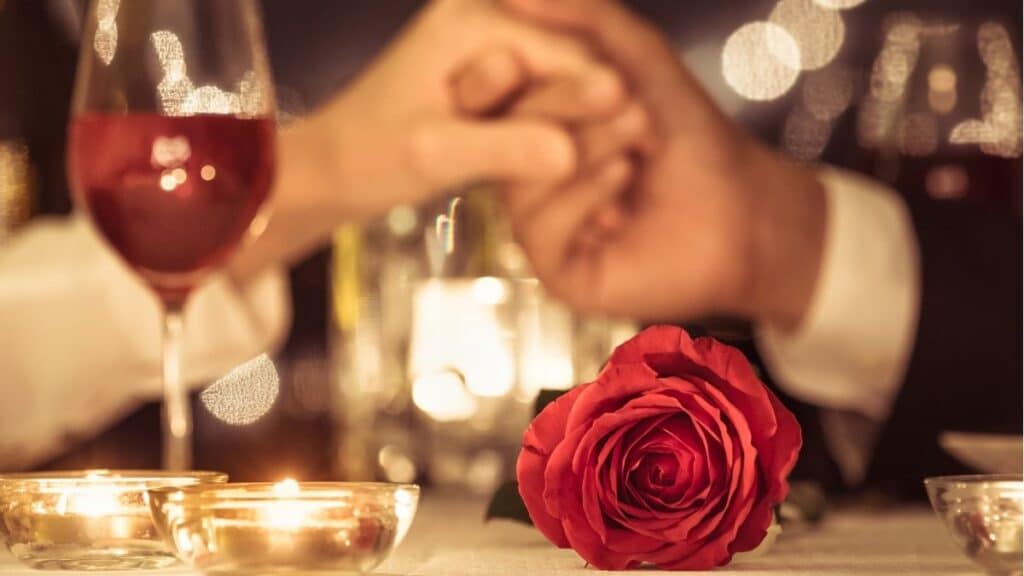
The classic Valentine’s Day involves dinner reservations at a restaurant with a prix-fixe menu, a bouquet of red roses, a box of chocolates, and maybe jewelry if it’s a milestone year. Couples exchange cards—sometimes funny, sometimes sentimental, sometimes both. The goal is quality time, uninterrupted attention, and a moment to acknowledge the relationship amidst the chaos of daily life.
But the best Valentine’s Days often aren’t the most expensive. They’re the ones where someone pays attention. Your partner knows you hate crowded restaurants, so they cook your favorite meal at home. They remember you mentioned wanting to try pottery, so they book a class. They write a letter by hand, which feels shockingly intimate in the digital age.
For long-distance couples—and there are millions in diaspora communities—Valentine’s Day becomes an exercise in creative connection. Video calls with coordinated meals. Sending care packages timed to arrive on the 14th. Playlists of songs that remind you of each other. Love finds a way, even across time zones.
For Singles: Galentine’s Day and Self-Love
Not everyone has a romantic partner on February 14th, and the cultural pressure to couple up can feel suffocating. But recent years have seen a counter-movement: Galentine’s Day (February 13th, popularized by the TV show “Parks and Recreation”), celebrating female friendships with brunch, gifts, and appreciation.
Singles also reclaim Valentine’s Day for self-care. Treat yourself to the fancy chocolate. Buy yourself flowers. Take yourself on a date—dinner, a movie, whatever makes you feel cherished. The radical idea here is that you don’t need someone else to validate your worth or make February 14th meaningful.
In Indian culture, where marriage and family are often deeply valued, being single on Valentine’s Day can carry extra weight. But diaspora communities are also spaces where young people are redefining what love and partnership look like on their own terms, without waiting for parental matchmaking or societal timelines.
For Friends and Family: Expanding the Definition
Valentine’s Day doesn’t have to be romantic. Parents exchange cards with children. Teachers organize classroom valentine exchanges where every kid gets one from every other kid—no one left out. Friends send each other silly memes that say “You’re stuck with me.”
This broader definition of Valentine’s Day—love as appreciation, affection, and chosen family—feels especially resonant in diaspora life. When you’re far from extended family, your friends become your support system. When you’re navigating a new culture, the people who show up for you deserve roses too.

Valentine’s Day Controversies and Cultural Tensions
Valentine’s Day isn’t universally beloved. In India, the rise of Valentine’s Day in the 1990s sparked backlash from groups like the Shiv Sena, who saw it as Western cultural pollution undermining traditional values. There have been incidents of moral policing, protests outside card shops, and threats against couples celebrating publicly.
The tension is real: how do you honor cultural tradition while also allowing young people autonomy in how they express love? For many Indian diaspora families, this plays out in living rooms—parents uncomfortable with dating, kids trying to explain that a Valentine’s Day dinner doesn’t mean abandoning respect or values.
There’s also the commercial critique. Valentine’s Day generates billions in revenue globally, and the pressure to spend money to prove love can feel coercive. The “perfect” Valentine’s Day marketed in ads—luxury hotels, expensive jewelry, elaborate gestures—is financially out of reach for most people and creates unrealistic expectations.
Some argue that love should be expressed year-round, not just on February 14th. They’re right, of course. But the counter-argument is that humans need rituals, reminders, designated moments to pause and acknowledge what matters. Valentine’s Day, at its best, is that reminder.
Love Doesn’t Need a Calendar, But Sometimes It Helps
Valentine’s Day won’t fix a broken relationship, and it won’t create love where there isn’t any. But it does something quieter and maybe more important: it creates permission. Permission to be vulnerable, to say “I love you” without prompting, to acknowledge that relationships—whether romantic or platonic—require intentional care. On February 14, 2026, whether you’re booking a table for two, texting your best friend, or buying yourself the good chocolate, you’re participating in a ritual that stretches back centuries and across cultures. You’re saying that love, in whatever form it takes in your life, deserves to be honored. Not because a greeting card company told you to, but because the people you love—including yourself—deserve to hear it out loud at least once a year.
When is Valentine’s Day 2026?
Valentine’s Day is celebrated annually on February 14th, so in 2026 it falls on Saturday, February 14th—a weekend, perfect for date nights and celebrations.
What is the origin of Valentine’s Day?
Valentine’s Day originated from Christian traditions honoring St. Valentine, a priest martyred in Rome around 269 CE, blended with the ancient Roman fertility festival Lupercalia
Why do we give roses on Valentine’s Day?
Red roses symbolize passionate love, rooted in Roman mythology where they were associated with Venus, the goddess of love.
