


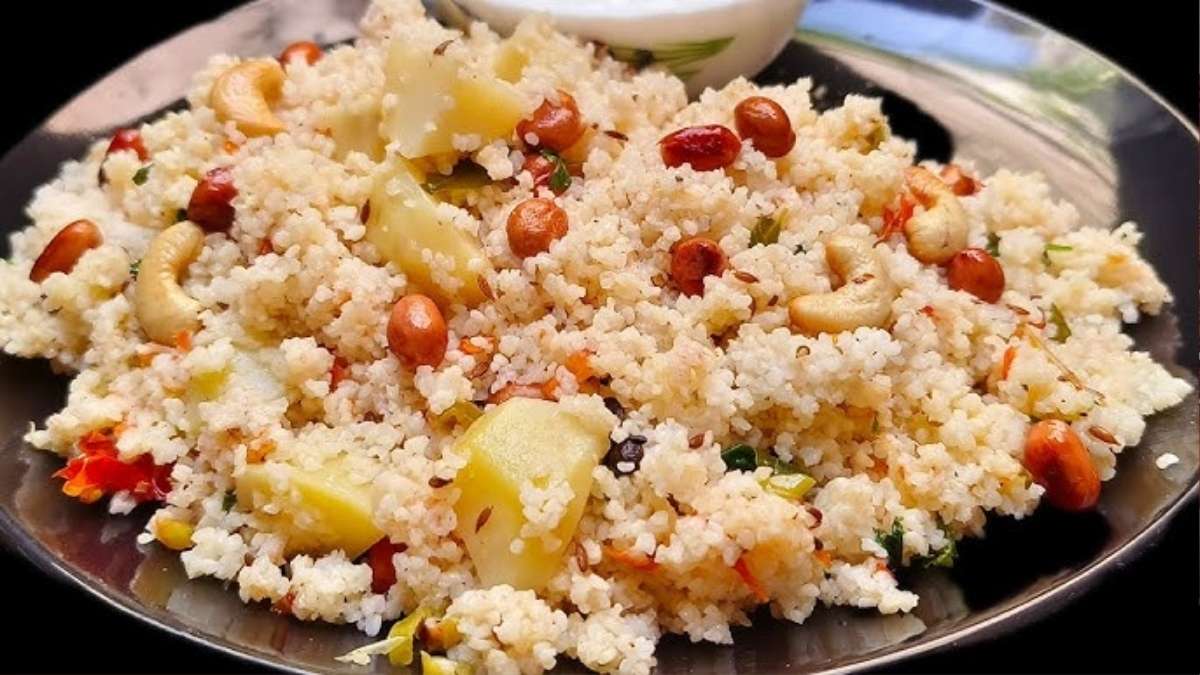
There’s something quietly grounding about sitting down to a bowl of vrat ke chawal during Navratri. It doesn’t look extraordinary. It’s pale, slightly nutty-smelling, and fluffy in a way that regular rice never quite manages. But take one bite with a spoonful of dahi aloo or a ladle of lauki sabji, and something clicks. This is what a proper fasting meal feels like. Not a compromise. Not a pale substitute for the real thing. Just honest, nourishing food that happens to work within the rules of the fast.
Vrat ke chawal—made from samak, or barnyard millet—is one of those ingredients that deserves far more credit than it usually gets. Most people treat it as simply “the rice you eat when you can’t eat rice.” But samak is genuinely nutritionally superior to the white rice it replaces: more fiber, a lower glycemic index, more magnesium and iron, and a cooking time that’s actually faster than most regular rice varieties. It’s not a consolation prize. It’s an upgrade.
Table of Contents
What Exactly Is Vrat ke Chawal?
Vrat ke chawal is made from samak—scientifically known as Echinochloa frumentacea, or barnyard millet. Despite the name “chawal” (which means rice in Hindi), samak isn’t actually rice at all. It’s a millet seed that, when cooked, mimics the texture and appearance of rice so convincingly that it fills that emotional and functional gap on your fasting plate.
It’s gluten-free, grain-free in the traditional sense, and completely compliant with the dietary rules of Navratri fasting. It has a neutral flavor profile—mild, slightly earthy, with a gentle nuttiness when toasted in ghee—that makes it incredibly versatile. It absorbs the flavors of whatever it’s cooked with or served alongside, which is exactly what you want in a base dish.
One of samak’s best qualities is its behaviour when cooked. It triples in volume—so one cup of dry samak gives you three cups of cooked rice—and it cooks in just 12 to 15 minutes. Faster than regular rice, faster than most grains, and with minimal fuss if you follow the right technique.
CHECK MORE ON: Singhare Ka Halwa Recipe
Recipe Overview
| Detail | Information |
|---|---|
| Prep Time | 5 minutes |
| Soak Time | 15 minutes |
| Cook Time | 12-15 minutes |
| Total Time | ~35 minutes |
| Servings | 4 people |
| Cuisine | North Indian (Vrat/Fasting) |
| Course | Main Course/Side Dish |
| Diet | Vegetarian, Gluten-Free, Vrat-Friendly, Sattvic |
| Difficulty Level | Easy |
| Calories per Serving | ~150 kcal |
Ingredients List
| Ingredient | Quantity | Notes |
|---|---|---|
| Samak ke chawal (Barnyard millet) | 1 cup | Rinse thoroughly before use |
| Water | 2 cups | Exact ratio is critical |
| Ghee | 1 tablespoon | Improves aroma and grain separation |
| Sendha namak (Rock salt) | 1 teaspoon | Regular salt if not fasting |
| Cumin seeds (optional) | ½ teaspoon | For tempering and flavor |
| Curry leaves (optional) | 4-5 leaves | Adds aroma to tempering |
Why Vrat ke Chawal Is Perfect for Navratri Fasting
When Navratri arrives—whether Chaitra in March or Sharad in October—the usual structure of eating shifts dramatically. No regular rice. No wheat. No grains of any kind. And if you’ve ever tried to fast for multiple days without something rice-like on your plate, you know how much you miss that simple comfort of a grain-based base.
Steadier energy. With a glycemic index of around 50 compared to white rice’s 70, samak releases energy more gradually. This means fewer energy spikes and crashes during long fasting hours—exactly what you need when you’re eating fewer meals and spacing them further apart.
More fiber. With approximately 10 grams of fiber per 100 grams of dry millet—compared to just 2 grams in white rice—samak provides five times the digestive support. This fiber acts as a prebiotic, feeding beneficial gut bacteria during a time when your diet is restricted and your digestion needs all the help it can get.
Important minerals. Magnesium (around 130mg per 100g) supports muscle function—important when you’re standing through long pujas or dancing during garba. Iron (around 4mg per 100g) helps maintain hemoglobin levels during periods of calorie restriction.
Better satiety. The combination of fiber and complex carbohydrates in samak keeps you fuller for longer than refined alternatives. Paired with yogurt-based dishes like dahi aloo, that satiety extends even further.
The Secret to Perfect Samak: Ratio, Rinsing, and Restraint
Before we get into the steps, let’s talk about the three things that separate fluffy, perfectly separated samak from the sticky, mushy disappointment that gives this ingredient an undeserved bad reputation.
The ratio. One cup of samak to exactly two cups of water. Not 1.5. Not 2.5. Two. This ratio is non-negotiable. Too little water and the samak won’t cook through. Too much and you’ll get a sticky, clumping mess that’s the opposite of what you want.
The rinsing. Samak has a coating of surface starch that, if not removed, will make the cooked grains stick together. Rinse it three to four times under cold water, until the water runs completely clear. Then soak it for 15 minutes. This step takes patience but it makes an enormous difference.
The restraint. Once the samak is cooking—whether in a pressure cooker or on the stovetop—do not stir it. Not even once. Stirring releases more starch from the grains and creates exactly the sticky texture you’re trying to avoid. Let it cook undisturbed, then rest for 5 minutes after cooking, and fluff gently with a fork. A fork, not a spoon—spoons compress the grains where forks separate them.
Get these three things right and your vrat ke chawal will be consistently fluffy, fragrant, and exactly what a Navratri meal deserves.
Step-by-Step Instructions: Making Perfect Vrat ke Chawal
Step 1: Rinse and Soak the Samak
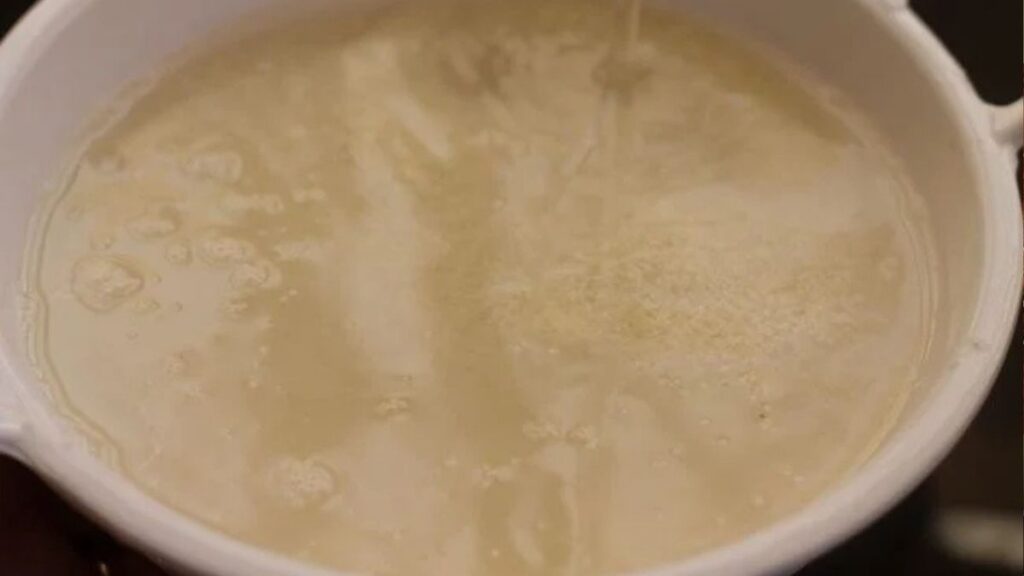
Place 1 cup of samak ke chawal in a fine-mesh strainer or bowl. Rinse under cold running water, gently agitating the grains with your fingers. Repeat this three to four times until the water runs completely clear rather than milky or cloudy.
Time: 20 minutes (including soak)
Step 2: Temper the Spices in Ghee
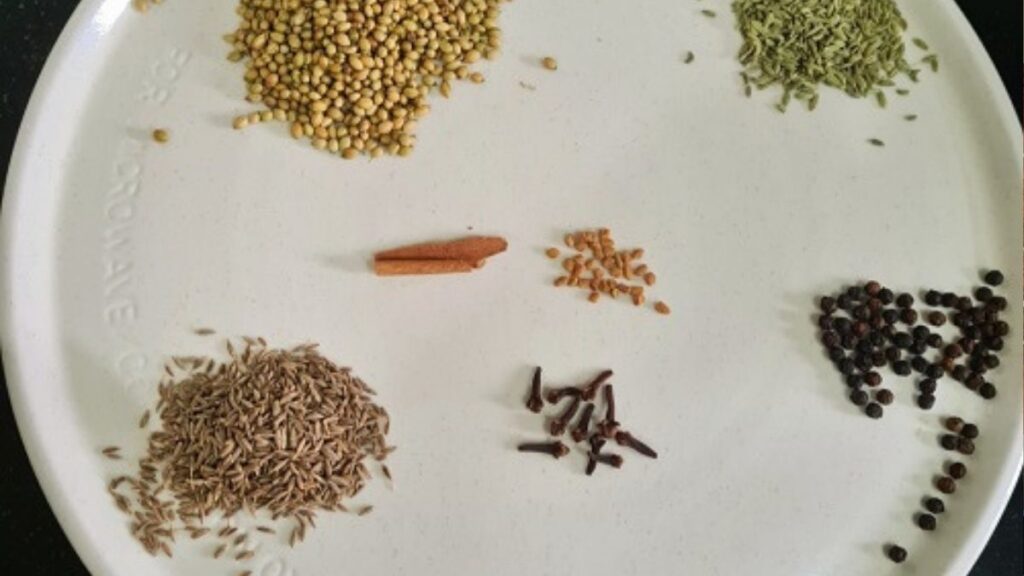
Heat 1 tablespoon of ghee in a heavy-bottomed pan, kadhai, or pressure cooker over medium heat. Once the ghee shimmers, add ½ teaspoon of cumin seeds if you’re using them. Let them crackle for 20 to 30 seconds. Add curry leaves if using.
The ghee tempering isn’t just for flavor—the fat coats the samak grains and helps keep them separate during cooking. It also draws out the nutty aroma that makes vrat ke chawal smell like something worth eating.
Time: 1 minute
Step 3: Sauté the Drained Samak
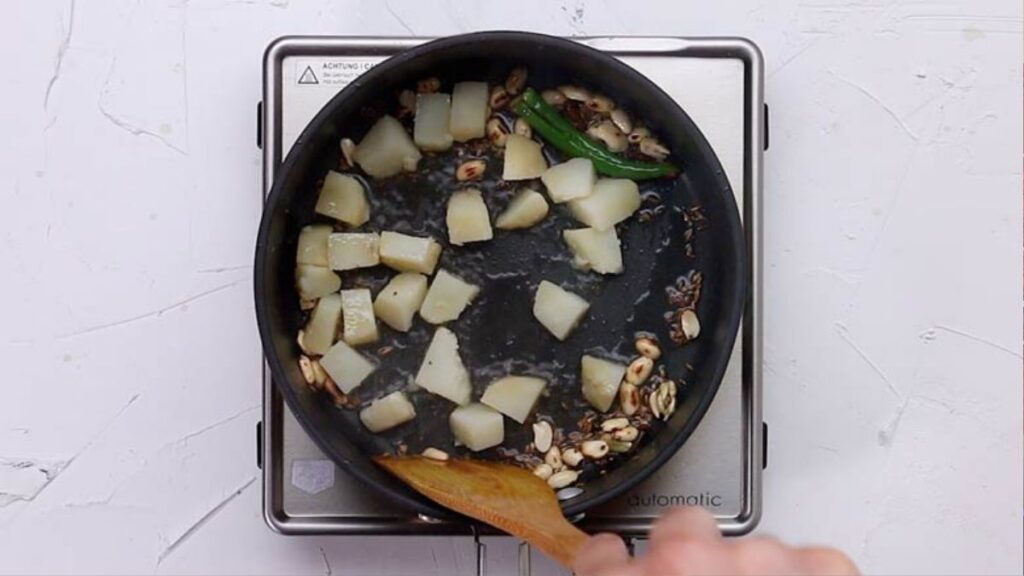
Add the drained samak to the ghee and tempered spices. Sauté for about 2 minutes on medium heat, stirring gently. The grains should look slightly translucent and smell lightly toasted. This step is the equivalent of toasting basmati rice before cooking—it builds flavor and prevents clumping.
Time: 2 minutes
Step 4: Add Water and Salt
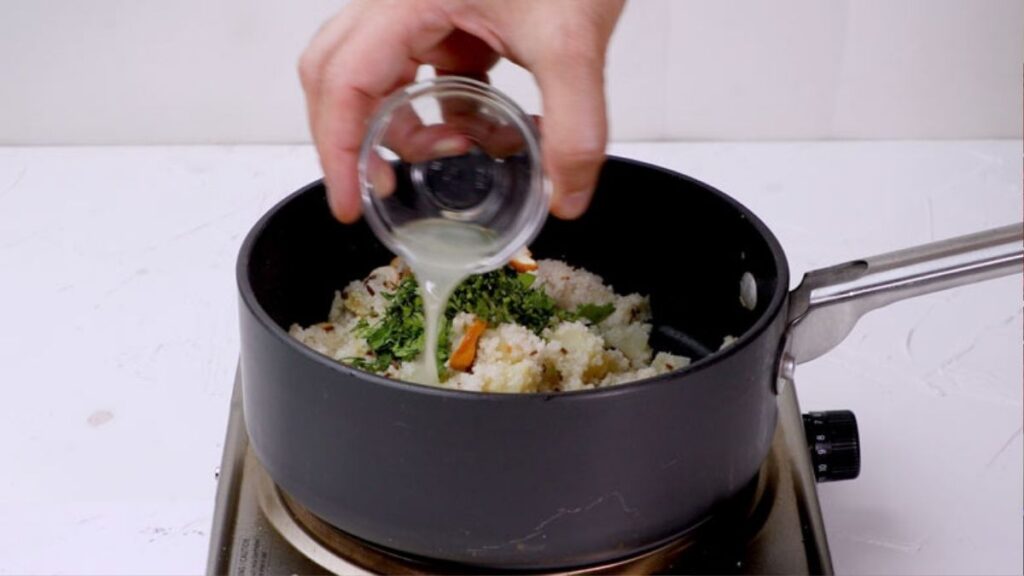
Add exactly 2 cups of water and 1 teaspoon of sendha namak (or regular salt if not fasting). Stir once to combine the salt with the water. This is the last time you’ll stir until the samak is fully cooked.
Time: 30 seconds
Step 5a: Pressure Cooker Method
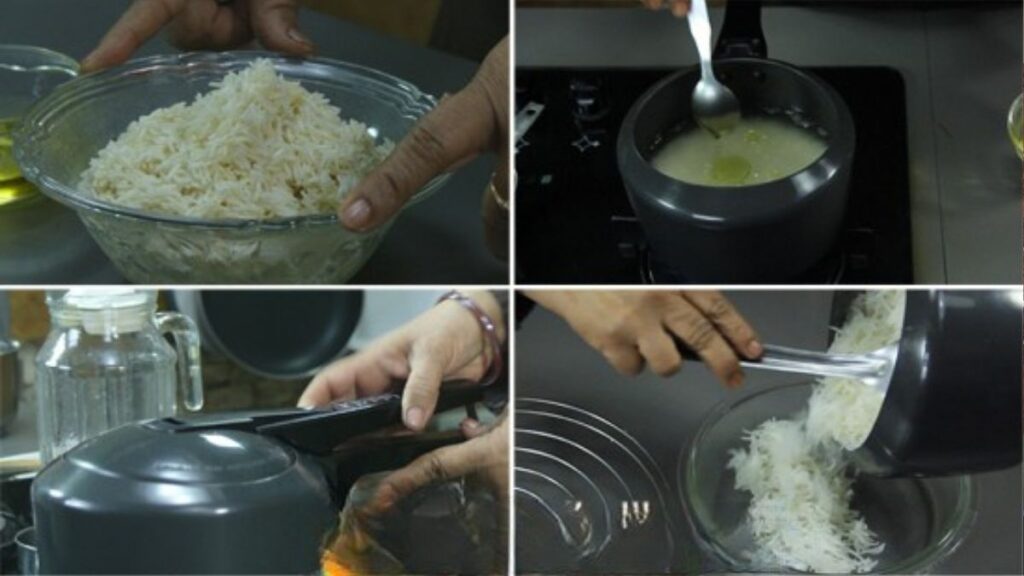
Close the pressure cooker lid and cook on medium heat for 2 whistles. This takes approximately 8 minutes. Remove from heat and let the pressure release naturally—don’t force it. Once the pressure is fully released, open the lid.
Time: 8-10 minutes
Step 5b: Stovetop Method
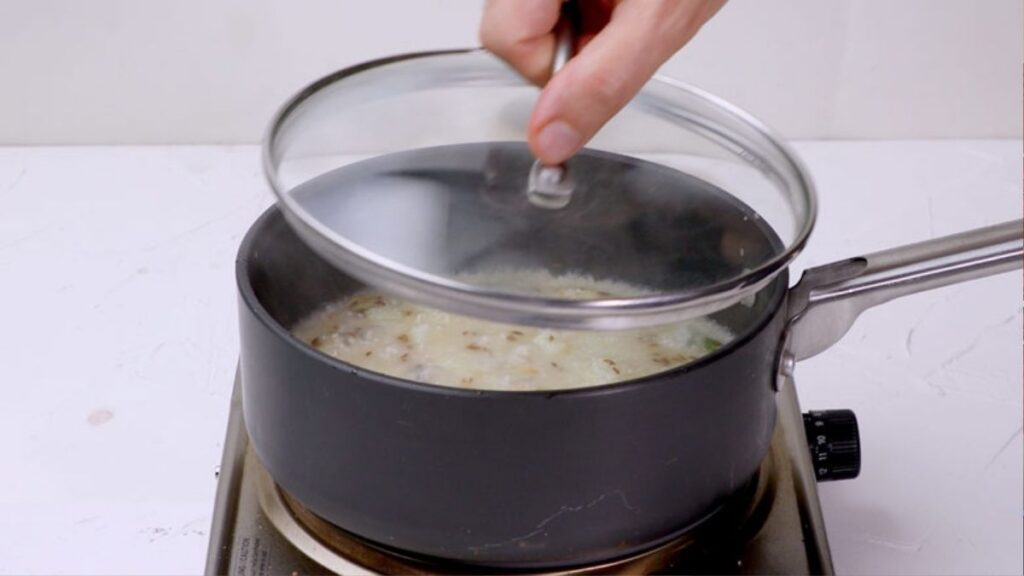
Bring the water to a boil, then reduce the heat to the lowest setting. Cover tightly with a lid and let it simmer for 12 to 15 minutes. Don’t lift the lid. Don’t stir. Just let it cook undisturbed. You’ll know it’s done when you can see small holes forming on the surface and the water has been fully absorbed.
Time: 12-15 minutes
Step 6: Rest and Fluff
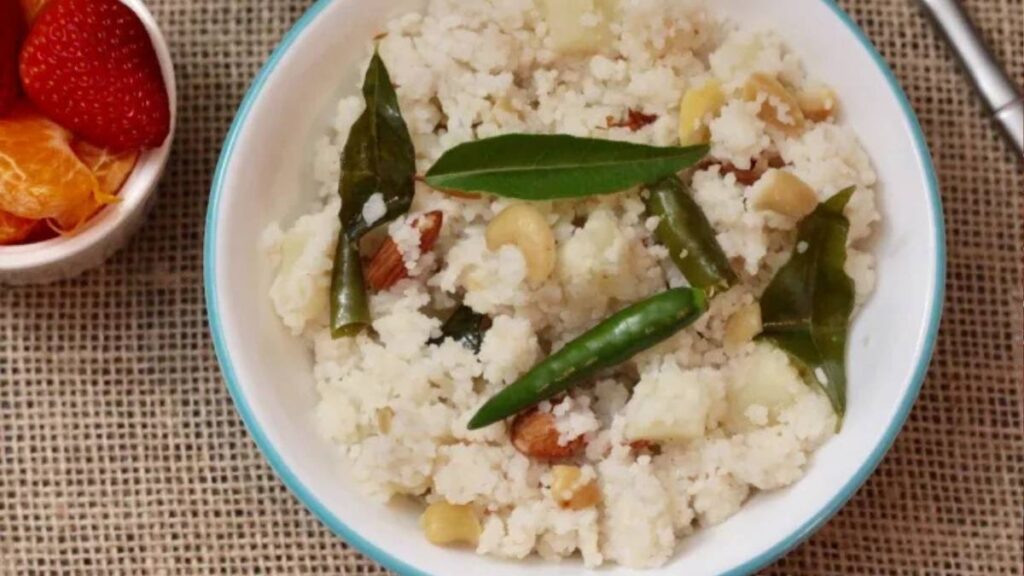
Once cooked, keep the pan covered and let the samak rest for 5 minutes off the heat. This resting period allows the steam to finish cooking the grains and the moisture to distribute evenly. Skipping this step often results in unevenly cooked rice with a slightly wet center.
Time: 5 minutes
Total Active Time: About 20 Minutes (plus 15 minutes soaking)
Equipment Needed
| Equipment | Purpose |
|---|---|
| Fine-mesh strainer | For rinsing samak thoroughly |
| Bowl | For soaking |
| Heavy-bottomed pan or pressure cooker | For even heat distribution |
| Fork | For fluffing cooked samak (never a spoon) |
| Measuring cups | For exact water ratio |
| Tight-fitting lid | To trap steam during cooking |
Vrat ke chawal shows up consistently across North Indian Navratri thalis. It’s the quiet center around which everything else is arranged—the lauki sabji on one side, the dahi aloo in the middle, maybe a small bowl of halwa for sweetness. It doesn’t demand attention, but the meal wouldn’t be complete without it.
Storage and Make-Ahead Tips
| Storage Method | Duration | Notes |
|---|---|---|
| Refrigerated (airtight) | Up to 2 days | Reheat with a splash of water to restore moisture |
| Frozen (cooked portions) | Up to 1 week | Steam reheat for best texture |
| Dry samak (uncooked) | Several months | Store in cool, dry place away from moisture |
Cooked samak stores well for up to 2 days in the refrigerator. To reheat, sprinkle a tablespoon of water over the cold rice and warm it gently on low heat, covered, or steam it for a few minutes. The texture comes back remarkably well. For longer storage, freeze individual portions and reheat by steaming directly from frozen.
Why This Recipe Still Matters
In a food culture that’s increasingly focused on superfoods and health trends, samak ke chawal is having a quiet moment of recognition. Nutritionists are beginning to appreciate what North Indian grandmothers have known for generations: that this unassuming millet seed, cooked simply with ghee and sendha namak, is one of the most balanced, efficient, and genuinely nourishing things you can eat during a fast.
It’s not just that it’s allowed during Navratri. It’s that it was always the right choice—higher fiber, lower glycemic impact, faster cooking time, and a neutral flavor that makes it the perfect companion to every other dish on the fasting thali.
When you cook vrat ke chawal, you’re doing something that generations of North Indian households have done before you: using the constraints of fasting not as a limitation but as an opportunity to eat more thoughtfully. To choose ingredients that actually support your body rather than just filling the space where regular food used to be.
So this Navratri, rinse your samak until the water runs clear. Toast it in a spoonful of warm ghee. Use exactly twice as much water as rice. And then—this is the hard part—leave it alone. Don’t stir. Don’t peek. Just let it cook.
And when you finally lift that lid after five minutes of resting, when you run a fork through the fluffy, fragrant, perfectly separated grains and the steam rises around your face—take a moment to appreciate what you’ve made.
Because sometimes the simplest things, done with care and precision, are exactly what a fasting table needs most.
Why is my samak ke chawal sticky and mushy?
The most common cause is either too much water or insufficient rinsing. Samak has a surface starch coating that causes stickiness if not washed off before cooking.
Can I cook samak without soaking it first?
You can, but the texture won’t be as good and you’ll need to increase cooking time slightly. Soaking allows the grains to hydrate evenly before they hit heat
What’s the difference between samak and sabudana?
Samak (barnyard millet) and sabudana (tapioca pearls) are both vrat-compliant but completely different ingredients.
