
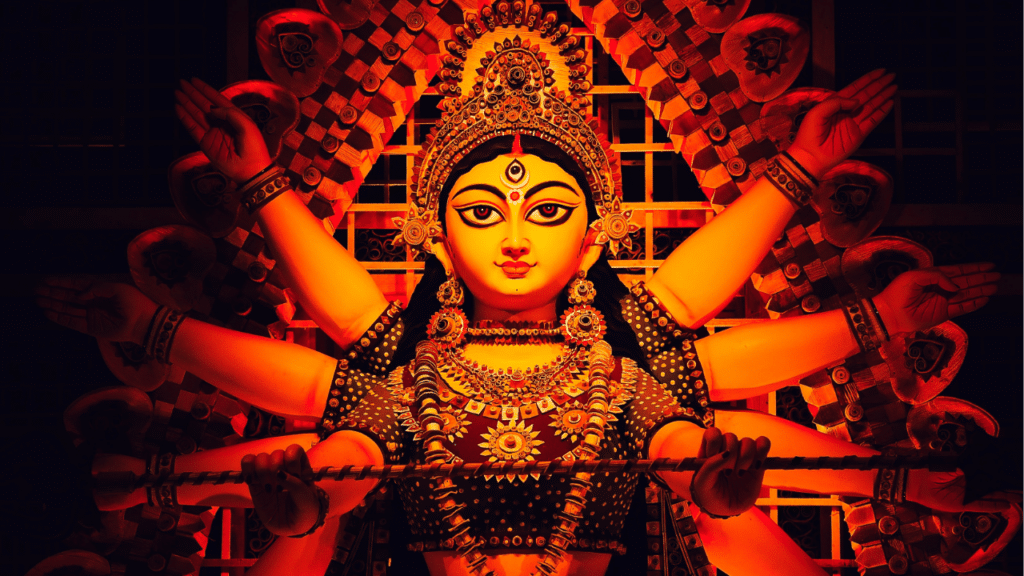
Chaitra Navratri is one of India’s most spiritually significant festivals, celebrated at the arrival of spring to honor the nine divine forms of Goddess Durga. Known as Vasanta Navratri, this nine-day celebration marks the beginning of the Hindu New Year and symbolizes renewal, devotion, and the triumph of good over evil. Rooted in ancient Hindu traditions, Chaitra Navratri holds special importance as it coincides with Rama Navami—the birth anniversary of Lord Rama—making it a festival of dual divine blessings.
The spiritual essence of Chaitra Navratri comes from the worship of Shakti, the divine feminine energy that sustains creation. According to Hindu cosmology, Lord Brahma began the creation of the universe on the first day of Chaitra Shukla Paksha, making this not just a religious observance but a cosmic celebration of new beginnings.
During these nine sacred days, devotees observe fasts, perform special prayers, and engage in spiritual practices to seek blessings for prosperity, happiness, and spiritual liberation. The festival is primarily observed by Hindus across India, Nepal, and global diaspora communities, though its message of renewal and positivity resonates universally.
When Is Chaitra Navratri Celebrated in 2026?
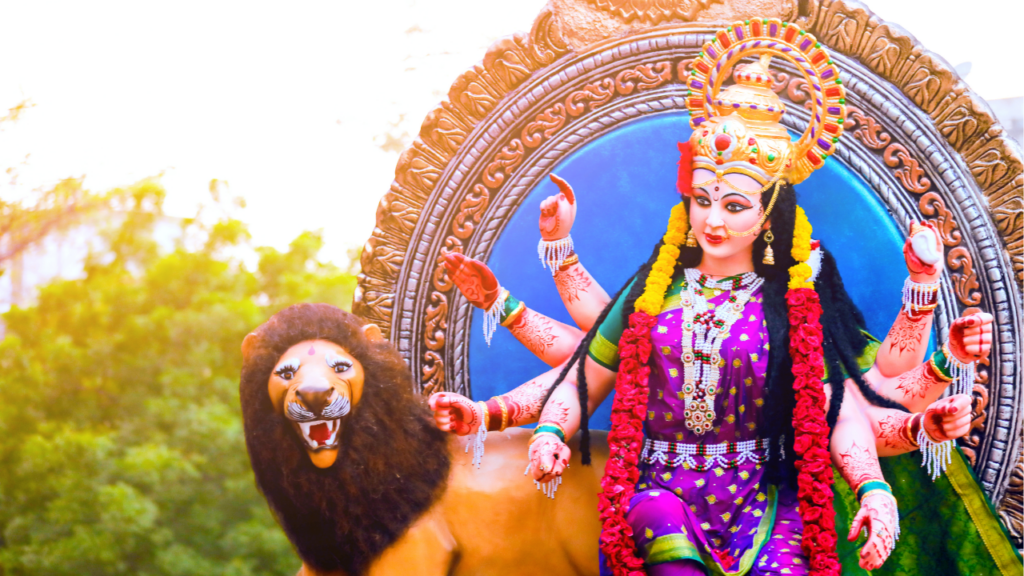
Chaitra Navratri is celebrated on the Pratipada Tithi (first day) of the Shukla Paksha (bright fortnight) of the Hindu lunar month of Chaitra, which typically falls in March or April.
Chaitra Navratri In India 2026 Dates
- Day 1: Ghatasthapana will be celebrated on March 19, 2026 in India – The sacred Kalash installation ceremony marking the beginning of Navratri.
– Ghatasthapana Muhurat – 06:52 AM to 07:43 AM
– Ghatasthapana Abhijit Muhurat – 12:05 PM to 12:53 PM - Day 9: Navratri Parana and Rama Navami will be celebrated on March 27, 2026 in India – The conclusion of the nine-day festival and Lord Rama’s birthday.
The exact dates vary each year based on the lunar calendar, making Chaitra Navratri a movable festival rather than a fixed-date event.
Table of Contents
Chaitra Navratri In USA, Canada, Australia, New Zealand, UK, UAE, Singapore 2026 Dates
Ghatasthapana Date: March 19, 2026 (Thursday)
- Ghatasthapana (Kalash Sthapana) Date: March 19, 2026 (Thursday)
- Best Time (Morning): 06:10 AM – 08:35 AM
- Abhijit Muhurat (Afternoon): 12:05 PM – 12:53 PM
- Pratipada Tithi: Begins on March 18 and ends on March 19
Ghatasthapana Muhurat (March 19, 2026, Ontario):
- Auspicious Time (Morning): 6:52 AM – 7:46 AM
- Abhijit Muhurat (Mid-day): 12:04 PM – 12:52 PM
Ghatasthapana Date: March 20, 2026 (Friday)
- Ghatasthapana Muhurat: 06:19 AM to 07:22 AM (Friday)
- Abhijit Muhurat: 11:59 AM to 12:48 PM (Friday)
Ghatasthapana Date: March 19, 2026 (Thursday)
- Primary Ghatasthapana Muhurat: 06:52 AM – 07:43 AM
- Abhijit Muhurat: 12:05 PM – 12:53 PM
Ghatasthapana Date: March 19, 2026 (Thursday)
- Ghatasthapana Muhurat: Morning, after sunrise
- Pratipada Tithi Begins: 18 March 2026 (Evening)
- Pratipada Tithi Ends: 19 March 2026 (Night)
Ghatasthapana Date: March 19, 2026 (Thursday)
- Best Muhurat (Morning): 06:52 AM to 07:43 AM
- Alternative (Abhijit Muhurat): 12:05 PM to 12:53 PM
Why Chaitra Navratri Dates Change Every Year?
Chaitra Navratri is celebrated based on the Hindu lunar calendar (Panchang), not the Gregorian calendar. It falls on the Pratipada Tithi of Chaitra Shukla Paksha, which usually occurs in March or April.
Since lunar months are shorter than solar months:
- Chaitra Navratri’s date shifts every year
- Timing depends on moon position and local sunrise
- Ritual timings (like Ghatasthapana) are calculated using planetary positions
In 2026, there’s a unique coincidence: both Magha Gupt Navratri (January 19) and Chaitra Navratri (March 19) begin on the 19th of their respective months.
Nine Days of Chaitra Navratri 2026
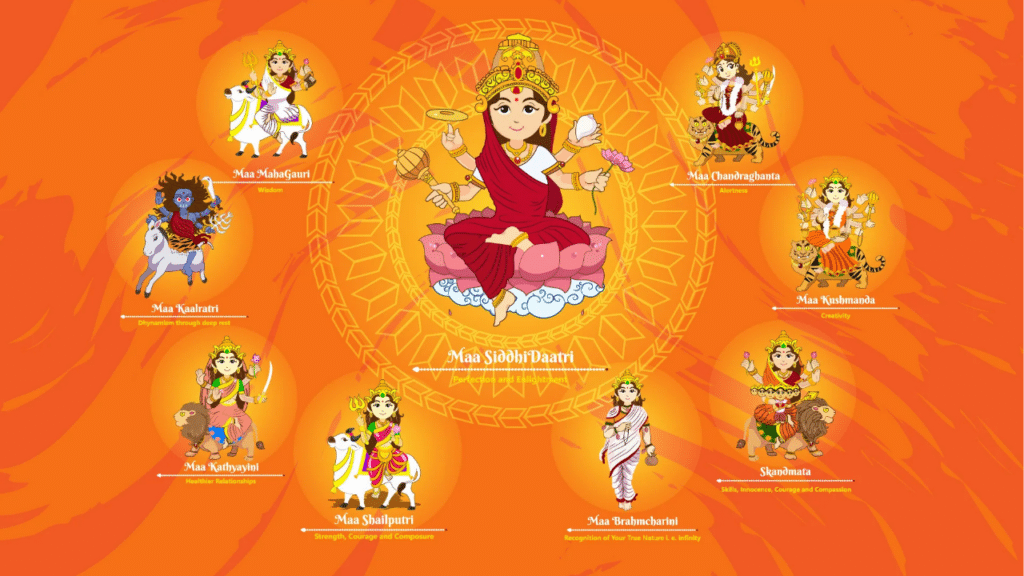
Day 1 – March 19 (Thursday): Ghatasthapana, Shailputri Puja | Color: Yellow
Day 2 – March 20 (Friday): Chandra Darshana, Brahmacharini Puja | Color: Green
Day 3 – March 21 (Saturday): Gauri Puja, Chandraghanta Puja | Color: Grey
Day 4 – March 22 (Sunday): Kushmanda Puja | Color: Orange
Day 5 – March 23 (Monday): Naag Puja, Skandamata Puja | Color: White
Day 6 – March 24 (Tuesday): Skanda Sashti, Katyayani Puja | Color: Red
Day 7 – March 25 (Wednesday): Maha Saptami, Kalaratri Puja | Color: Royal Blue
Day 8 – March 26 (Thursday): Durga Ashtami, Mahagauri Puja, Sandhi Puja (11:24 AM – 12:12 PM) | Color: Pink
Day 9 – March 27 (Friday): Rama Navami, Navratri Parana, Siddhidatri Puja | Color: Purple
How is Ghatasthapana Muhurat Decided?

The timing of Ghatasthapana (Kalash installation) is decided based on Pratipada Tithi, Brahma Muhurta, and Abhijit Muhurat, as per Hindu scriptures.
Planetary positions and local sunrise times influence the exact muhurat.
- First preference is given to performing Ghatasthapana during the first one-third of the day when Pratipada Tithi is active
- The most auspicious time is during Brahma Muhurta (pre-dawn hours)
- Abhijit Muhurta (midday) serves as an alternative auspicious time
- The ritual should ideally be completed before Pratipada Tithi ends
Chaitra Navratri Other Names & Regional Identities

Standard Names
Chaitra Navratri — Standard name in Hindi, English, Sanskrit, and many languages.
Vasanta Navratri / Vasant Navratri — Refers to the spring season timing.
Rama Navratri — Due to Rama Navami falling on the ninth day.
North & East India
Chaiti Navratri — Popular in Uttar Pradesh and Bihar.
Basanti Puja / Basanti Durga Puja — West Bengal, emphasizing the spring worship of Durga.
Gudi Padwa Navratri — Maharashtra, where it begins with the Marathi New Year.
South India
Ugadi Navratri — Karnataka and Andhra Pradesh, coinciding with the New Year festival Ugadi.
Chithirai Navratri — Tamil Nadu, named after the Tamil month Chithirai.
Yugadi / Paksha Navratri — Alternate South Indian names.
Other Regional Variants
Cheti Chand — Sindhi community’s New Year celebration during the same period.
Navreh — Kashmiri Pandit New Year celebrated during Chaitra.
Diaspora / International Naming
Spring Navratri — Common term used by diaspora communities to distinguish from Sharad Navratri.
Hindu New Year Festival — Used in Western contexts to explain cultural significance.
Navratri Festival — Simplified name used in international celebrations.
The Origins, History, and Legends of Chaitra Navratri

Chaitra Navratri is one of the oldest festivals in Hindu tradition, with its origins deeply rooted in ancient scriptures. The festival finds mention in the Puranas, Markandeya Purana, Devi Bhagavata Purana, and Kalika Purana, which describe elaborate rituals for worshipping the Divine Mother during the Chaitra month. Historically, Chaitra Navratri also marked the arrival of spring and the beginning of a new agricultural cycle, making it both a spiritual and seasonal celebration.
According to Hindu cosmology, Lord Brahma began the creation of the universe on the first day of Chaitra Shukla Paksha, making this day not just the beginning of Navratri but the cosmic New Year.
The most significant legend associated with Chaitra Navratri is the story of Goddess Durga’s battle with Mahishasura, the buffalo demon. After receiving a boon that no man or god could kill him, Mahishasura’s tyranny became unbearable. The gods combined their powers to create Goddess Durga, who fought the demon for nine days and nights, ultimately slaying him on the tenth day. Each day of Navratri represents a different form of Durga manifesting to destroy evil.
Another central legend is Lord Rama’s worship of Goddess Durga before his battle with Ravana. Born on the ninth day of Chaitra Navratri, Rama’s life embodies dharma (righteousness), making this period doubly sacred. This connection is why Chaitra Navratri is also called Rama Navratri.
Scripturally, the Devi Mahatmya provides detailed descriptions of the nine forms of Durga worshipped during Navratri. The Ramayana mentions Rama’s devotion to the Divine Mother, while the Durga Saptashati offers the ritual framework still followed today.
Over centuries, Chaitra Navratri evolved from a Vedic religious observance into a comprehensive festival that combines devotion, cultural celebration, and social renewal. The festival represents purification, new beginnings, and the eternal truth that righteousness prevails over evil. Today, Chaitra Navratri continues to symbolize the timeless message of spiritual awakening, feminine power, and divine grace.t to be celebrated with color, compassion, and togetherness.
Chaitra Navratri: Cultural and Spiritual Significance

Chaitra Navratri is a festival that symbolizes renewal, devotion, and the triumph of good over evil. Spiritually, it represents the awakening of Shakti (divine feminine energy) in nature as winter transitions to spring. The nine nights symbolize the journey from darkness to light, ignorance to knowledge, marking a period of intense spiritual transformation.
The festival’s timing at the beginning of the Hindu New Year makes it especially significant for fresh starts and setting spiritual intentions. Through fasting, prayer, and devotion, practitioners seek to burn away past negativity, ego, and obstacles, inviting divine blessings for the year ahead.
Culturally, Chaitra Navratri celebrates feminine power in all its forms—from nurturing motherhood to fierce warrior energy. The nine forms of Goddess Durga represent different aspects of life: strength, wisdom, courage, compassion, protection, and ultimate spiritual liberation. This multifaceted celebration honors the complete spectrum of divine feminine qualities.
The festival also promotes unity, forgiveness, and social harmony. During Navratri, people come together across social boundaries for community worship, shared meals, and cultural programs. The tradition of Kanya Pujan (worshipping young girls as embodiments of the Goddess) emphasizes respect for the feminine and reinforces values of equality.
Marking the arrival of spring, Chaitra Navratri signifies growth, abundance, and hope. The vibrant colors worn each day reflect the joy of new life, the fertility of the earth, and the promise of prosperity. More than a religious festival, Chaitra Navratri is a universal celebration of life’s renewal, spiritual dedication, and the eternal cosmic dance of creation and transformation.
Chaitra Navratri Prayers and Religious Observances
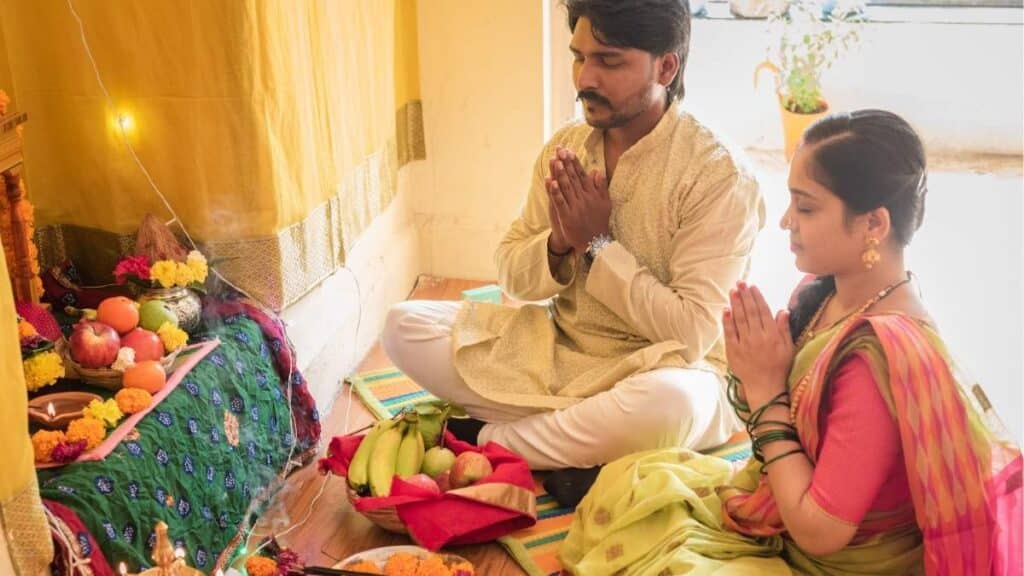
Chaitra Navratri prayers and rituals are performed to seek spiritual purification, divine protection, and blessings for prosperity, health, and spiritual growth. The religious observances span nine days, with each day dedicated to a specific form of Goddess Durga, creating a structured spiritual journey.
The festival begins with Ghatasthapana (Kalash Sthapana), the sacred installation of a ceremonial pot representing the Goddess. Devotees fill a copper or clay pot with water, place mango leaves around its rim, top it with a coconut, and sow barley seeds in soil around it. This ritual symbolizes invoking divine energy into the home and is performed during the auspicious morning muhurat with prayers and mantras.
Daily Worship Rituals
Each morning, devotees:
- Wake during Brahma Muhurta (pre-dawn) and bathe
- Wear clean, preferably new clothes in the day’s designated color
- Offer prayers to the Kalash and the day’s specific goddess form
- Light ghee lamps and incense
- Chant mantras such as “Om Aim Hreem Kleem Chamundaye Vichche” (108 times)
- Recite Durga Saptashati or Devi Mahatmya
- Offer flowers, fruits, and sacred items
Key Mantras and Prayers
Universal Durga Mantra: “Om Dum Durgayei Namaha”
चैत्र नवरात्रि के प्रमुख मंत्र और उनका महत्व:
- मूल मंत्र: ॐ ऐं ह्रीं क्लीं चामुण्डायै विच्चै
- सर्वमंगल मंत्र (सुख-समृद्धि):सर्वमङ्गलमाङ्गल्ये शिवे सर्वार्थसाधिके। शरण्ये त्र्यम्बके गौरि नारायणि नमोऽस्तु ते॥
- दुर्गा स्तुति मंत्र (शक्ति):या देवी सर्वभूतेषु शक्ति-रूपेण संस्थिता। नमस्तस्यै नमस्तस्यै नमस्तस्यै नमो नमः॥
Day-Specific Mantras: Each goddess form has her own mantra (Shailaputri, Brahmacharini, Chandraghanta, etc.)
- Day 1 (Maa Shailaputri): ॐ देवी शैलपुत्र्यै नमः (Om Devi Shailaputryai Namah).
- Day 2 (Maa Brahmacharini): ॐ देवी ब्रह्मचारिण्यै नमः (Om Devi Brahmacharinyai Namah).
- Day 3 (Maa Chandraghanta): ॐ देवी चंद्रघंटायै नमः (Om Devi Chandraghantayai Namah).
- Day 4 (Maa Kushmanda): ॐ देवी कूष्माण्डायै नमः (Om Devi Kushmandayai Namah).
- Day 5 (Maa Skandamata): ॐ देवी स्कन्दमातायै नमः (Om Devi Skandamatayai Namah).
- Day 6 (Maa Katyayani): ॐ क्लीं कात्यायनि महामाये महायोगिन्यधीश्वरि। नंद गोप सुतं देवि पतिं में कुरुते नमः क्लीं ॐ.
- Day 7 (Maa Kalaratri): ॐ देवी कालरात्र्यै नमः (Om Devi Kalaratryai Namah).
- Day 8 (Maa Mahagauri): ॐ देवी महागौर्यै नमः (Om Devi Mahagauryai Namah).
- Day 9 (Maa Siddhidatri): ॐ देवी सिद्धिदात्र्यै नमः (Om Devi Siddhidatryai Namah).
Evening Aarti: “Jai Ambe Gauri, Maiya Jai Shyama Gauri”
Special Observances
Sandhi Puja: Performed at the junction between Ashtami (eighth day) and Navami (ninth day), this is considered the most powerful moment of Navratri. In 2026, it occurs from 11:24 AM to 12:12 PM on March 26.
Kanya Pujan: On Ashtami and Navami, young girls (typically nine) are worshipped as living embodiments of the Goddess. They are fed special meals, given gifts, and honored with prayers.
Rama Navami Prayers: The ninth day celebrates Lord Rama’s birth with special recitations from the Ramayana, Ram Katha narrations, and temple processions.
Home vs Temple Observance
Home Worship: Most families create a dedicated shrine area with the Kalash, goddess images, and daily offerings. Home worship emphasizes personal devotion, family participation, and maintaining ritual purity throughout the nine days. The Akhanda Jyoti (continuous lamp) is kept burning.
Temple Observance: Temples conduct elaborate Vedic ceremonies with trained priests, organize mass aarti sessions, host devotional music programs (bhajans and kirtans), and serve community meals (bhandaras). Major Shakti Peethas and Durga temples see thousands of devotees during Chaitra Navratri.
Whether observed at home or in temples, Chaitra Navratri rituals emphasize devotion, discipline, gratitude, and spiritual renewal, making the festival both joyous and deeply transformative..
Jai Ambe Gauri Aarti – Maa Durga Aarti for Navratri
One of the most beloved devotional hymns sung during Navratri, the Jai Ambe Gauri aarti is offered to Maa Durga each morning and evening throughout the nine sacred nights. Devotees sing this aarti in homes, temples, and pandals across India and around the world, invoking the goddess’s blessings for protection, prosperity, and the removal of suffering.
Jai Ambe Gauri Aarti (English)
Jai Ambe Gauri, Maiya Jai Shyama Gauri, Tumako Nishadin Dhyavat, Hari Bramha Shivari. Om Jai Ambe Gauri
Mang Sindur Virajat, Tiko Mrigamad Ko, Ujjval Se Dou Naina, Chandravadan Niko. Om Jai Ambe Gauri
Kanak Saman Kalevar, Raktambar Raje, Raktpushp Gal Mala, Kanthan Par Saje. Om Jai Ambe Gauri
Kehari Vahan Rajat, Khadag Khappar Dhari, Sur-Nar-Munijan Sevat, Tinake Dukhahari. Om Jai Ambe Gauri
Kaanan Kundal Shobhit, Nasagre Moti, Kotik Chandr Divakar, Rajat Sam Jyoti. Om Jai Ambe Gauri
Shumbh-Nishumbh Bidare, Mahishasur Ghati, Dhumr Vilochan Naina, Nishadin Madamati. Om Jai Ambe Gauri
Chand-Mund Sanhare, Shonit Bij Hare, Madhu-Kaitabh Dou Mare, Sur Bhayahin Kare. Om Jai Ambe Gauri
Bramhani, Rudrani, Tum Kamala Rani, Agam Nigam Bakhani, Tum Shiv Patarani. Om Jai Ambe Gauri
Chausath Yogini Mangal Gavat, Nritya Karat Bhairu, Bajat Tal Mridanga, Aru Baajat Damaru. Om Jai Ambe Gauri
Tum Hi Jag Ki Mata, Tum Hi Ho Bharata, Bhaktan Ki Dukh Harta, Sukh Sampati Karta. Om Jai Ambe Gauri
Bhuja Char Ati Shobhi, Varamudra Dhari, Manvanchhit Fal Pavat, Sevat Nar Nari. Om Jai Ambe Gauri
Kanchan Thal Virajat, Agar Kapur Bati, Shrimalaketu Mein Rajat, Koti Ratan Jyoti. Om Jai Ambe Gauri
Shri Ambeji Ki Arati, Jo Koi Nar Gave, Kahat Shivanand Svami, Sukh-Sampatti Pave. Om Jai Ambe Gauri
जय अम्बे गौरी आरती (Hindi)
जय अम्बे गौरी, मैया जय श्यामा गौरी। तुमको निशदिन ध्यावत, हरि ब्रह्मा शिवारी॥ ॐ जय अम्बे गौरी
मांग सिंदूर विराजत, टीको मृगमद को। उज्ज्वल से दोउ नैना, चंद्रवदन नीको॥ ॐ जय अम्बे गौरी
कनक समान कलेवर, रक्ताम्बर राजे। रक्तपुष्प गल माला, कंठन पर साजे॥ ॐ जय अम्बे गौरी
केहरि वाहन राजत, खड्ग खप्पर धारी। सुर-नर-मुनिजन सेवत, तिनके दुखहारी॥ ॐ जय अम्बे गौरी
कानन कुण्डल शोभित, नासाग्रे मोती। कोटिक चंद्र दिवाकर, राजत सम ज्योति॥ ॐ जय अम्बे गौरी
शुम्भ-निशुम्भ बिदारे, महिषासुर घाती। धूम्र विलोचन नैना, निशदिन मदमाती॥ ॐ जय अम्बे गौरी
चंड-मुंड संहारे, शोणित बीज हरे। मधु-कैटभ दोउ मारे, सुर भयाहीन करे॥ ॐ जय अम्बे गौरी
ब्रह्माणी, रुद्राणी, तुम कमला रानी। आगम निगम बखानी, तुम शिव पटरानी॥ ॐ जय अम्बे गौरी
चौसठ योगिनी मंगल गावत, नृत्य करत भैरू। बाजत ताल मृदंग, अरु बाजत डमरू॥ ॐ जय अम्बे गौरी
तुम ही जग की माता, तुम ही हो भरता। भक्तन की दुख हर्ता, सुख सम्पत्ति कर्ता॥ ॐ जय अम्बे गौरी
भुजा चार अति शोभी, वरमुद्रा धारी। मनवांछित फल पावत, सेवत नर नारी॥ ॐ जय अम्बे गौरी
काञ्चन थाल विराजत, अगर कपूर बाती। श्रीमालाकेतु में राजत, कोटि रतन ज्योति॥ ॐ जय अम्बे गौरी
श्री अम्बेजी की आरती, जो कोई नर गावे। कहत शिवानंद स्वामी, सुख-सम्पत्ति पावे॥ ॐ जय अम्बे गौरी
How Chaitra Navratri Is Celebrated Across India
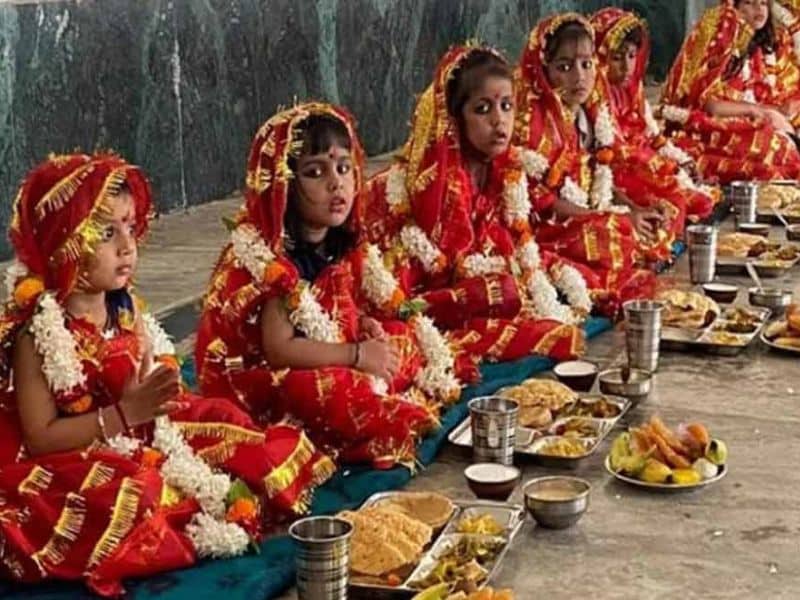
While the essence of Chaitra Navratri remains consistent—devotion to Goddess Durga and spiritual renewal—its expressions vary beautifully across regions, reflecting India’s rich cultural diversity.
North India
In Uttar Pradesh and Uttarakhand, Chaitra Navratri is extremely popular with devotees observing strict nine-day fasts. Pilgrims visit famous Shakti Peethas like Vaishno Devi and local Durga temples. Rama Navami receives grand celebrations with Ram Barat processions, temple decorations, and continuous Ramayana recitations.
Delhi and Haryana see community Navratri events in temples and housing societies, with Kanya Pujan ceremonies on Ashtami and Navami. Though less elaborate than Sharad Navratri, the spiritual fervor remains strong.
Punjab celebrates with temple programs and langars (community meals). The festival intertwines with spring harvest preparations and Baisakhi anticipation.
Rajasthan emphasizes temple visits, especially to famous Goddess shrines in Udaipur, Jaipur, and Pushkar. Traditional folk music and devotional songs mark evening celebrations.
Western India
Maharashtra uniquely merges Chaitra Navratri with Gudi Padwa, the Marathi New Year. Families install decorated Gudis (ceremonial poles), prepare special sweets like Puran Poli and Shrikhand, exchange greetings, and visit temples for Navratri prayers, creating a festive atmosphere of dual celebrations.
Gujarat, while famous for Sharad Navratri’s Garba, observes Chaitra Navratri more quietly through temple visits, home pujas, and fasting. Some communities organize smaller cultural programs.
South India
Karnataka and Andhra Pradesh celebrate the festival beginning with Ugadi, the regional New Year. Families prepare Ugadi Pachadi (a dish with six tastes representing life’s experiences), decorate homes with mango leaf torans, wear new clothes, and visit temples for both New Year and Navratri blessings.
Tamil Nadu focuses primarily on Rama Navami celebrations, with grand processions at temples in Rameshwaram and other sacred sites. The Ramayana is recited continuously, and devotional programs highlight Rama’s life and teachings.
East India
West Bengal celebrates as Basanti Puja or Basanti Durga Puja, worshipping Goddess Durga in spring. While not as elaborate as autumn’s Durga Puja, temples conduct special rituals, devotees observe fasts, and cultural programs are organized.
Odisha combines Durga worship with Rama Navami celebrations at Jagannath temples and local shrines.
Regional Customs and Traditions
Despite variations, certain practices unite celebrations nationwide:
- Color of the Day: Each day has a designated color worn by devotees
- Kanya Pujan: Worshipping young girls as goddess embodiments
- Kalash/Ghatasthapana: Sacred pot installation with growing barley sprouts
- Fasting Traditions: Observing partial or complete fasts with specific foods
- Community Gatherings: Bhajan sessions, Ramayana recitations, and temple programs
- Charitable Acts: Distributing food, clothes, and donations
Food, music, devotional singing, and shared participation remain central everywhere, making Chaitra Navratri a truly pan-Indian celebration of divine feminine power and spiritual renewal.
Participation Across Religions in India
Chaitra Navratri is celebrated not only by Hindus but by people of various faiths across India, making it a festival that transcends religious boundaries. Over time, Chaitra Navratri has evolved into a shared cultural celebration that promotes unity, harmony, and togetherness.
Interfaith Participation
Sikh Community: Many Sikhs, especially in Punjab and Haryana, participate in Rama Navami celebrations, as Lord Rama is revered in Sikh scripture (Guru Granth Sahib). Gurdwaras organize special prayers and community meals during this period.
Jain Community: Jains respect the fasting traditions and spiritual discipline associated with Navratri, which align with Jain principles of self-control and purification. Some Jains participate in temple visits and cultural programs.
Buddhist Participation: In regions with Buddhist populations, the festival’s emphasis on compassion, spiritual awakening, and the feminine principle resonates with Buddhist values of enlightenment.
Muslim Participation: In many Indian communities, Muslim neighbors join Navratri festivities by attending cultural programs, sharing sweets, and participating in the spirit of communal celebration. The emphasis on devotion and righteousness transcends religious divisions.
Shared Cultural Practices
The festival promotes harmony and social bonding as neighborhoods come together to celebrate without distinction of caste, creed, or belief. Community aspects like:
- Bhandaras (Community Meals): Free food distribution welcomes all
- Cultural Programs: Music, dance, and storytional performances attract diverse audiences
- Ramayana Recitations: The epic’s moral teachings appeal across faiths
- Charitable Activities: Donation drives and service projects bring communities together
In many regions, interfaith participation is a natural part of Chaitra Navratri, reflecting India’s pluralistic spirit and cultural diversity. By encouraging forgiveness, friendship, and shared happiness, the festival serves as a reminder that celebrations can unite people through common values of joy, respect, devotion, and the triumph of good over evil.
How Chaitra Navratri Is Celebrated Outside India

Indian diaspora communities across the globe celebrate Chaitra Navratri with devotion and cultural pride, adapting traditional practices to fit their new environments while maintaining spiritual authenticity.
Celebrations in North America
United States: Major cities like New York, New Jersey, California, Texas, and Illinois host nine-day celebrations at Hindu temples and community centers. Organizations like the Hindu Temple Society of North America, BAPS Swaminarayan temples, and ISKCON centers conduct:
- Daily Ghatasthapana and goddess worship
- Evening aarti and bhajan sessions
- Weekend cultural programs and Garba nights
- Rama Navami processions and Ram Katha recitations
- Virtual participation options for those unable to attend
Canada: Toronto, Vancouver, Calgary, and other cities organize temple celebrations, weekend programs, and community gatherings. Condensed schedules allow working professionals to participate during evenings and weekends.
United Kingdom
London’s Neasden Temple (BAPS Shri Swaminarayan Mandir) and other Hindu mandirs conduct traditional nine-day rituals. The UK’s large Indian community organizes:
- Daily temple pujas with professional priests
- Weekend cultural festivals
- Ramayana storytelling sessions
- Community meals (prasad distribution)
Middle East
UAE (Dubai, Abu Dhabi): The significant Indian expatriate population celebrates through:
- Temple programs at designated Hindu religious spaces
- Community hall gatherings
- Modified timings to accommodate work schedules
- Special weekend events combining devotion and culture
Asia-Pacific Region
Australia: Melbourne, Sydney, and Perth temples host Navratri celebrations with:
- Daily morning and evening prayers
- Weekend dandiya and cultural nights
- Kanya Pujan ceremonies
- Rama Navami special events
Singapore: Sri Senpaga Vinayagar Temple and other Hindu temples organize traditional observances, serving the large Indian community.
Malaysia: Hindu communities in Kuala Lumpur and other cities maintain traditional practices with temple rituals and family gatherings.
Chaitra Navratri Gifting Traditions
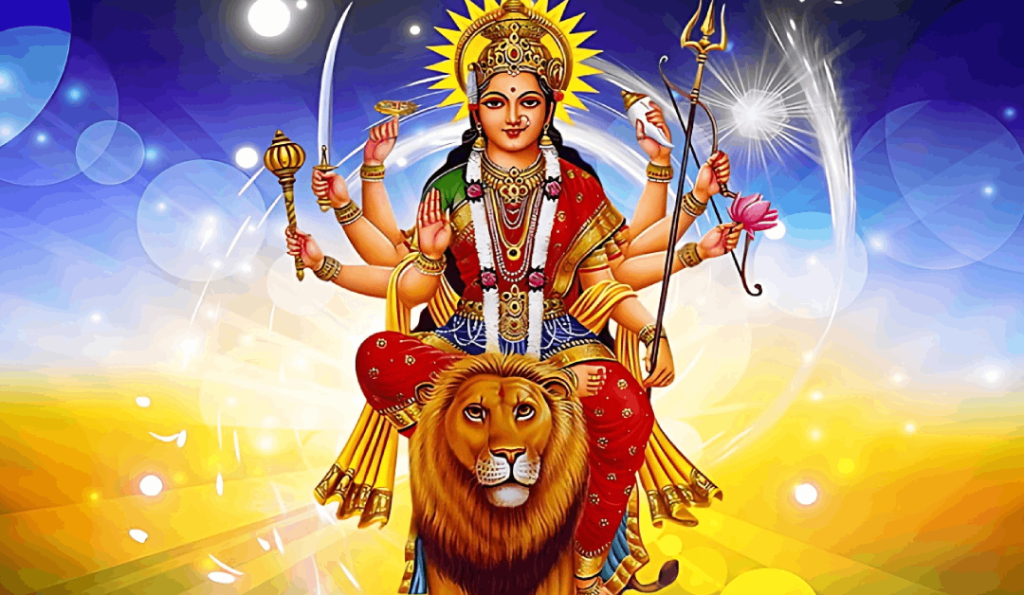
Gifting during Chaitra Navratri symbolizes new beginnings, blessings, and strengthening relationships. As the festival marks the Hindu New Year, exchanging gifts represents wishes for prosperity, happiness, and spiritual growth in the coming year.
Traditional Gifts
Religious Items:
- Goddess Durga idols and framed images
- Complete puja thalis (worship plate sets)
- Kalash sets for Ghatasthapana
- Sacred texts (Durga Saptashati, Devi Mahatmya)
- Rudraksha malas and prayer beads
- Incense, lamps, and puja accessories
Clothing and Textiles:
- Sarees in auspicious colors
- New clothes for family members (symbolizing fresh starts)
- Traditional attire for the nine color days
- Dupattas and stoles
Food Gifts:
- Traditional sweets (barfi, ladoo, peda)
- Dry fruit boxes
- Special Navratri food items
- Thandai ingredients
- Homemade vrat (fasting) snacks
Symbolism of Gifting
Gifts during Chaitra Navratri represent:
- New Year Blessings: Wishing abundance and success for the year ahead
- Divine Grace: Sharing spiritual merit and blessings
- Family Bonds: Strengthening relationships through thoughtful gestures
- Gratitude: Acknowledging teachers, elders, and community members
- Prosperity: Invoking wealth and well-being
Modern and Diaspora Gifting Practices
Contemporary Gifts:
- Eco-friendly puja items (sustainable materials)
- Wellness hampers (organic foods, herbal products, health items)
- Books on spirituality, Indian culture, and goddess worship
- Handcrafted items supporting artisans
- Digital gift cards for Indian stores
- Decorative home items with spiritual themes
Diaspora Adaptations:
- Sending gifts to India via online platforms (Amazon, FlowerAura)
- Gift baskets combining Indian and local items
- Charitable donations in recipient’s name
- Virtual puja bookings at Indian temples
- Cultural experience gifts (Indian classical music concerts, dance classes)
Corporate Gifting: Companies in India and abroad send Navratri hampers to employees and clients, including dry fruits, sweets, puja items, and decorative elements.
Gifting to Young Girls: During Kanya Pujan, young girls receive new clothes, accessories, money, sweets, and blessings—honoring them as embodiments of the Goddess.
Traditional Chaitra Navratri Foods and Sweets
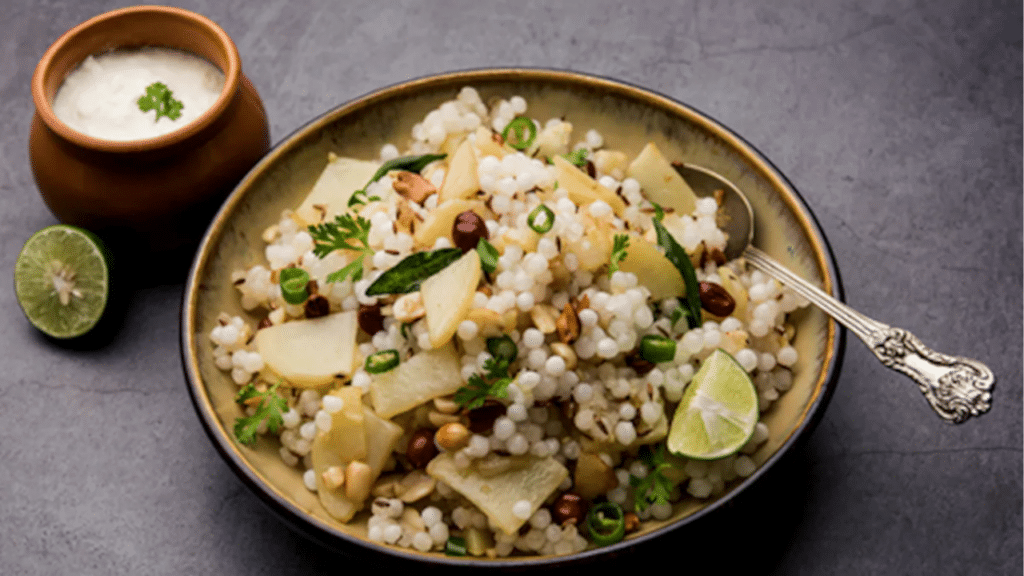
Food plays an essential role in Chaitra Navratri celebrations, with special dishes prepared for fasting (vrat) and for breaking the fast. The culinary traditions emphasize purity, sattvic (pure) ingredients, and spiritual mindfulness.
Fasting Foods (Vrat Ka Khana)
Grains and Flours Allowed:
- Kuttu ka atta (buckwheat flour) for rotis and puris
- Singhare ka atta (water chestnut flour) for pancakes and pakoras
- Sabudana (tapioca pearls) for khichdi, vadas, and kheer
- Samo/Barnyard millet for rice substitute
Signature Fasting Dishes:
- Sabudana Khichdi: Tapioca pearls cooked with peanuts, potatoes, and mild spices
- Kuttu Ki Puri: Buckwheat bread, crispy and nutritious
- Aloo Jeera: Cumin-flavored potatoes, a fasting staple
- Singhare Ka Halwa: Water chestnut flour pudding
- Lauki Ki Sabzi: Bottle gourd curry prepared without onion-garlic
- Shakarkandi Chaat: Sweet potato salad with lemon and spices
- Makhana Kheer: Fox nut pudding with milk and dry fruits
- Vrat Ke Chawal: Samo rice cooked like regular rice
- Dahi Aloo: Yogurt-based potato curry
Beverages:
- Fresh fruit juices
- Lassi and buttermilk
- Coconut water
- Almond milk
- Herbal teas
Regional Festive Foods
North India:
- Panjiri: Sweet roasted flour mixture with nuts and ghee
- Malpua: Sweet pancakes served with rabri
- Puri-Aloo: The classic breaking-fast combination
- Kheer: Rice or vermicelli pudding
- Halwa: Various types (sooji, moong dal, gajar)
Maharashtra:
- Sabudana Vada: Crispy tapioca fritters
- Rajgira Puri: Amaranth flour bread
- Farali Misal: Fasting-friendly spicy sprouts
- Shrikhand: Sweetened strained yogurt
Gujarat:
- Rajgira Paratha: Amaranth flatbread
- Farali Chevdo: Fasting snack mix
- Mori Bhajiya: Puffed rice fritters
South India:
- Vrat Rice Idli: Made with samo rice
- Sabudana Dosa: Tapioca pearl crepes
- Sweet Potato Chips: Baked or fried
- Coconut Ladoo: Simple coconut-jaggery balls
Bengal:
- Kuttu Ki Puri with Aloo Dum
- Sandesh: Milk-based sweets
- Chhena Kheer: Cottage cheese pudding
Kanya Pujan Feast
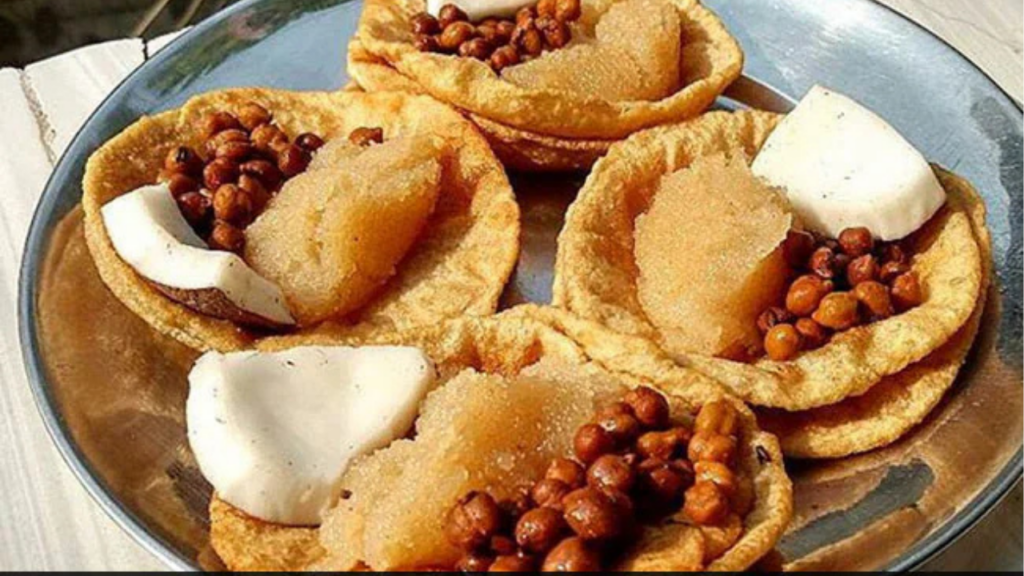
On Ashtami and Navami, young girls (kanjak) are served a special feast:
- Puri: Deep-fried bread
- Chana: Spiced chickpeas
- Halwa: Sweet semolina or moong dal pudding
- Kheer: Rice pudding
- Fresh fruits and sweets
Culinary Traditions and Dietary Restrictions
What to Avoid:
- Onion and garlic
- Regular grains (wheat, rice, lentils)
- Non-vegetarian food
- Alcohol and tobacco
- Processed and preserved foods
Fasting Varieties:
- Complete Fast (Nirjala): No food or water
- Fruit Fast (Phalahar): Only fruits and milk
- Single Meal (Ekana): One meal during the day
- Sattvic Fast: Fasting-appropriate foods without grains
Breaking the Fast: On the ninth day (Rama Navami), families prepare elaborate meals to break their fasts, including festive dishes, sweets, and complete thalis. Community meals (bhandaras) at temples serve traditional food to all devotees, emphasizing sharing and charity.






Chaitra Navratri: Music, Art, and Cultural Expression

Music, art, and performance bring vibrancy and devotion to Chaitra Navratri celebrations, creating an atmosphere of spiritual joy and cultural richness.
Devotional Music
Bhajans and Kirtans:
- Durga Chalisa and Durga Aarti
- Jai Ambe Gauri (popular aarti)
- Aigiri Nandini (powerful Sanskrit hymn)
- Shree Durga Stuti and various Devi stotras
- Mahishasura Mardini Stotram
Classical Renditions:
- Carnatic compositions dedicated to Goddess Durga
- Hindustani classical ragas associated with Shakti worship (Bhairavi, Durga, Devi)
- Dhrupad and Dhamar performances in temples
- Traditional Sanskrit chanting
Visual Arts and Decoration
Traditional Art Forms:
- Rangoli/Alpana designs with Durga and goddess motifs
- Madhubani paintings depicting Navratri themes
- Warli art celebrating the festival
- Tanjore paintings of Goddess Durga
- Temple and home decorations with flowers and lights
Chaitra Navratri’s Modern Relevance and Cultural Continuity

In today’s fast-changing world, Chaitra Navratri continues to hold deep relevance as a festival that promotes spiritual renewal, feminine empowerment, and cultural connection. While lifestyles and celebration methods have evolved, the core spirit of Navratri remains unchanged—worshipping the divine feminine, seeking blessings for new beginnings, and celebrating life’s cyclical nature.
Modern Chaitra Navratri celebrations blend tradition with contemporary expressions. From eco-friendly rituals to virtual temple participation, from health-conscious fasting to social media sharing, the festival adapts to present realities while preserving ancient wisdom.
As Chaitra Navratri continues evolving—embracing technology, sustainability, and inclusivity—it demonstrates that tradition and modernity can coexist harmoniously. The festival invites everyone, regardless of background, to celebrate renewal, seek inner transformation, and honor the divine forces that sustain life.
Whether observed through strict fasting and elaborate temple rituals or simple home prayers and cultural participation, Chaitra Navratri remains a vibrant celebration of life, faith, and the eternal cycle of creation. It reminds us that spring always follows winter, light conquers darkness, and the divine feminine energy guides us toward ultimate liberation.
May this Chaitra Navratri bring you new beginnings, spiritual awakening, and the infinite blessings of Maa Durga.
Jai Mata Di! Shubh Navratri!