


Releasing January 23, 2025 A crime anchor’s quest for justice becomes a descent into buried horrors
When your best friend dies under “suspicious circumstances” and you’re a crime journalist who reports on violence every single day, the lines between professional distance and personal rage blur fast. Cheekatilo takes that premise and twists it into something far more unsettling—a thriller that’s less about solving a murder and more about confronting the systems that allowed it to happen.
Quick Summary:
Cheekatilo (January 23) follows crime anchor Sandhya investigating her best friend’s mysterious death, unraveling a dark web of patriarchy, power and buried truths. This isn’t your typical whodunit—it’s a psychological descent that questions who gets to tell women’s stories and what happens when the storyteller becomes the story.
What Cheekatilo Is Really About
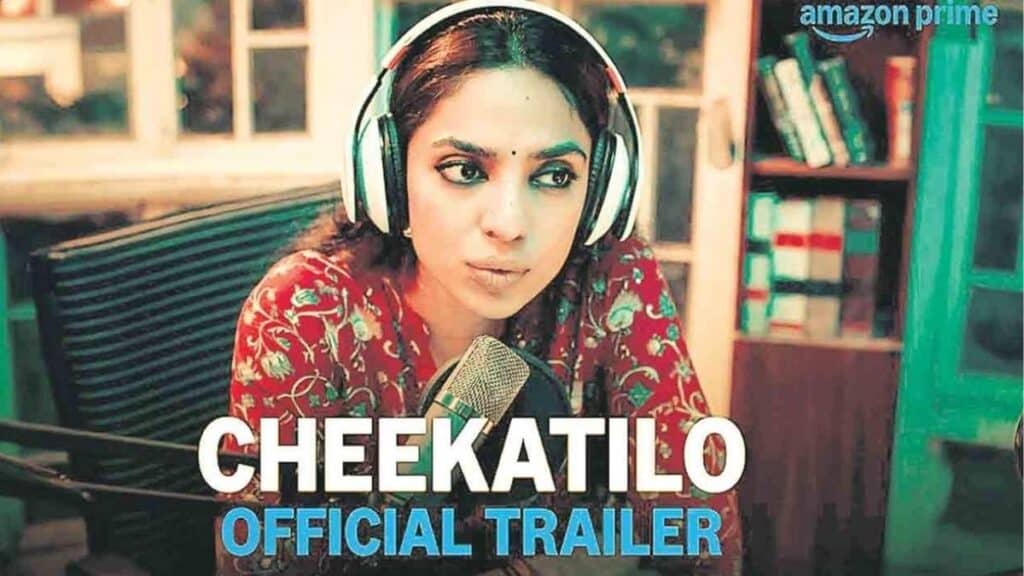
The trailer drops you right into Sandhya’s world—she’s the composed voice delivering crime news to millions, the professional who’s learned to narrate horror without flinching. But when violence touches her own life, that composure shatters. Her best friend’s death doesn’t add up, and Sandhya can’t just read the official version on a teleprompter and move on.
What starts as a personal investigation quickly becomes something more dangerous. The deeper she digs, the more she realizes this isn’t just about one death. There’s a pattern here, a rot that goes beyond individual perpetrators to the structures that protect them.
The title itself is chilling—Andrei Chikatilo was a Soviet serial killer whose crimes went undetected for years because authorities refused to believe such evil could exist in their system. The film borrows that framework: what horrors do we overlook because acknowledging them would mean admitting the system itself is broken?
Why This Thriller Feels Different
We’ve seen plenty of journalist-turned-detective stories, but Cheekatilo appears to be asking harder questions. It’s not just who killed her friend—it’s why do we keep losing women to violence that everyone saw coming but no one stopped.
The trailer hints at several compelling layers:
- The insider paradox: Sandhya reports on crime but has always been outside it, narrating other people’s tragedies. Now she’s living one, and her professional tools—objectivity, distance, evidence—aren’t enough when grief and rage are driving you.
- Institutional complicity: The “suspicious circumstances” framing suggests cover-ups, official versions that don’t match reality, powerful people who’d rather bury truth than face accountability.
- The cost of speaking up: As Sandhya pursues answers, she’s not just risking her career or safety—she’s fighting a system designed to exhaust women who demand justice, to make them seem hysterical or obsessed until they give up.
For Indian audiences, especially women, this resonates on a cellular level. How many times have we watched news anchors report femicide with that careful neutrality, knowing that behind each “suspicious death” is probably a story no one wanted to investigate too closely?
The Psychological Thriller Elements
From the trailer, Cheekatilo leans heavily into psychological horror—the kind where the real terror isn’t jump scares but the slow realization of how deep the rot goes. Sandhya’s investigation seems to pull her into paranoia, isolation, the uncertainty of who to trust when institutions themselves might be complicit.
There’s a claustrophobic quality to her journey. She’s surrounded by people—colleagues, sources, authorities—but increasingly alone in her conviction that something terrible is being hidden. That isolation is its own kind of violence, one that women navigating patriarchal systems know intimately.
The film also appears to explore trauma as a narrative device. Sandhya isn’t just uncovering facts; she’s reliving her friend’s final days, imagining her fear, confronting the reality that she couldn’t protect someone she loved. That psychological weight—carrying someone else’s terror while pursuing their justice—can break you in ways physical danger can’t.
Patriarchy and Power: The Real Horror
The promotional material emphasizes “buried horrors of patriarchy,” and that framing matters. This isn’t a thriller where violence against women is just a plot device to motivate a male hero. The violence is the point—its prevalence, its protection, the way systems circle wagons around powerful men while women’s deaths get filed under “suspicious circumstances” and forgotten.
The film seems to interrogate several uncomfortable truths:
- How patriarchal power structures protect abusers through official channels, not just individual cover-ups
- The way women’s credibility is questioned even when they’re the ones with evidence and expertise
- How demanding justice for one woman means confronting an entire system designed to prevent exactly that
- The exhaustion of fighting battles everyone else has decided aren’t worth fighting
For desi viewers, this hits particularly hard. We’ve watched countless cases where women’s deaths were initially dismissed, where families had to fight for basic investigations, where “respectable” men’s reputations mattered more than victims’ lives. Cheekatilo seems to be taking that collective frustration and channeling it into a narrative that doesn’t look away.
What the Trailer Reveals (and Hides)
Smart thrillers reveal just enough to hook you without spoiling the architecture of their mysteries. The Cheekatilo trailer does this well—we see Sandhya’s determination, glimpses of violence and confrontation, the sense that she’s walking into something far bigger than a single death.
What’s notably absent: easy answers, clear villains, reassurance that justice will be served. The trailer’s tone is ominous, almost fatalistic, suggesting Sandhya might get her truth but it’ll cost her more than she anticipated.
There’s also a haunting quality to how the friend’s death is presented—not as shocking surprise but as something that feels inevitable once you know the full context. That’s perhaps the film’s darkest suggestion: that this violence wasn’t random or unforeseeable, that people knew and did nothing.
Why This Matters for Indian Cinema
We’re in a moment where Indian thrillers are getting more sophisticated, more willing to use genre to explore social issues rather than just entertain. Films like NH10, Kahaani, The Lunchbox (in its own way) showed that audiences will show up for stories that trust their intelligence and don’t shy away from uncomfortable truths.
Cheekatilo seems positioned in that lineage—using the thriller format to ask questions about power, gender, and institutional failure that wouldn’t get greenlit as straight drama. The genre gives it permission to be dark, unflinching, to follow its logic to bitter conclusions.
For women viewers especially, there’s something cathartic about seeing that rage and grief taken seriously, treated as the engine of a story rather than dismissed as emotional overreaction. Sandhya’s investigation isn’t presented as personal vendetta clouding professional judgment—it’s presented as the only rational response to a death that official channels have already decided doesn’t matter enough.
The Questions We’re Left With
The trailer raises more questions than it answers, which is exactly what good thriller marketing should do:
- What exactly happened to Sandhya’s friend, and why are the circumstances “suspicious” rather than clear-cut?
- How deep does the conspiracy go—individual corruption or systemic rot?
- What does Sandhya risk losing in her pursuit of truth—her career, relationships, sanity, life?
- Does she get justice, or does the film dare to end with the harder truth that some systems can’t be beaten, only exposed?
That last question might be the most important. We’re conditioned to expect resolution in thrillers, but some stories serve us better by refusing neat closure, by ending where we have to sit with the discomfort of knowing that real justice requires more than one person’s heroic investigation.
The Uncomfortable Reflection
Cheekatilo arrives at a time when we’re collectively reckoning with how casually violence against women gets absorbed into daily news cycles. Another suspicious death, another grieving family, another news anchor reading the details with professional composure before moving to the next story.
What happens when the anchor can’t move on? When the story is personal and the professional tools we use to process horror—objectivity, distance, evidence—fall apart because you knew her laugh, her fears, her voice?
The film doesn’t seem interested in providing comfort or catharsis. It seems interested in making us sit with how normalized this violence has become, how easily we file it under “tragic but inevitable” and scroll on. Sandhya’s refusal to accept official narratives becomes a mirror for our own complicity in accepting them.
